
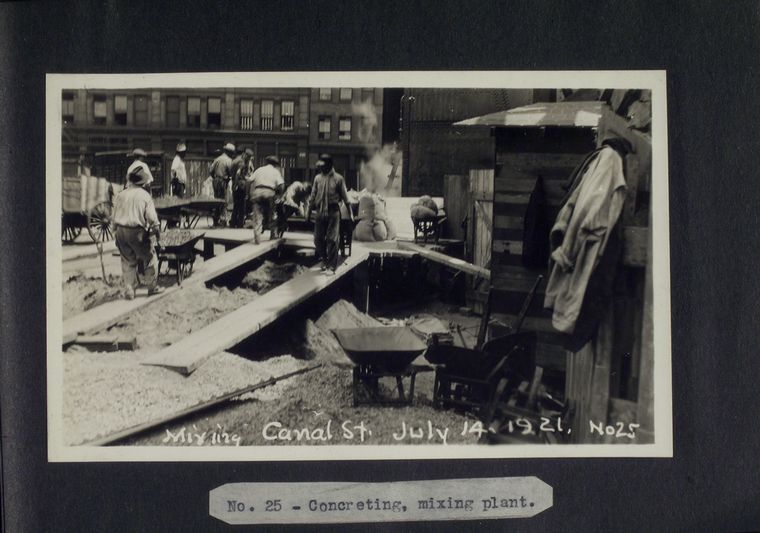
On July 14, 1921, construction crews operated massive concrete mixing plants along Canal Street in New York, pushing forward with the monumental excavation of the historic Holland Tunnel. Designed to connect Manhattan directly to New Jersey beneath the Hudson River, this engineering triumph required thousands of sandhogs to labor in high-pressure, underwater environments to carve out the subterranean passage.
The hidden, lethal danger that haunted this specific July construction phase was the terrifying threat of “the bends,” or decompression sickness. To prevent the Hudson River from collapsing into the active dig site, engineers pumped the tunnel shafts full of dense, highly compressed air that wreaked havoc on the human body. Workers frequently emerged from the depths in excruciating pain, leading to the creation of specialized medical airlocks on Canal Street to slowly decompress the workers and save them from permanent paralysis.
Image via NYPL Digital Collections, no known restrictions
