
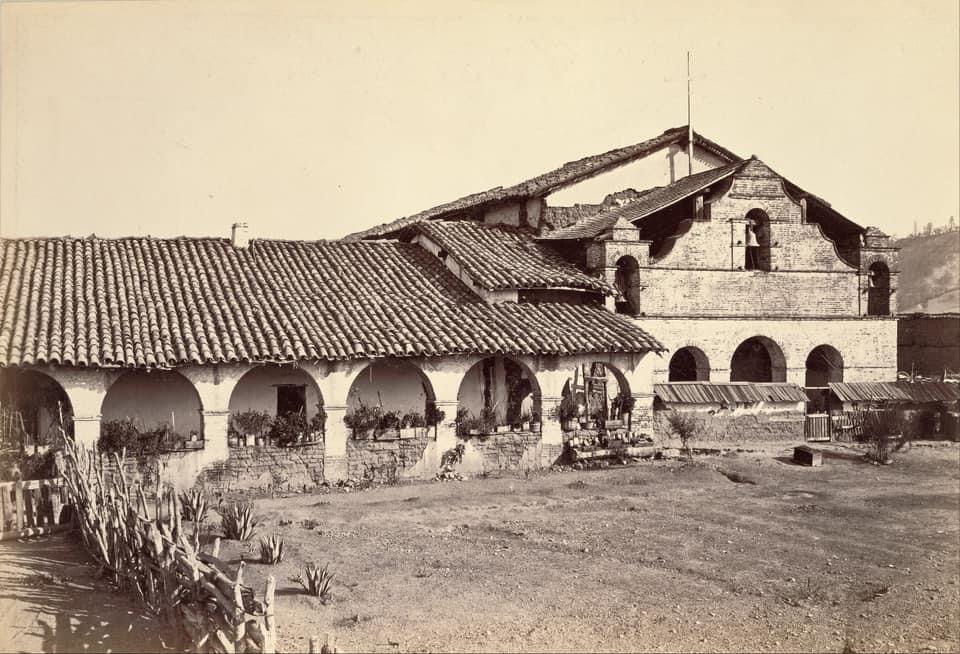
On July 14, 1771, Franciscan friar Junípero Serra officially founded Mission San Antonio de Padua in California’s remote Valley of the Oaks, establishing the third religious outpost in Spain’s expanding Alta California mission system. Captured in rare archival photographs over a century later in 1880, the structure stood as a weathered monument to a complex colonial era that fundamentally altered the region’s cultural landscape.
The fascinating, raw layer of the mission’s very first day lies in Serra’s overwhelming, eccentric religious enthusiasm. Upon arriving at the site, Serra hung a bronze bell from the branch of a massive, ancient oak tree and began frantically ringing it in the empty wilderness, screaming for the local Indigenous population to come hear the gospel before any buildings even existed. His traveling companions begged him to stop wasting his energy on an empty valley, but his bizarre display worked, attracting a local Salinan man who became the mission’s very first convert.
Photo of Mission San Antonio de Padua more than 100 years later c. 1880 via Wikimedia Commons, public domain.
