
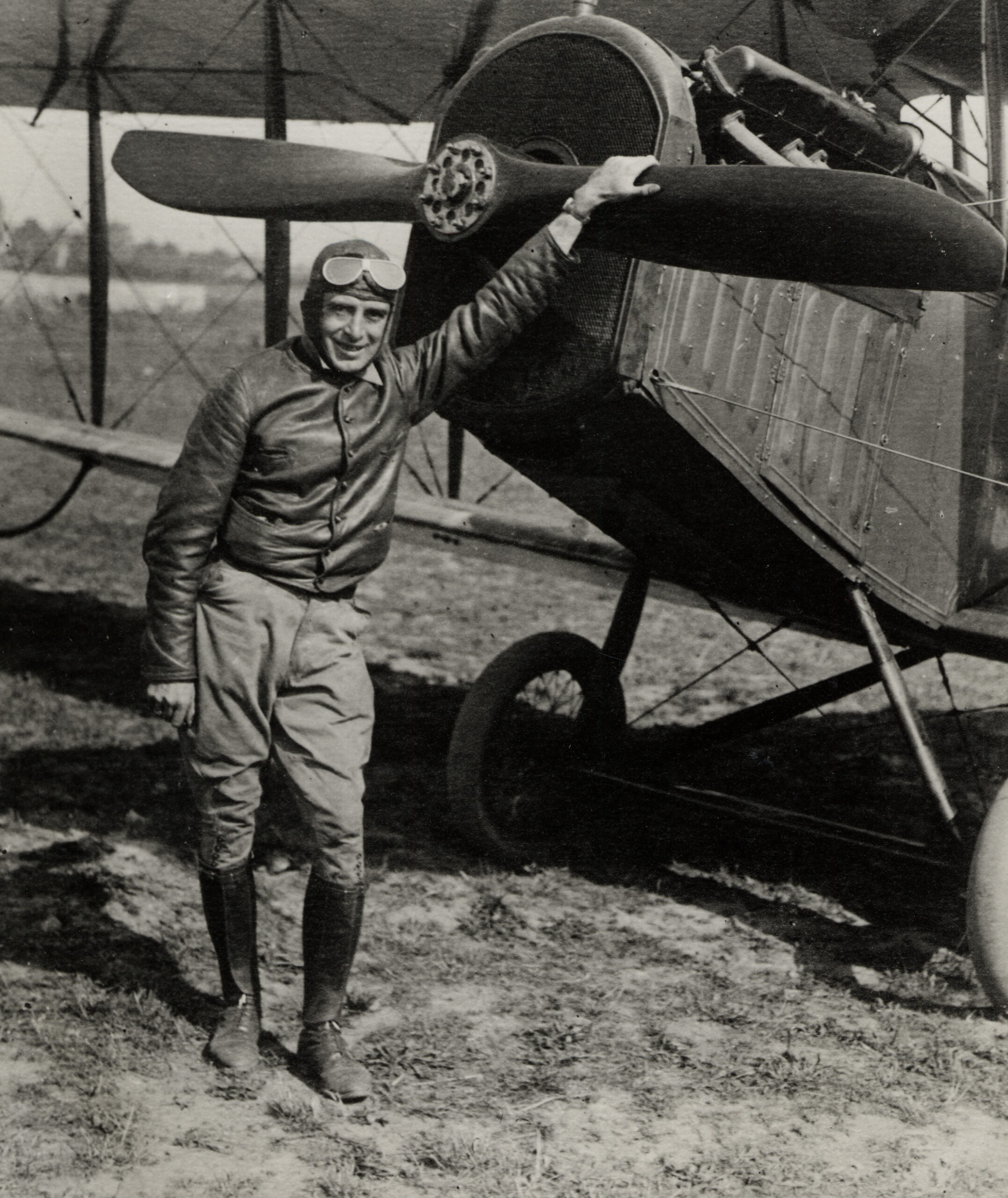
On June 27, 1919, the United States Post Office Department inaugurated its first regularly scheduled airmail route between New York and Chicago, a pivotal step toward establishing a true transcontinental air corridor. Pilots flew open‑cockpit Curtiss JN‑4H “Jenny” biplanes over hundreds of miles of farmland and industrial sprawl, attempting to prove that aviation could one day rival the speed of the nation’s railroads. Though early reliability was uneven, the new service dramatically aimed to cut communication times between America’s major financial centers and laid essential groundwork for the commercial airways that followed.
The Air Mail Service quickly earned a reputation for danger. With no radios, no radar, and only rudimentary weather information, pilots navigated by rivers, railroad tracks, and the memories of pathfinders like Eddie Gardner, who had braved the treacherous Alleghenies months earlier to map the most hazardous stretch of the New York–Chicago corridor. Bundled in heavy leather leggings and fleece‑lined helmets to survive the freezing temperatures in the open cockpit, these aviators operated under immense psychological stress. Many referred to the service as the “Suicide Club,” a grim acknowledgment of the fatality rate heavily driven by Otto Praeger, the iron‑willed Second Assistant Postmaster General, who demanded strict schedule adherence and frequently disciplined pilots who refused to fly in poor conditions.
The real turning point in the struggle over safety had come in late 1918, when a group of airmail pilots refused to take off into zero‑visibility weather after a series of deadly crashes. Their stand—one of the earliest collective actions by federal civilian employees—forced the Post Office to temporarily relax its rigid policies and acknowledge that pilots, not Washington administrators, were best positioned to judge flying conditions. By the time the New York–Chicago line opened in June 1919, this hard‑won principle was already reshaping the culture of the service. America’s commercial airways were not born from tidy bureaucratic planning, but from a high‑stakes contest between institutional pressure and the survival instincts of the men in the cockpit.
Caption: Airmail pilot Eddie Gardner posing with a Curtiss JN‑4H “Jenny” mail airplane, the pioneering model used to conquer the New York–Chicago corridor. Image via Wikimedia Commons, public domain.

The air mail service entered 1919 without the aid of radio, but at mid year the Commerce Dep’t assigned 5 station licenses to the Post Office, for the purpose of communicating between airfields along the original NY–Chicago route. Call signs were WWG-Chicago, WWO-Cleveland, WWQ-Bellefonte PA, WWU-Newark, and WWX-Washington.
Existing naval radio stations relayed weather reports, info on flights, and occasionally, top priority messages too urgent for airmail or telegram, until mid 1920 when the Post Office network was up and running. Stations increased to 10 or more by 1922, but owing to defunding of the program, mailplanes did not receive radios till 1925.