
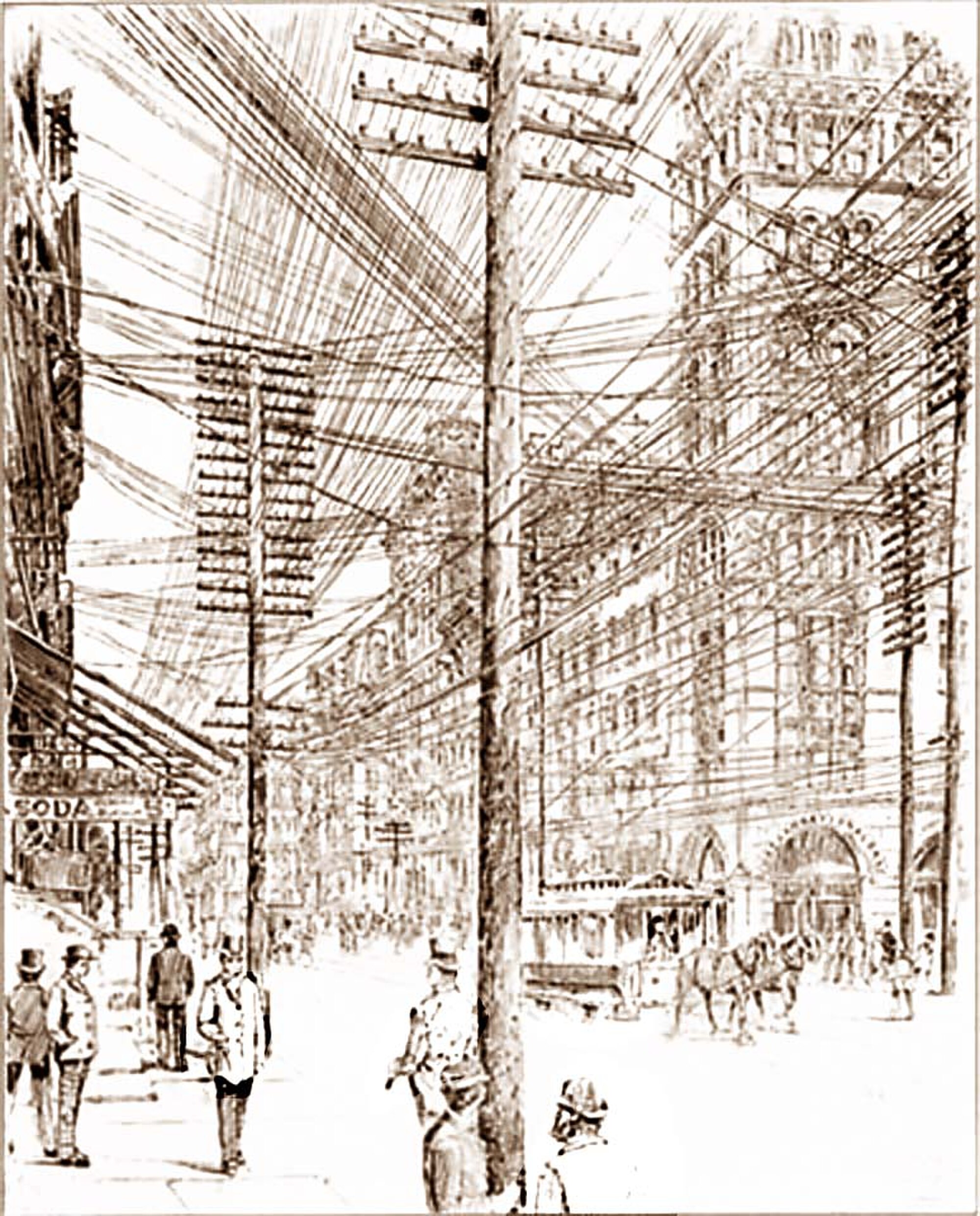
According to James D. Reid’s definitive 1879 history The Telegraph in America, June 27, 1846, marked the completion of the first direct telegraph line linking New York and Boston, establishing a monumental breakthrough in near-instant communication. Building upon Samuel Morse and Alfred Vail’s landmark 1844 demonstration, this network allowed messages to travel between New York’s Wall Street district and Boston’s School Street area in a matter of minutes rather than days. Driven by insatiable demand from merchants, newspapers, and stockbrokers, the line dramatically accelerated the speed of American commerce and journalism. Telegraph economics heavily reshaped the newspaper industry, as expensive per-word rates forced correspondents to adopt a concise, front-loaded reporting style that laid the essential groundwork for what would later evolve into the modern inverted pyramid structure
This chaotic scramble created a highly fragmented, unstable network where competing operators would occasionally cut or splice into each other’s lines to disrupt transmissions and steal stock market data. America’s first information highway was not forged through tidy civic planning or immediate public consensus, but through a lawless, high-stakes race to monopolize the airwaves.
Yet the most fascinating layer of this 1846 milestone lies in the ruthless corporate espionage and patent warfare that erupted before the wires were even strung. Samuel Morse did not hold a monopoly on the concept of long-distance communication; a brilliant but cutthroat entrepreneur named Henry O’Reilly began aggressively building rival lines using slightly modified technology, sparking a bitter, multi-year legal battle over intellectual property. As Morse’s associates raced to plant their poles along the New York–Boston corridor, rival crews frequently harassed workers, threatened lawsuits, and attempted to secure exclusive rights along the railroad tracks to block Morse from connecting the cities.
