
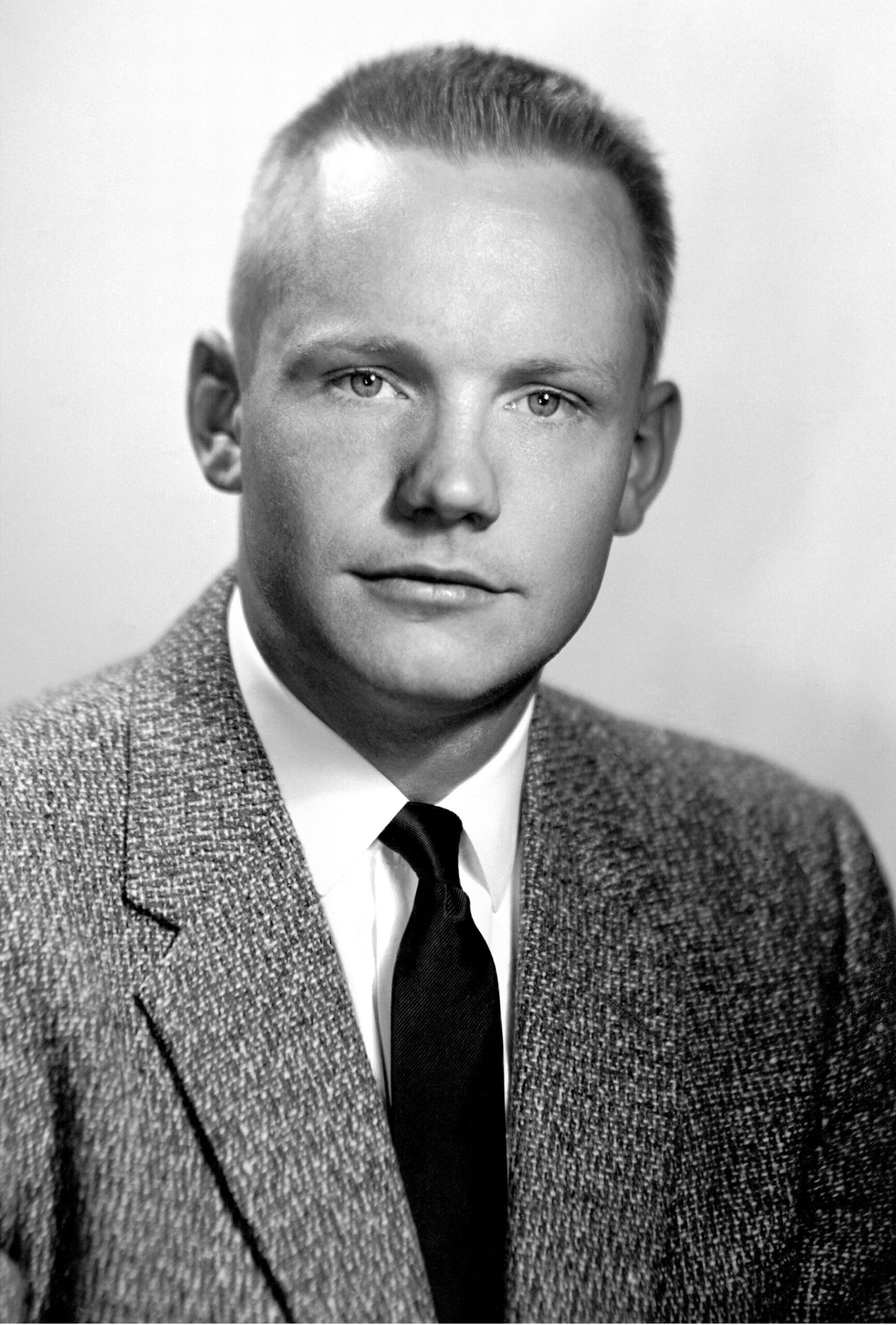
On June 25, 1958, the U.S. Air Force selected nine elite test pilots for the Man In Space Soonest program—America’s first attempt to put a human into orbit. The roster included future icons like Neil Armstrong (shown) and Joseph A. Walker, men accustomed to pushing experimental aircraft to the edge of survivability.
Though the program was dissolved weeks later in favor of NASA’s Project Mercury, MISS became the crucible that forged America’s earliest astronaut corps. Its rigorous standards, military discipline, and high‑risk ethos shaped the operational blueprint that would carry the nation from the panic of Sputnik to the triumph of the Moon landing.
