
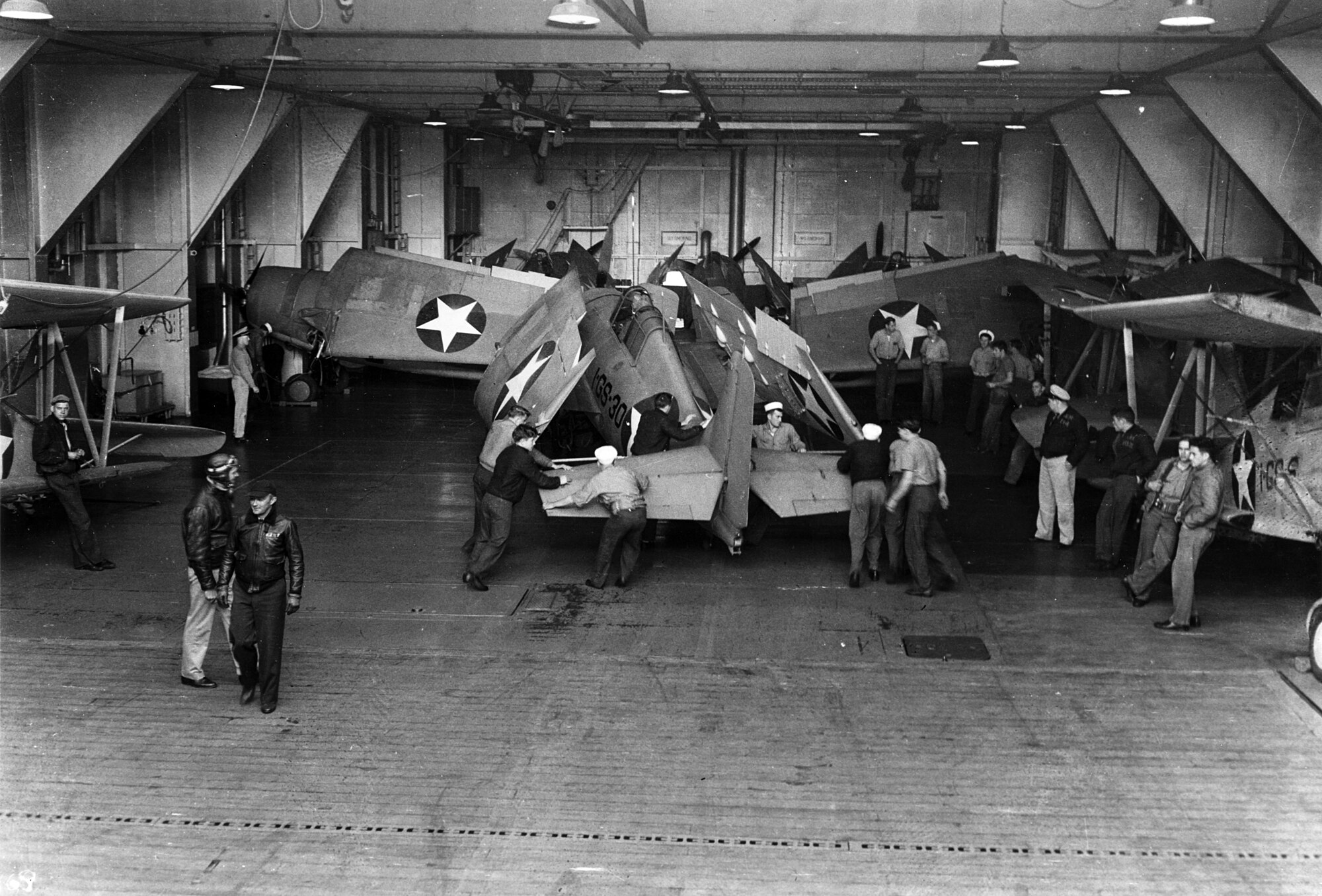
On June 17, 1942, a Grumman F4F-4 Wildcat sat secured to the hangar deck of the USS Long Island, the U.S. Navy’s very first escort carrier. Coming just days after the monumental American victory at the Battle of Midway, this snapshot captures a critical transition point in naval warfare, where the military desperately scrambled to adapt existing civilian hulls into makeshift floating airfields.
While the Wildcat was historically criticized for being slower and heavier than the nimble Japanese Mitsubishi A6M Zero, it possessed a secret design feature that saved countless American lives: rugged armor plating and self-sealing fuel tanks. This exceptional durability, combined with the innovative “Thach Weave” tactical maneuvers developed by Navy pilots, allowed Wildcat squadrons to absorb devastating enemy fire and hold the line across the Pacific theater until heavier, advanced fighters could be deployed.
