
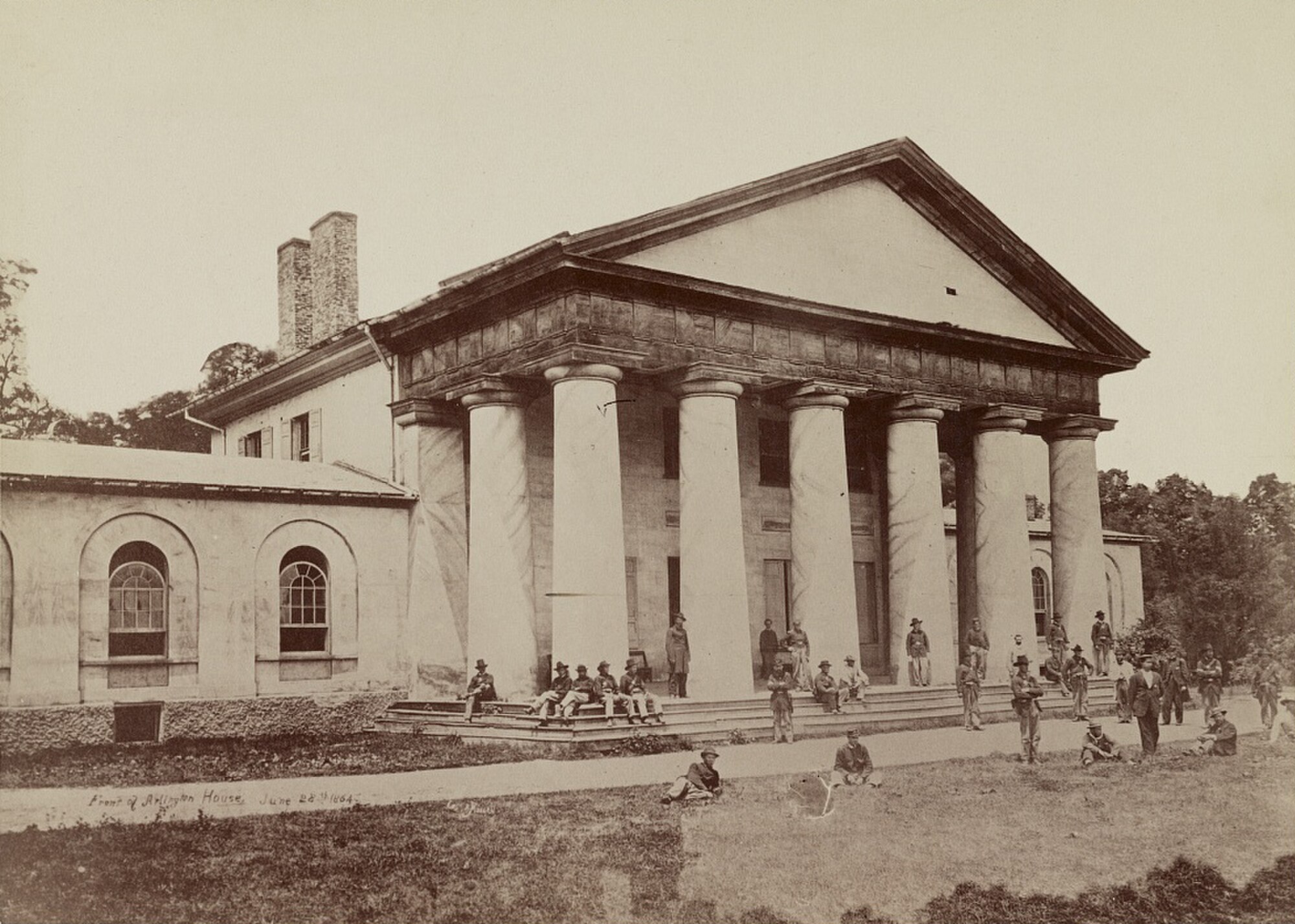
On June 15, 1864, Secretary of War Edwin Stanton officially designated the sweeping Arlington estate in Virginia as a national military cemetery, permanently altering the identity of the historic property. Five months prior, the federal government had seized the land at a tax auction for twenty‑six thousand eight hundred dollars, intentionally rejecting a payment sent by Mary Custis Lee, the wife of Confederate General Robert E. Lee, because she did not present the funds in person as required by wartime laws. Seeking to punish Lee for his treason and ensure the estate could never be occupied by his family again, Union Quartermaster General Montgomery Meigs ordered that the first military graves be dug directly inside Mrs. Lee’s treasured rose garden.
The targeted confiscation triggered a dramatic, decades‑long legal battle that eventually reached the highest court in the nation long after the Civil War ended. In United States v. Lee (1882), the Supreme Court ruled that the wartime tax seizure was unconstitutional, declaring that the land still belonged to Lee’s eldest son, George Washington Custis Lee. Recognizing that the property had already become a sacred national shrine containing thousands of Union graves, Lee chose not to evict the dead and instead formally sold the entire estate back to the federal government for one hundred and fifty thousand dollars, cementing Arlington’s legacy as America’s premier resting place for its fallen heroes.
