
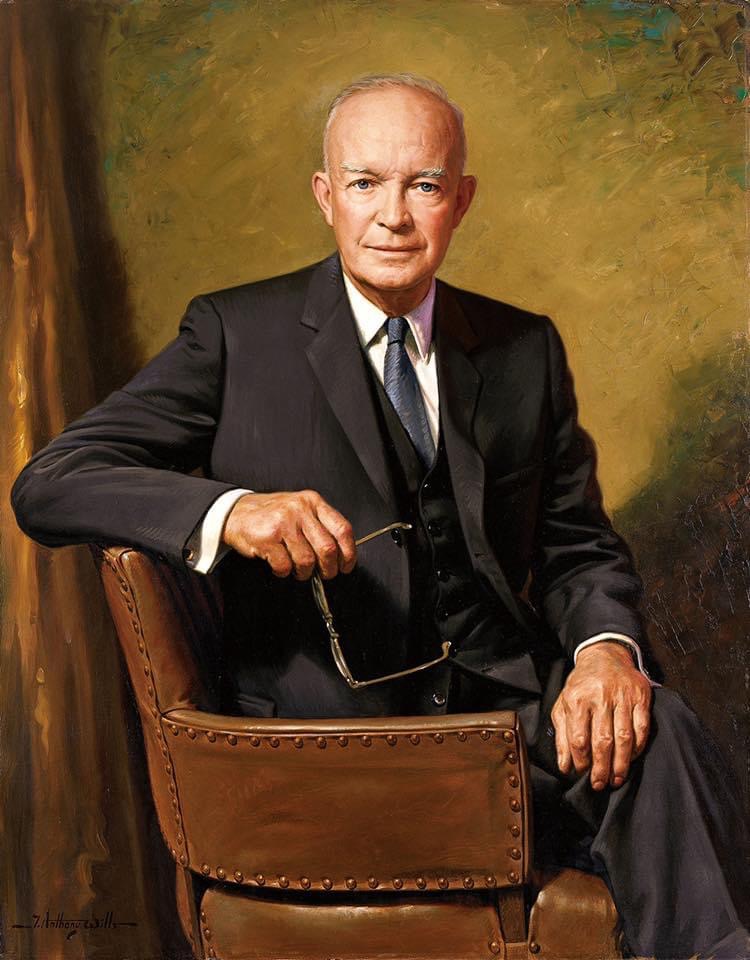
President Dwight D. Eisenhower signed a transformative bill that permanently altered the daily ritual of millions of American schoolchildren by officially adding the phrase “under God” to the Pledge of Allegiance. This legislative adjustment fundamentally connected faith and patriotism in the public sphere.
The driving force behind this change wasn’t actually politicians, but a Scottish immigrant Presbyterian minister named George Docherty. In a sermon delivered at Eisenhower’s church—with the President sitting directly in the pews—Docherty argued that without referencing God, the American Pledge could just as easily be recited by children in Nazi Germany or Communist Moscow, as it only praised the flag and the state. Moved by the sermon, Eisenhower immediately championed the bill. Signed deliberately on Flag Day amidst the escalating tensions of the Cold War, the modification was designed to draw a sharp ideological distinction. It separated the spiritual heritage of the American republic from the militant state atheism of its communist adversaries, serving as a powerful cultural defense mechanism.
