
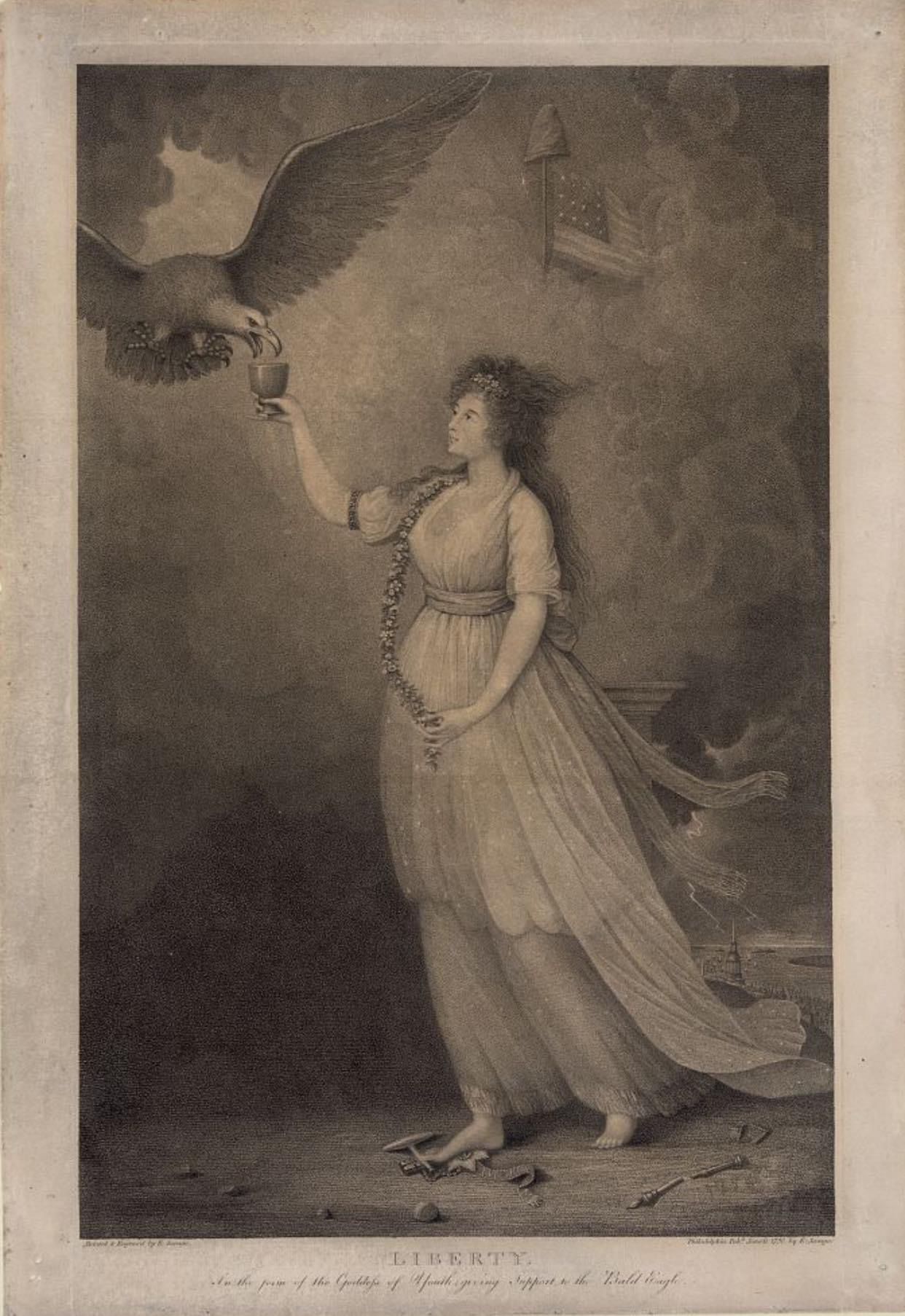
On June 11, 1796, American artist Edward Savage published a striking, symbolic engraving titled Liberty. In the form of the goddess of youth, giving support to the bald eagle. The allegorical artwork depicted a classical goddess dressed in flowing robes, gently offering nourishment to a large bald eagle while treading on symbols of British tyranny, including a broken key and a royal order. The piece, now preserved in the Library of Congress, became one of the most widely recognized and popular visual icons of the early American Republic.
Savage created this engraving during a period when the United States was desperately trying to forge its own distinct cultural and artistic identity separate from European monarchies. By merging the Greek concept of a Liberty goddess with the newly adopted American bald eagle, the print offered ordinary citizens a reassuring, idealized vision of their nation as youthful, pure, and divinely protected. The image was frequently copied, embroidered, and painted onto everyday household items across the country, serving as an early form of national branding that helped unite a divided post-revolutionary public under a shared visual mythos.
