
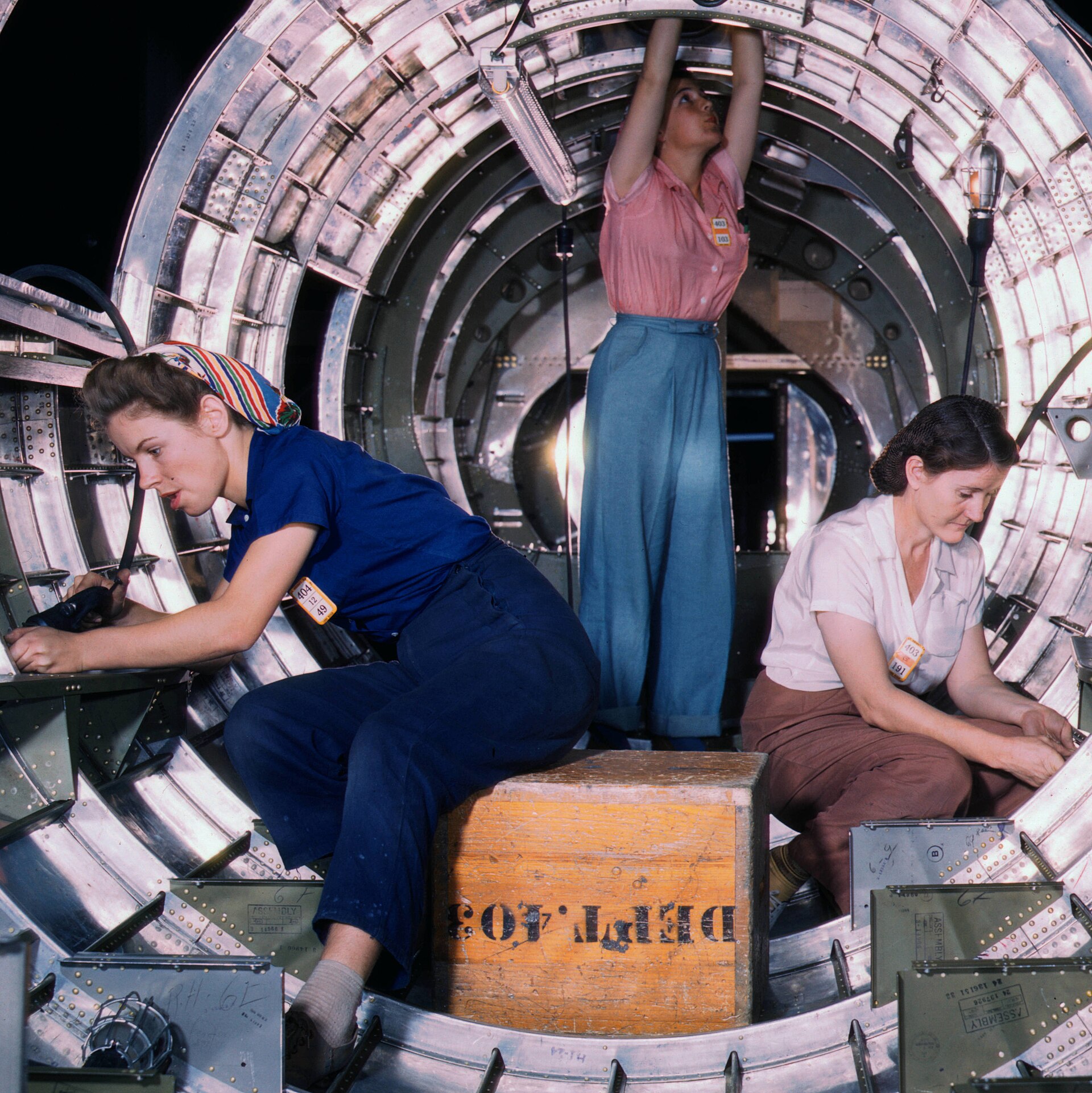
World War II, American aircraft factories became vast industrial ecosystems where teams of skilled workers—men and women alike—assembled the internal skeletons of the bombers that would soon fly over Europe. In this photograph, three female workers crouch, reach, and rivet inside the exposed fuselage framework of a combat aircraft, installing the ribs, stringers, and bulkheads that gave each plane its strength. Before any Plexiglas nose, engine, or gun turret could be added, crews like these built the hidden architecture that held the entire airframe together.
The interior structures these workers assembled had to withstand violent stresses: flak bursts, evasive maneuvers, freezing altitudes, and the recoil of defensive guns. A single misaligned rivet or weakened joint could compromise an aircraft under combat load. Their precision—performed in cramped spaces, under relentless production schedules—directly shaped the survivability of the bombers that supported the over 11,000 Allied sorties flown on D‑Day. It was painstaking, unseen labor, but it formed the backbone of the air campaign that helped liberate Europe.
Image: Women workers install fixtures and assemblies to a tail fuselage section of a B-17 bomber at the Douglas Aircraft Company plant, Long Beach, Calif.
