
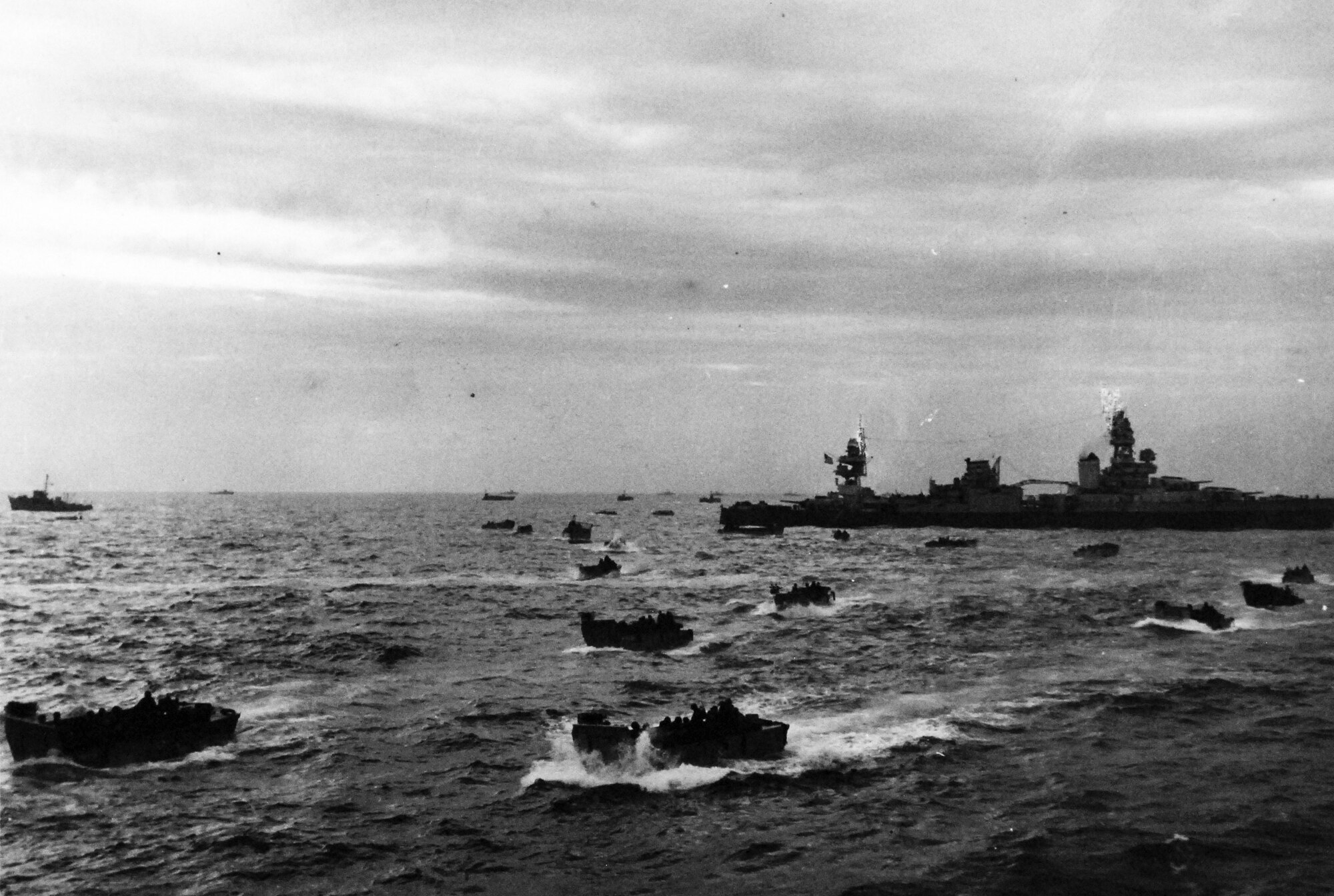
On June 6, 1944, the cold, churning waters off Omaha Beach formed the backdrop for the largest amphibious assault in human history. At the center of this vast naval armada was the heavy cruiser USS Augusta (CA‑31), flagship of Rear Admiral Alan G. Kirk’s Western Naval Task Force. Aboard her steel decks, General Omar Bradley spent the harrowing morning directing the unfolding battle, monitoring the bloody struggle of American troops fighting their way off the beach. The ship shook violently as her 8‑inch guns fired over the horizon, smashing German fortifications to support the infantry’s advance.
Although Augusta was the command nerve center for the invasion, she did not launch landing craft — that role belonged to troop transports positioned farther offshore. Her job was far more strategic: to serve as the floating headquarters from which Bradley and Kirk coordinated the entire assault on Omaha and Utah Beaches, making her one of the most important command posts in the history of modern warfare.
