
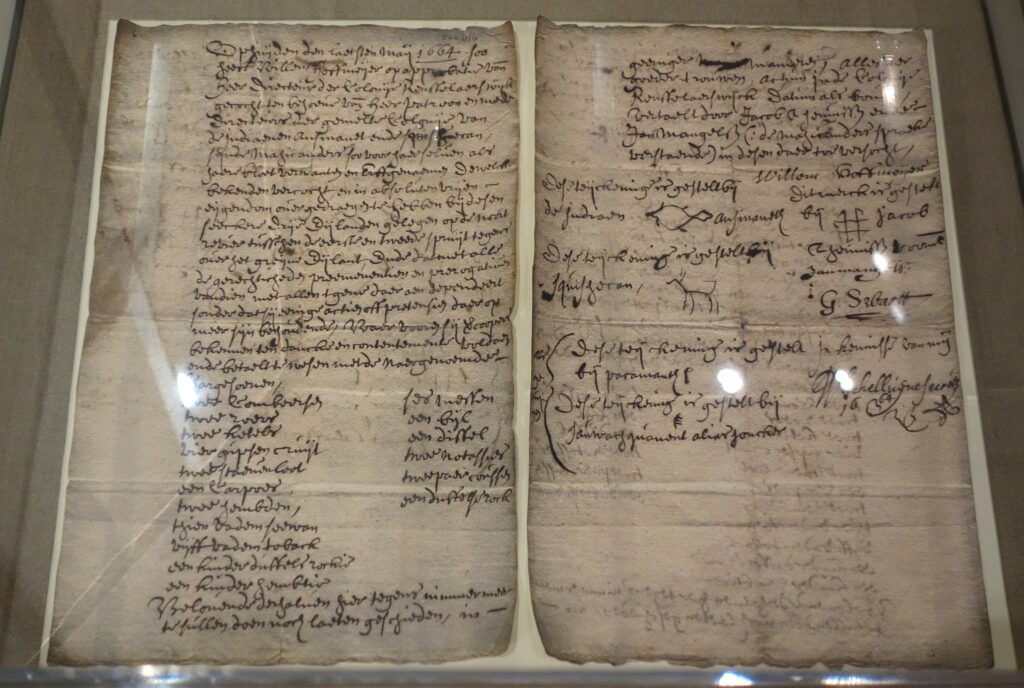
The exchange of three tranquil islands on the Hudson River on May 31, 1664, was captured in ink just months before Dutch colonial influence gave way to British rule. The precise list of trade goods, from practical kettles to ten strings of wampum, speaks to a complex meeting of two distinct worlds. For the Mahican people, parting with their ancestral river lands was a profound sacrifice, a reality reflected in the careful collection of items chosen to shield their community from the changing times. Among the weapons and tools, the inclusion of a single child’s coat and shirt serves as a poignant emotional fulcrum, showing a people securing the physical warmth of their youth even as the landscape shifted beneath their feet.
