
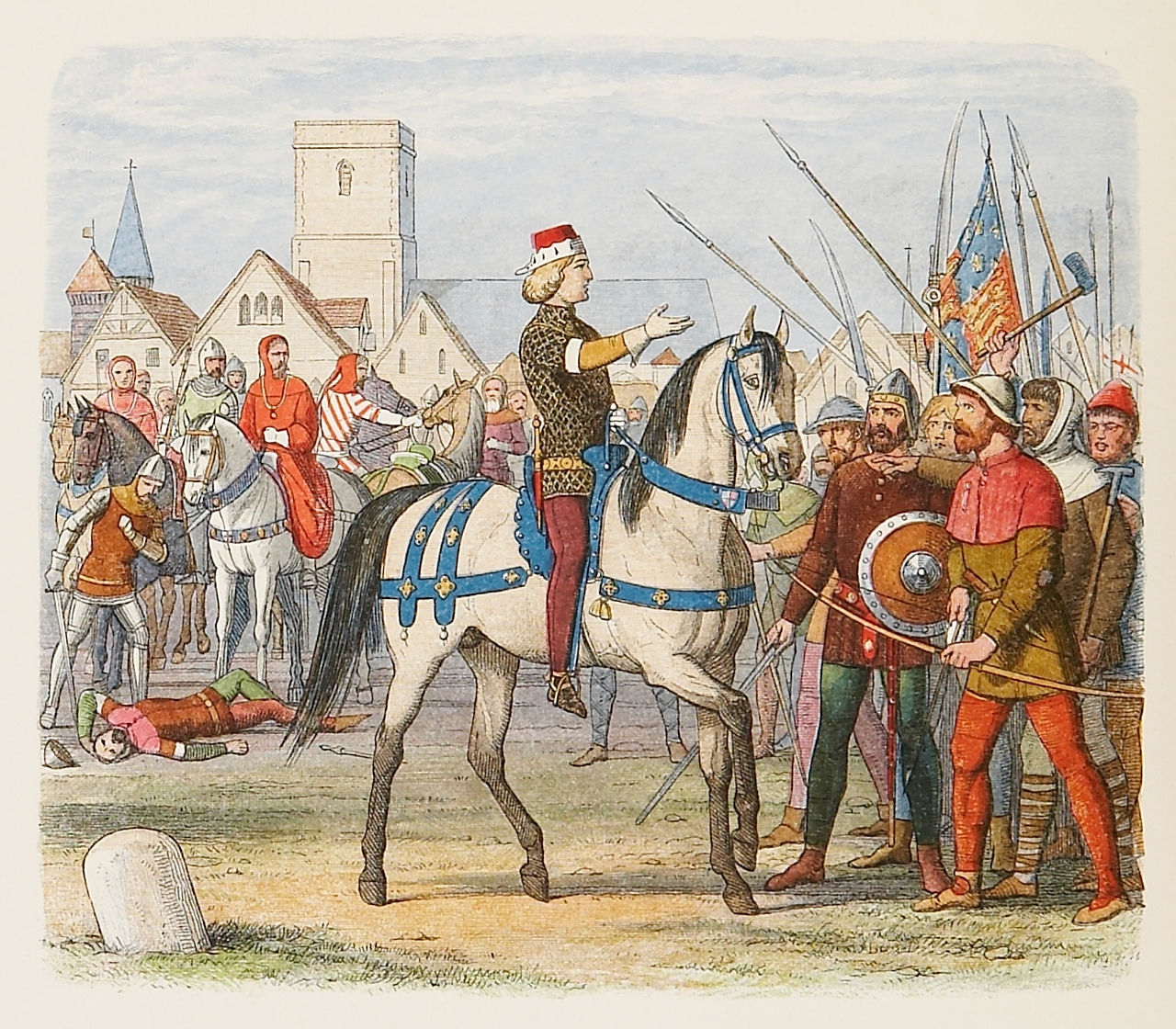
On May 30, 1381, long before the first English ship ever touched the shores of North America, the peasants of England lit a fuse of rebellion that shook the foundations of the medieval world. Crushed by an unjust poll tax, angered by corrupt officials, and determined to reclaim their dignity, the villagers of Fobbing, Essex, openly defied a royal commissioner on this day, chasing his guards away and sparking the historic Peasants’ Revolt. That local act of defiance quickly exploded into a massive march on London, where thousands of ordinary citizens boldly insisted to fourteen‑year‑old King Richard II (shown) that no man should live in bondage and that rulers must answer to the governed.
Though the uprising was ultimately suppressed with brutal force, its foundational ideas refused to die. Over the centuries, the memory of that rebellion helped erode the old feudal system and strengthened the belief that ordinary individuals possessed inherent rights that no king could justly strip away. English settlers — many of whom descended from the very peasants who had risen in the Middle Ages — carried this deep, inherited suspicion of unchecked tyranny across the Atlantic. In the New World, those ancient principles took root in the hearts of American colonists who rejected taxation without representation and insisted that government derives its authority from the consent of the governed.
In the defiant cries of the Essex peasants on that late spring morning, the spirit of the American Revolution was already whispering — a distant echo of a people demanding to be free.
