
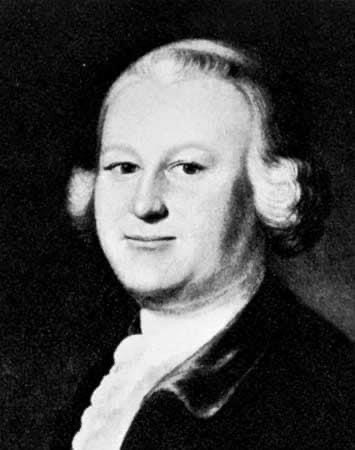
“The only principles of public conduct that are worthy of a gentleman or a man are to sacrifice estate, ease, health, and applause, and even life, to the sacred calls of his country.” By American lawyer and early Patriot James Otis who was born on February 5, 1725 in Barnstable, Massachusetts Bay.
Image via Wikimedia Commons, public domain
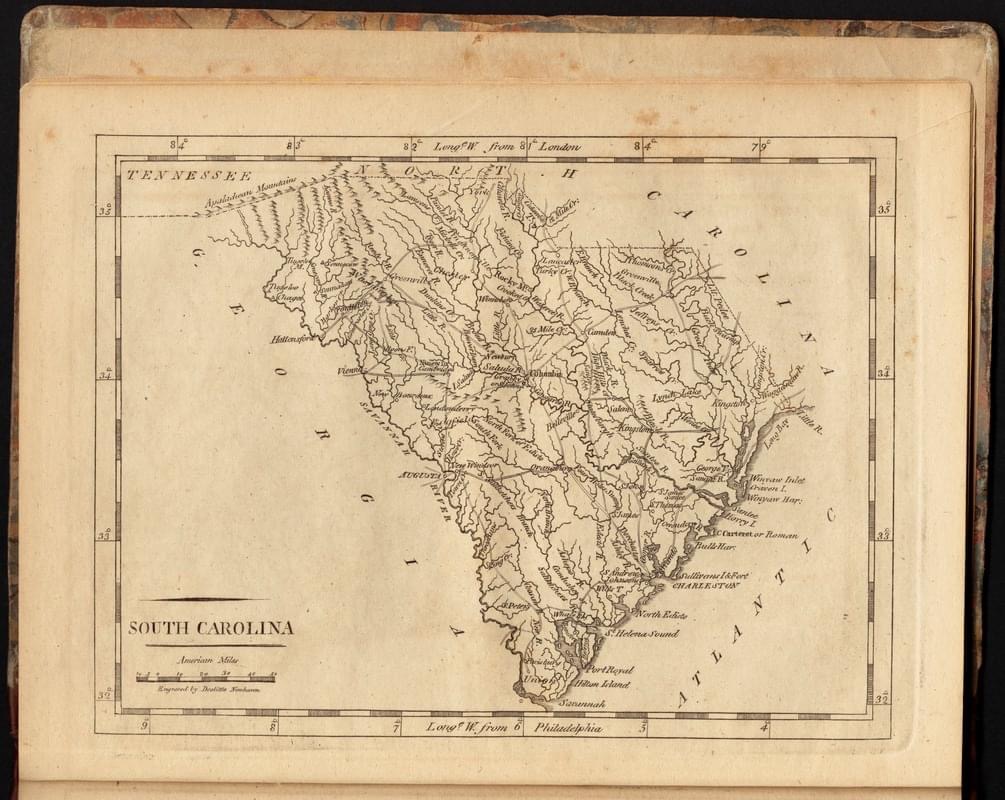
On today’s date February 5, 1778, South Carolina ratified the Articles of Confederation.
Image: Map of South Carolina c. 1806 via Digital Commonwealth Massachusetts, no known restrictions
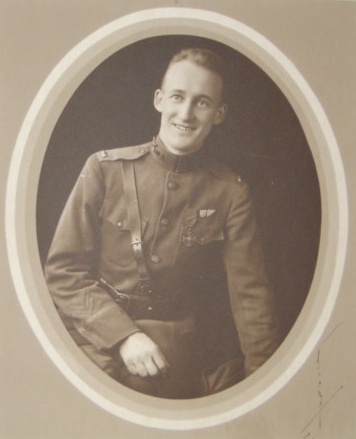
On February 5, 1918, Stephen W. Thompson became the first member of the U.S. Military to successfully shoot down an enemy aircraft after he shot down a German fighter. About 5 months later, during another WWI air combat mission, his plane was struck by bullets and he was hit in the leg. After a crash landing, he removed the bullet himself.
Image via Wikimedia Commons, CC BY 3.0
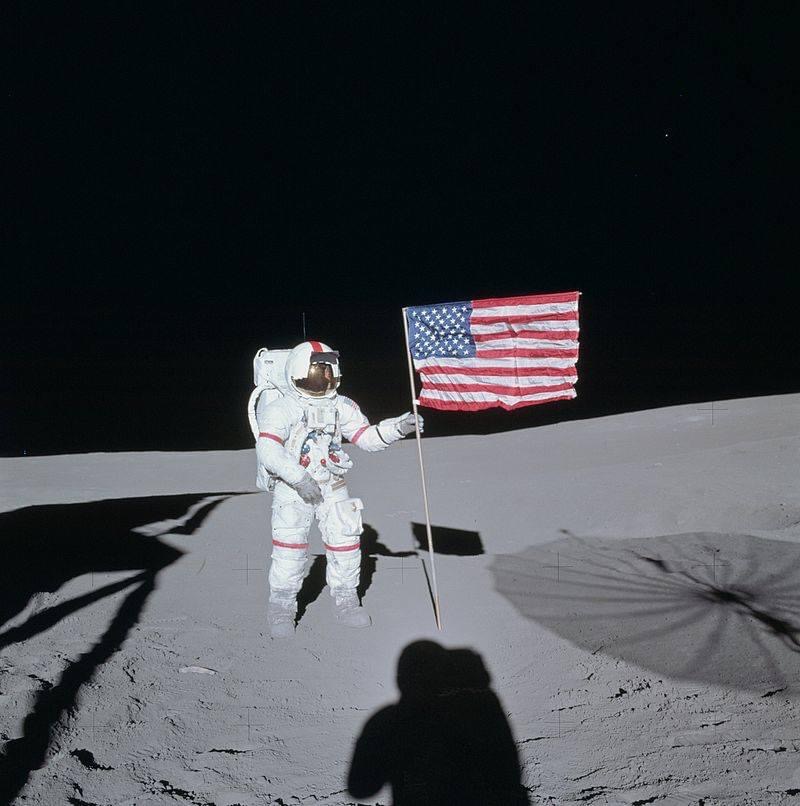
Alan Shepard of Apollo 14 holding the American flag on the moon February 5, 1971 via Wikimedia Commons, public domain
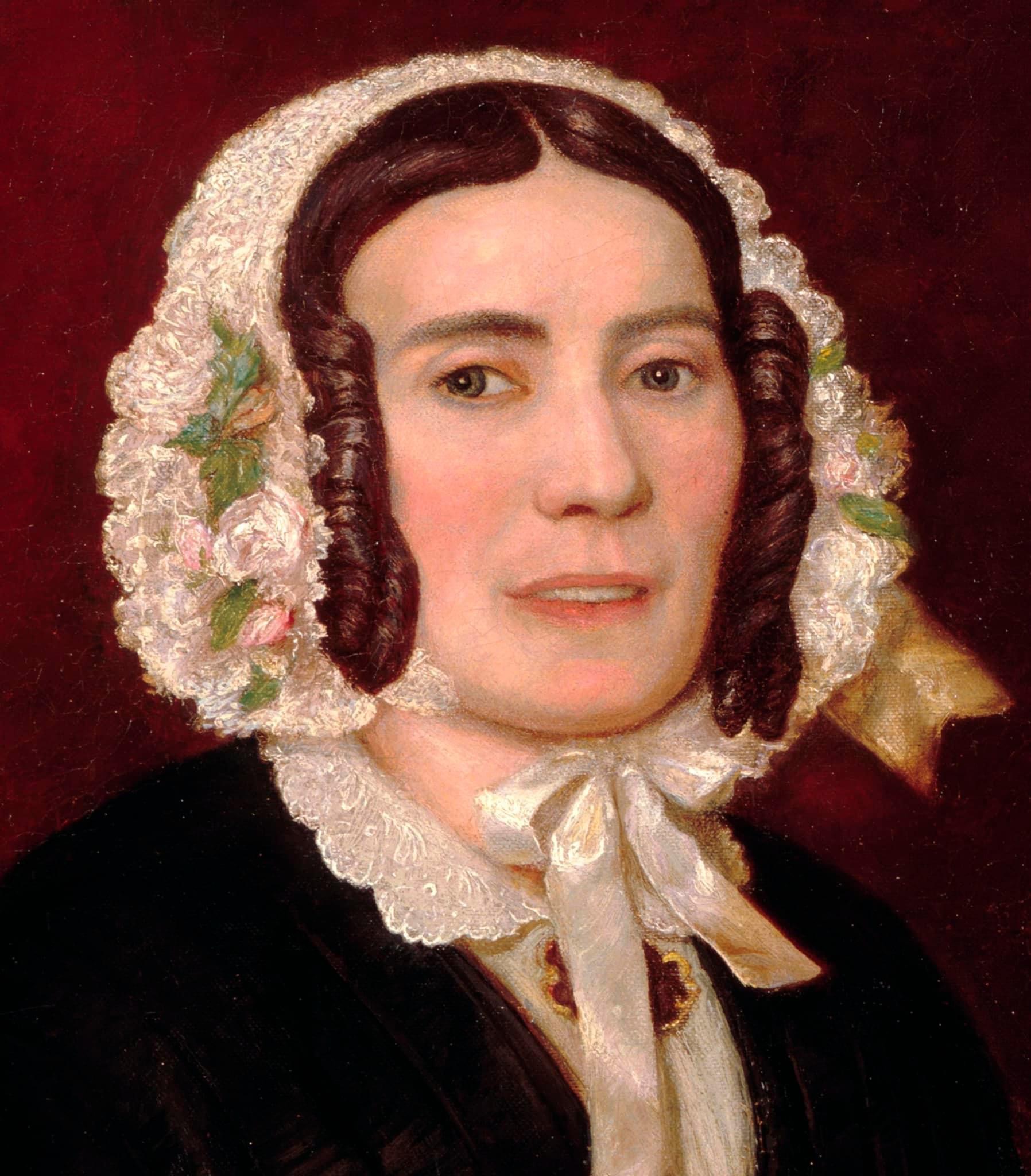
On February 5, 1826, Abigail Powers married Millard Fillmore in Moravia, New York. Nearly 24 years later she became First Lady of The United States.
Image painting of Abigail Fillmore from the mid 19th century via Wikimedia Commons, public domain
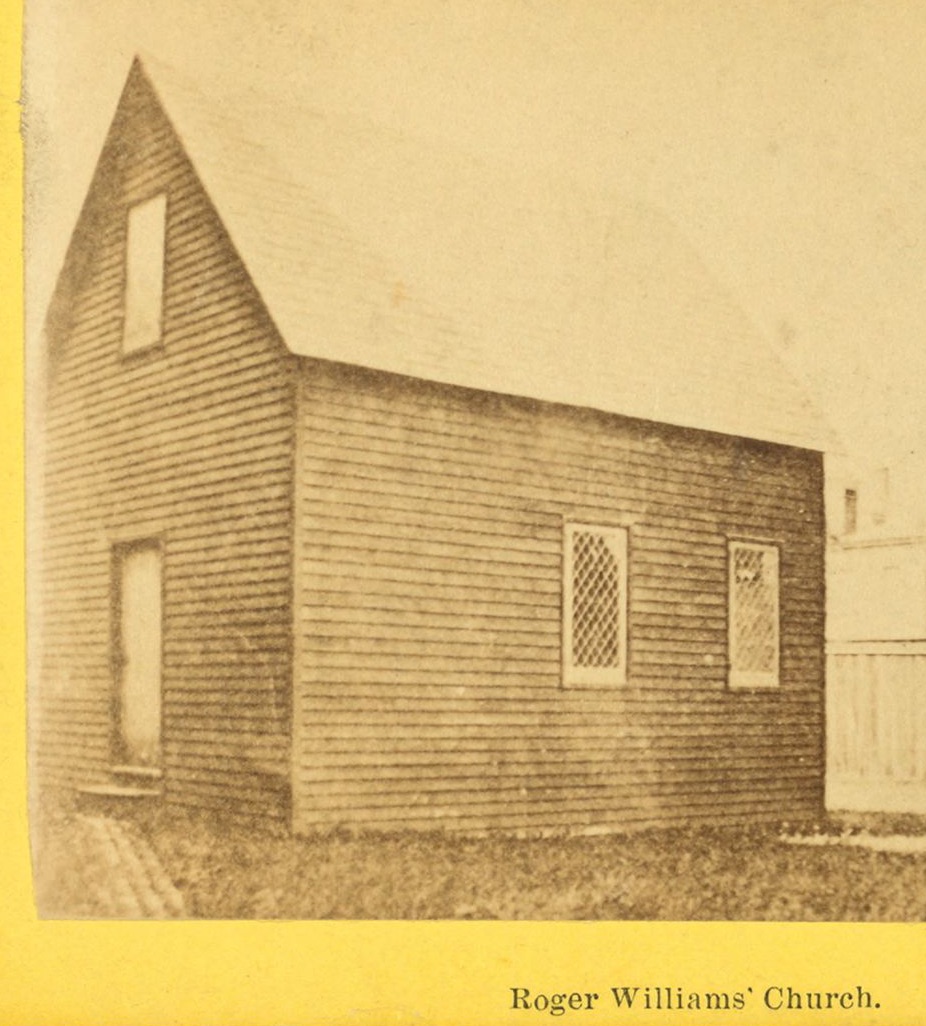
On February 5, 1631, Roger Williams arrived near Boston after departing England the December prior. In 1635, Williams was banished from Massachusetts Bay Colony.
Image of Roger Williams’ Church in Salem, Massachusetts built around 1634 via NYPL Digital Collections, public domain
Hank Aaron was born on February 5, 1934 in Mobile, Alabama. In addition to breaking Babe Ruth’s home run record, Aaron holds the MLB record for the most RBIs and is third on the list for the most hits.
Image via Wikimedia Commons, no known restrictions
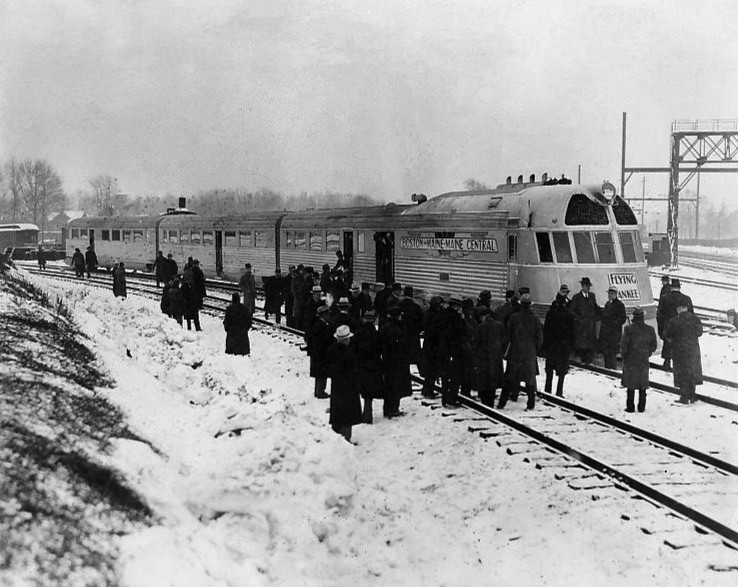
The Flying Yankee on its trial run between Philadelphia and Trenton, NJ. on February 5, 1935. The innovative diesel-electric train could travel over 100mph and its development was a sign of hope during the Great Depression.
Image via Wikimedia Commons, no known restrictions
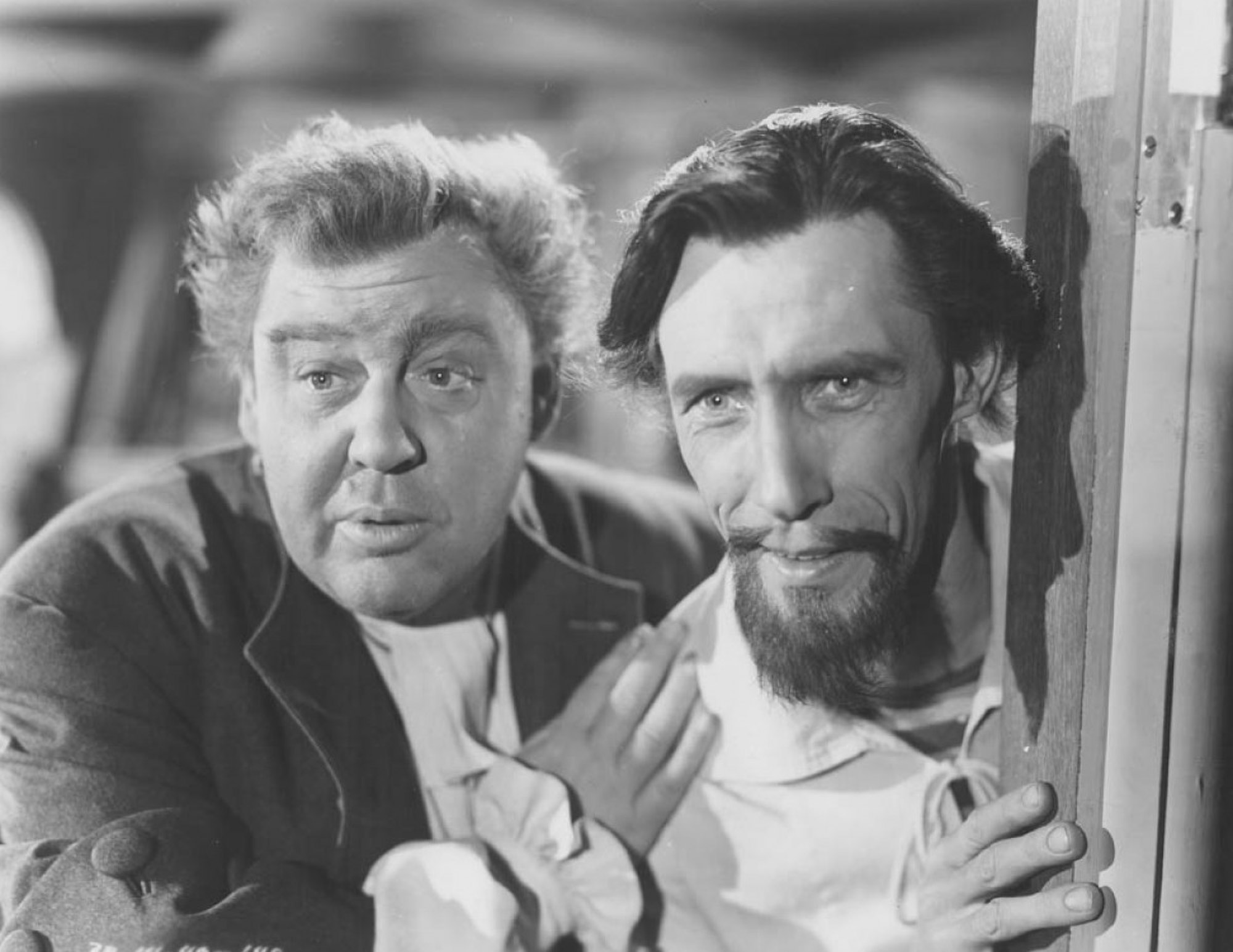
Richmond Reed Carradine better known as John Carradine was born on February 5, 1906 in New York City. He appeared in hundreds of films and portrayed diverse roles such as Dracula, Abraham Lincoln and Orange Povey (seen here on the right) in the 1945 movie Captain Kidd. He was David Carradine’s father.
Image via Wikimedia Commons, no known restrictions
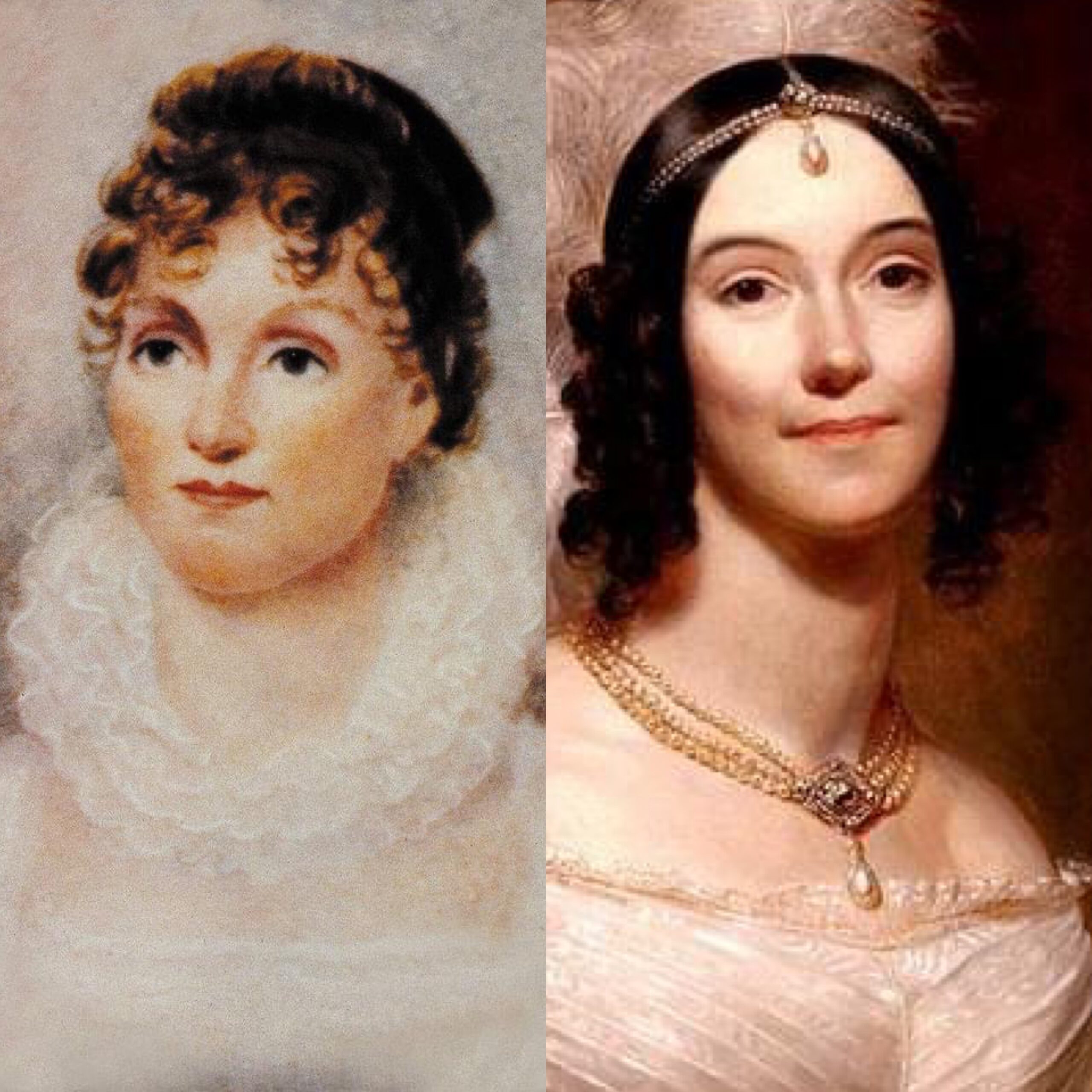
On today’s date February 5, 1819, Hannah Hoes Van Buren (left), wife of President Martin Van Buren, died of consumption (tuberculosis) in Albany, NY at the age of 35. Hannah passed away 18 years before Martin was President and he never remarried. Martin’s daughter-in-law, Angelica Singleton Van Buren (wife of Abraham Van Buren, Martin and Hannah’s oldest son) became the acting First Lady of The United States.
Images via Wikimedia Commons, public domain
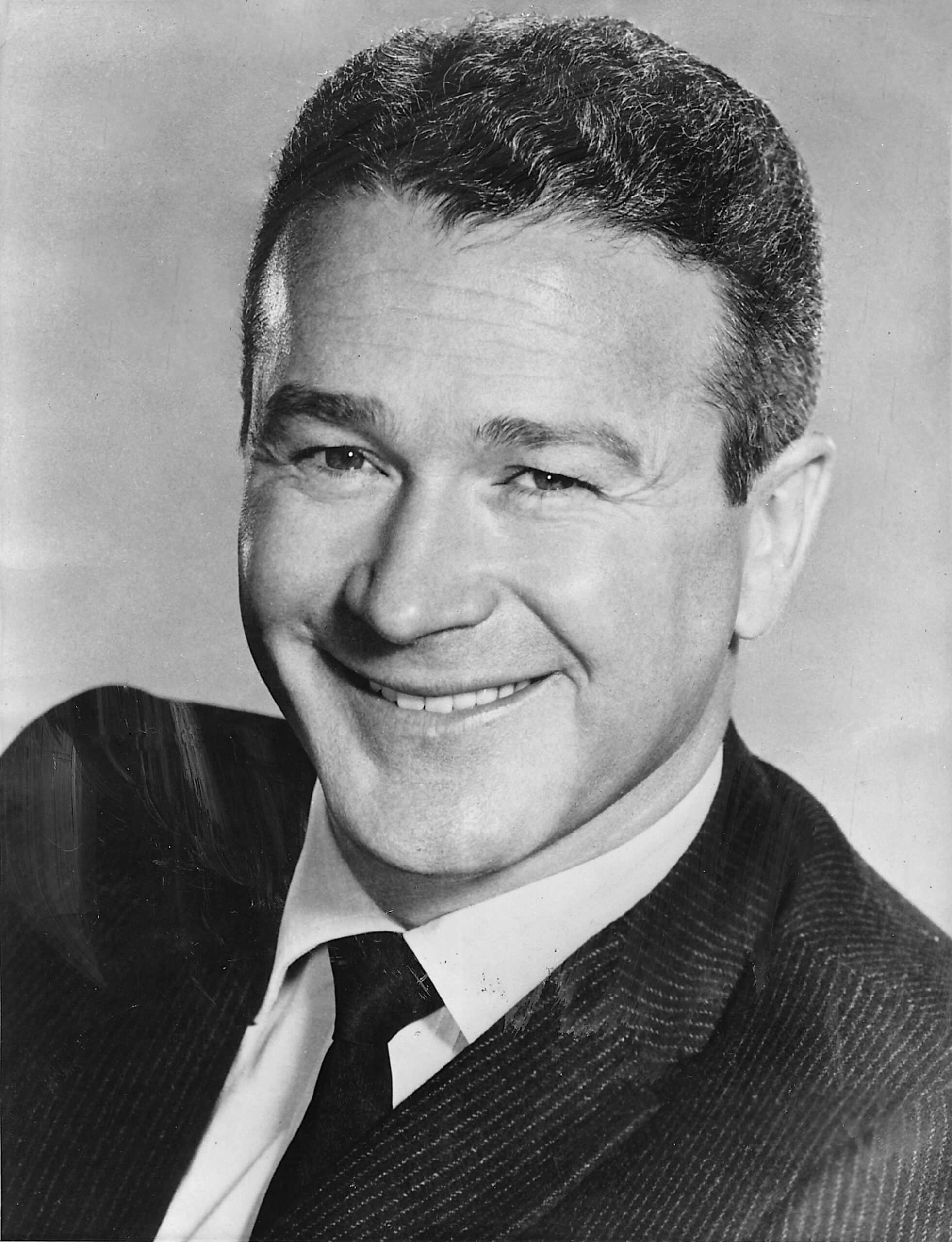
Born February 5, 1919 Aaron Chwatt’s red hair and bellhop uniform provided his stage name – Red Buttons. In his long career he appeared on Broadway, on television, and in films. His role as an airman with a Japanese bride in 1957’s “Sayonara” brought Oscars for Buttons and his on-screen wife Miyoshi Umeki.
Image of Buttons in 1959 via Wikimedia Commons, no known copyright, public domain in the US.
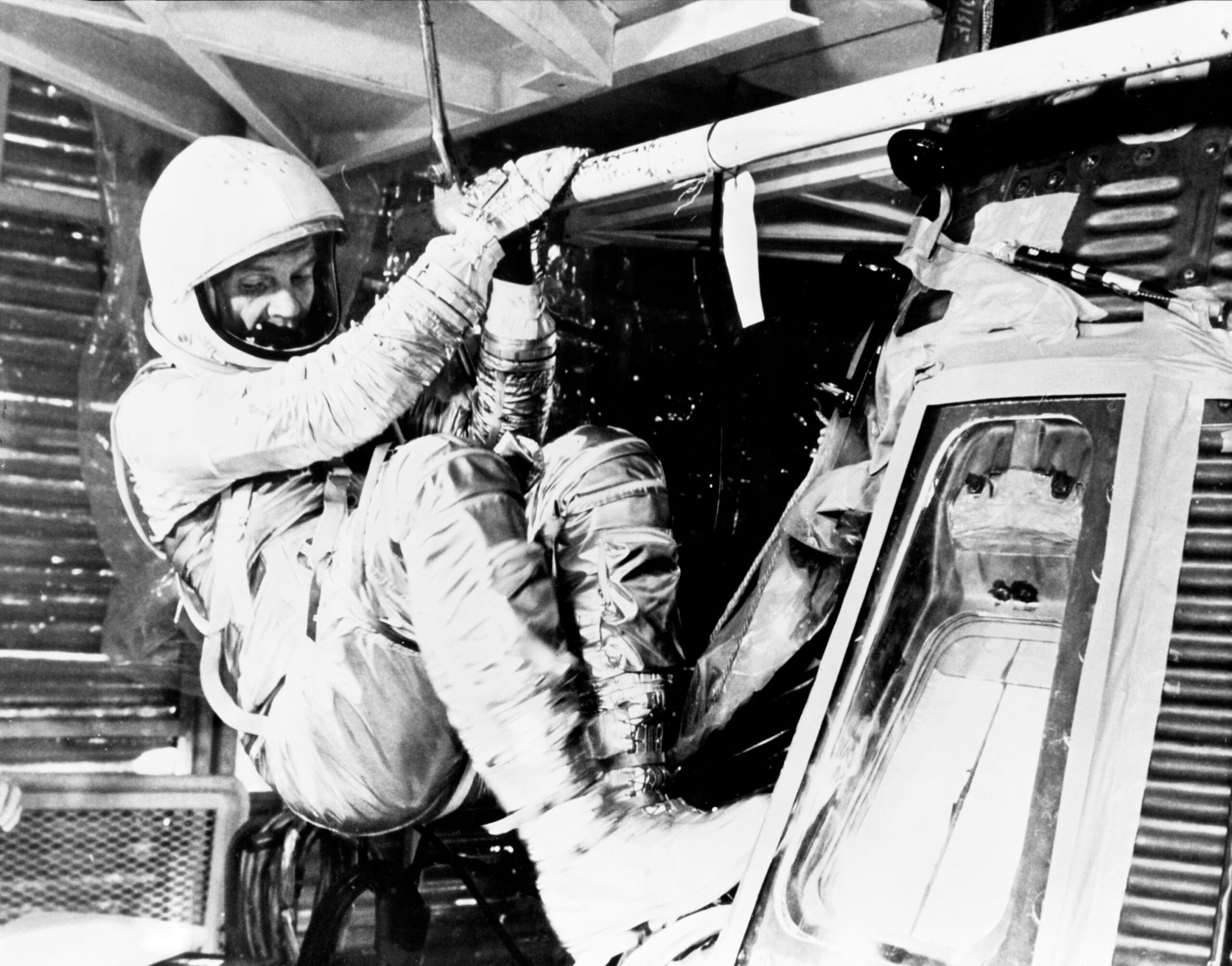
John H. Glenn Jr., pilot of the Mercury-Atlas 6 (MA-6) mission, wearing full pressure suit and helmet, practices insertion into the Mercury “Friendship 7” February 5, 1962
Image via Wikimedia Commons, public domain
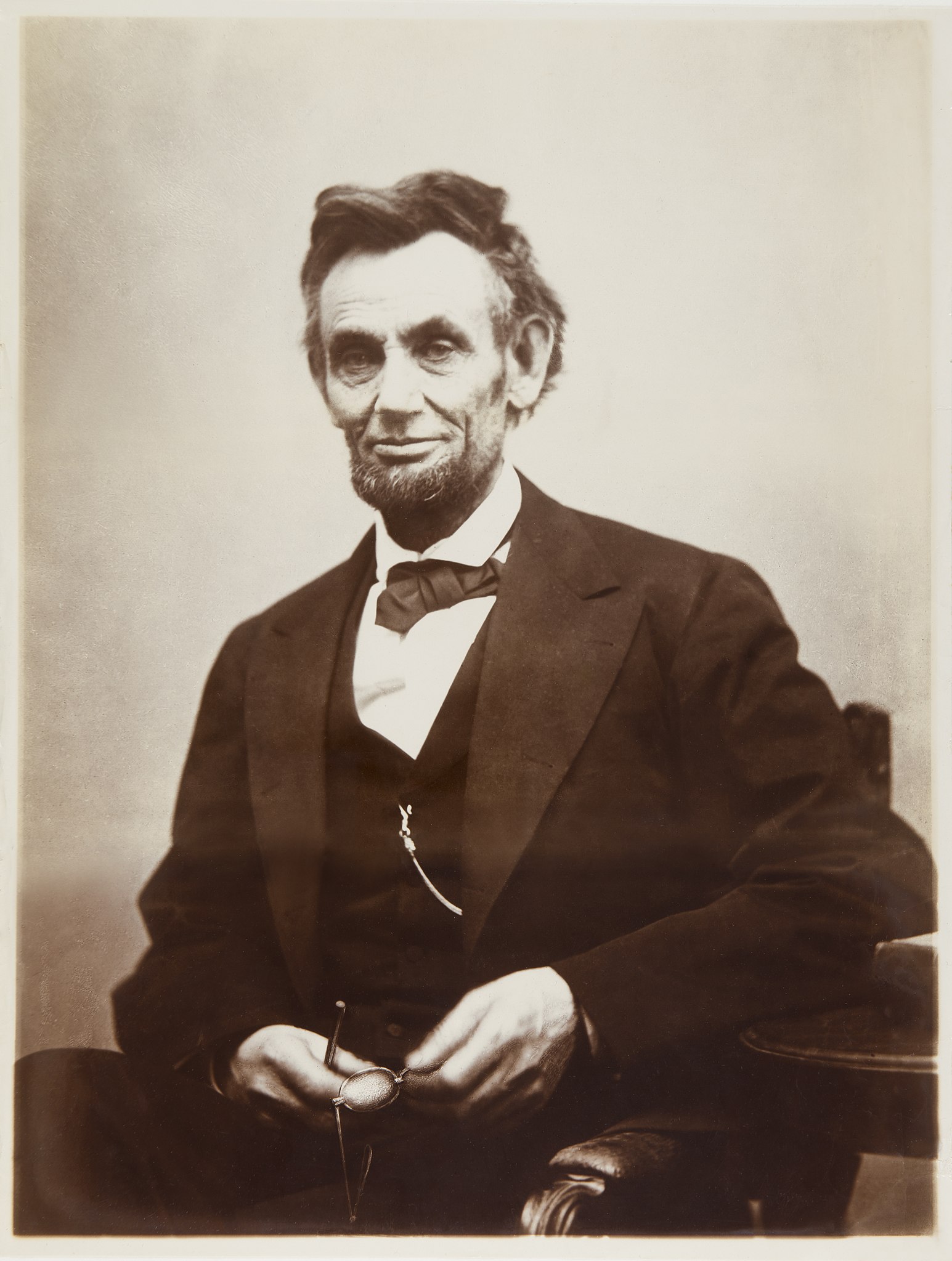
Photo of Abraham Lincoln by Alexander Gardner that was taken on February 5, 1865.
Image via Wikimedia Commons, public domain

1983 was a big year for music. Songs such as “Sweet Dreams (Are Made of This)” by the Eurythmics, “All Night Long (All Night)” by Lionel Richie, “Every Breath You Take” by The Police and “Tell Her About It” by Billy Joel were among the #1 songs that year. But it was on February 5, 1983 when “Africa” by American rock band Toto became the #1 song in the U.S.
Image via Alamy
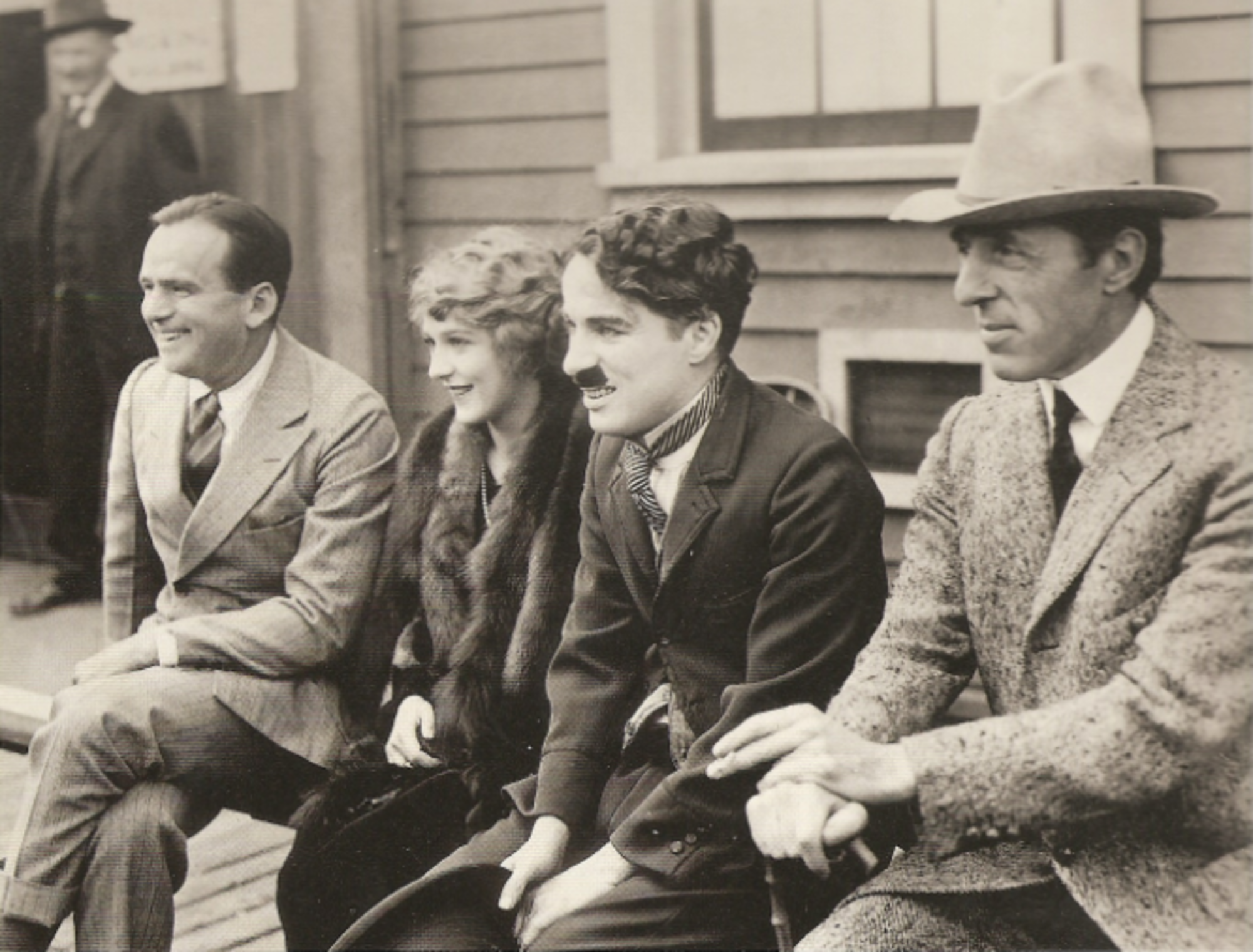
Photograph of Douglas Fairbanks, Mary Pickford, Charlie Chaplin and D.W. Griffith On February 5, 1919 they formed United Artists.
Image via Wikimedia Commons, no known copyright, public domain in the US.
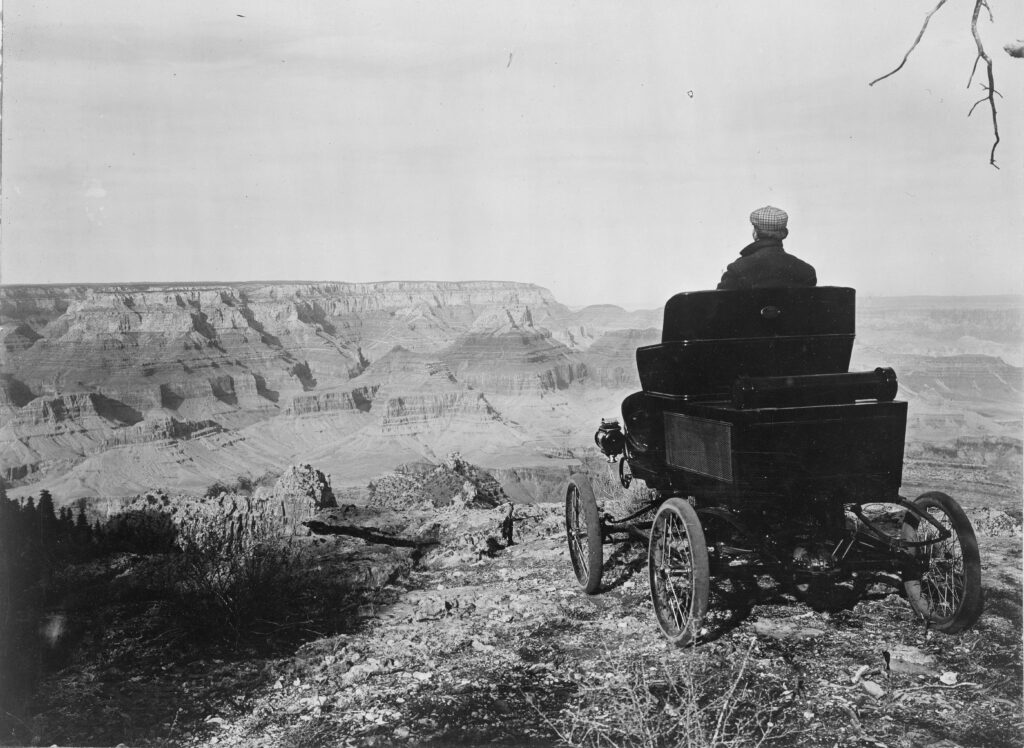
A member of the pioneer automobile party in a Toledo car at the rim of the Grand Canyon, Grand View Park, Arizona, Feb. 5, 1902
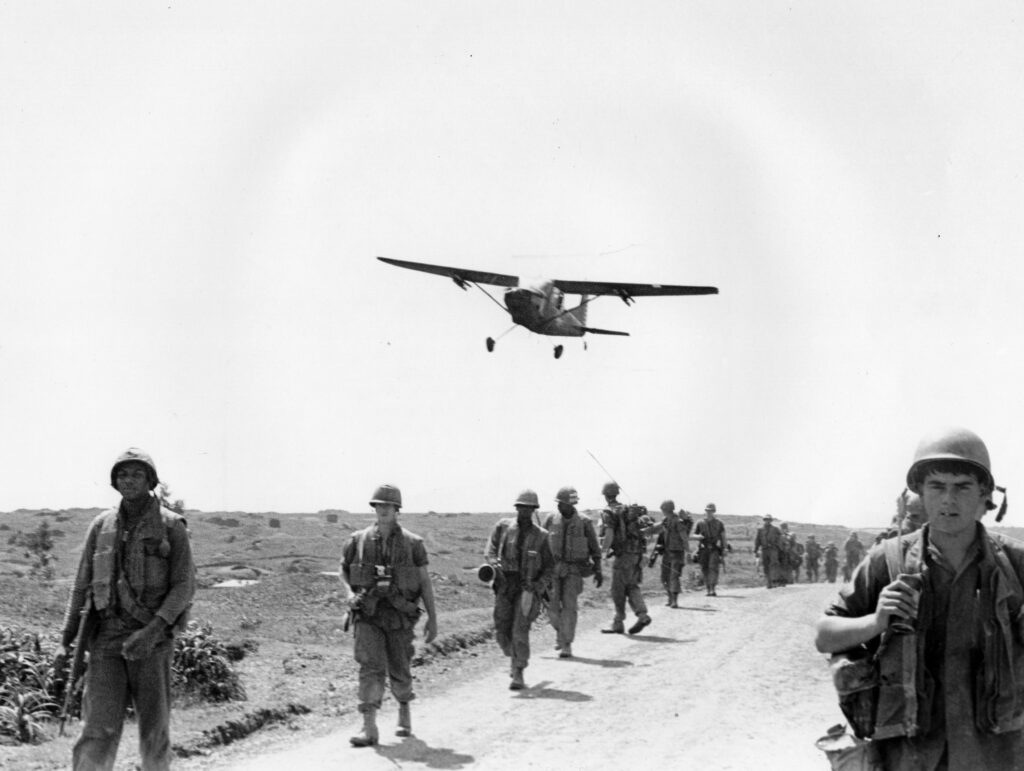
A low-flying omen over the Royal Tombs: An O-1 Bird Dog ghosts over Echo 2/9, scouting a silence that won’t last. They hunt in the shadows of ancient kings, unaware they are walking the very ground where, in one year’s time, the ancient soul of the empire will be torn apart in the streets of Hue.
2/5/1967
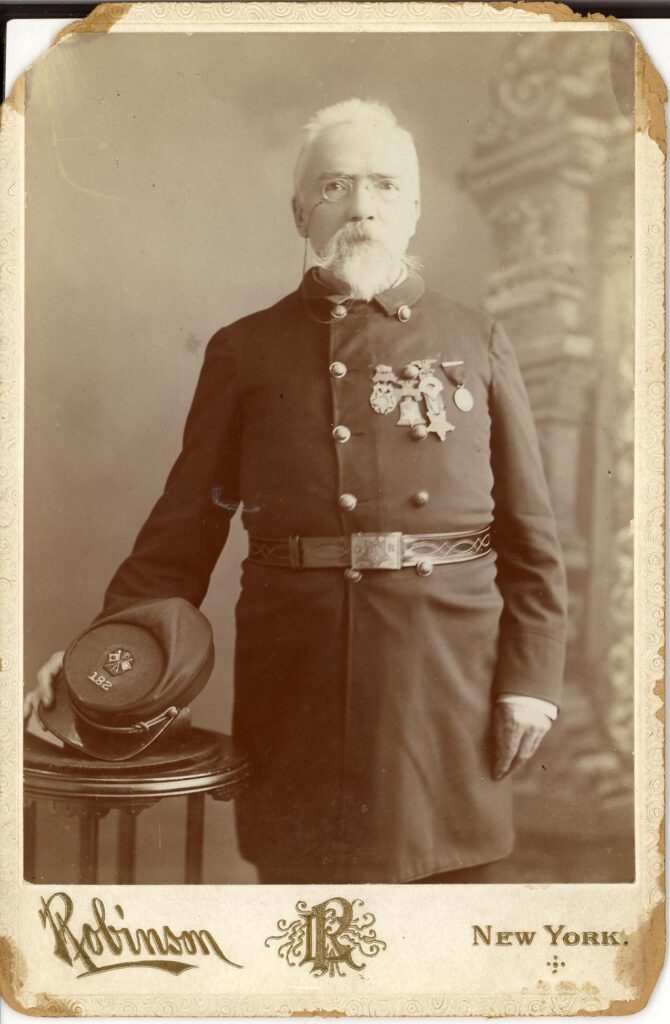
Thomas J. Kelly—remembered in Irish history as “Colonel Kelly”—carried two revolutions on his shoulders. Born in Galway and shaped by the Irish diaspora in America, he enlisted in the Union Army and served with the 10th Ohio Infantry, the Irish regiment known as “The Bloody Tenth.” Rising from sergeant to captain and later serving as Chief Signal Officer of the Army of the Cumberland, he fought through some of the Civil War’s hardest campaigns. A bullet that tore through his jaw and neck—an injury he later masked with a goatee—only strengthened his belief that oppressed people deserved a nation of their own.
That conviction returned him to Ireland’s underground struggle. As Chief Executive of the Irish Republican Brotherhood in 1867, Kelly was arrested in Manchester, only to be freed days later in the legendary “smashing of the van,” when Fenian supporters ambushed the police transport and accidentally killed Sergeant Charles Brett. While the Crown captured and executed the men involved—the Manchester Martyrs—Kelly himself slipped through the dragnet, evaded one of the largest manhunts in Victorian Britain, and escaped back to the United States. He lived out his remaining decades in New York, working at the Custom House until his death on February 5, 1908, a Union veteran and Fenian colonel who fought for liberty on both sides of the Atlantic.
