

The Pennsylvania Railroad (1846):
On April 13, 1846, The Pennsylvania Railroad received its charter.
Within a few decades, it became the world’s largest public company, often called the “Standard Railroad of the World.” It set the time of day for the entire country before time zones were standardized.
Image: The Pennsylvania Express c. 1905 via Wikimedia Commons, public domain
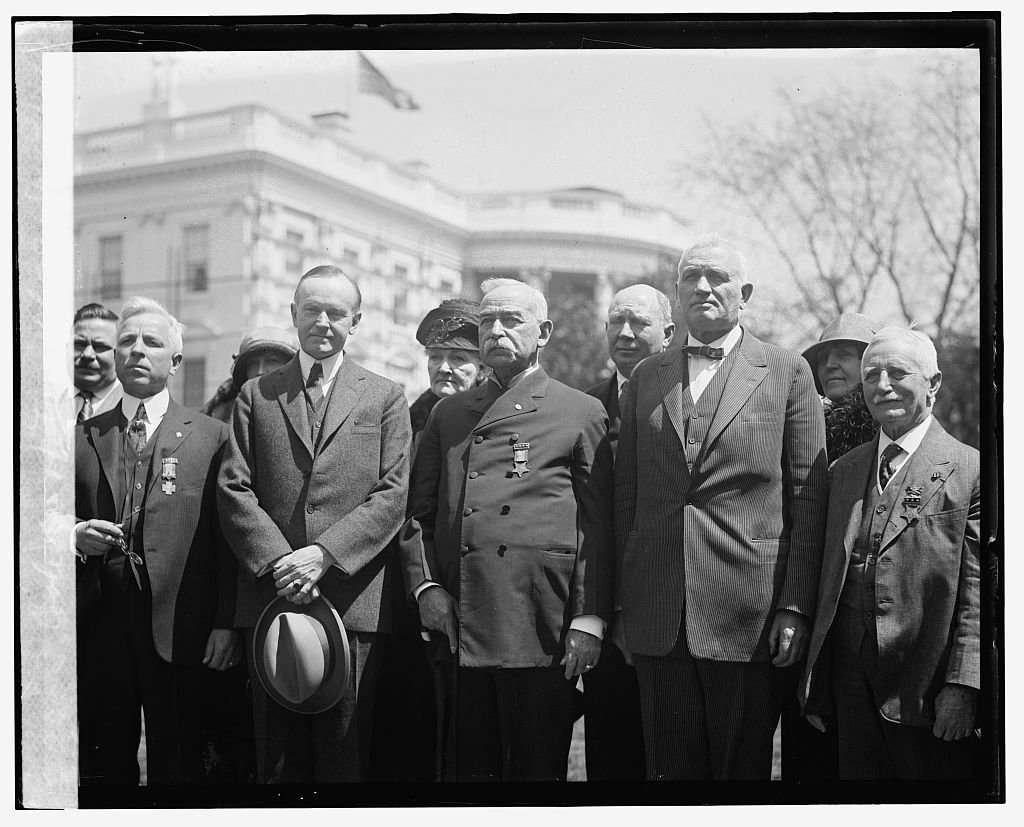
Coolidge & the Veterans (1924):
President Coolidge with Civil War & Spanish American War Veterans
April 13, 1924
This was the “Bonus Army” era. While Coolidge posed with these veterans, he vetoed the World War I Veterans’ Bonus bill a month later, though Congress overrode him. This shows the tension between public ceremony and private policy.
Image via Wikimedia Commons, public domain
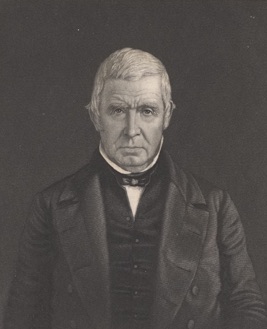
Eli Terry Sr. (1772):
Eli Terry Sr., the person responsible for making clocks more readily available and affordable through mass production in the U.S., was born on April 13, 1772 in East Windsor, Connecticut.
Before Terry, clocks were for the elite. He used water-powered machinery to cut wooden wheels, like a “Henry Ford moment” for timekeeping. This allowed many people to own a clock.
He also invented a milling machine for producing interchangeable parts.
Image via NYPL Digital Collections, no known restrictions
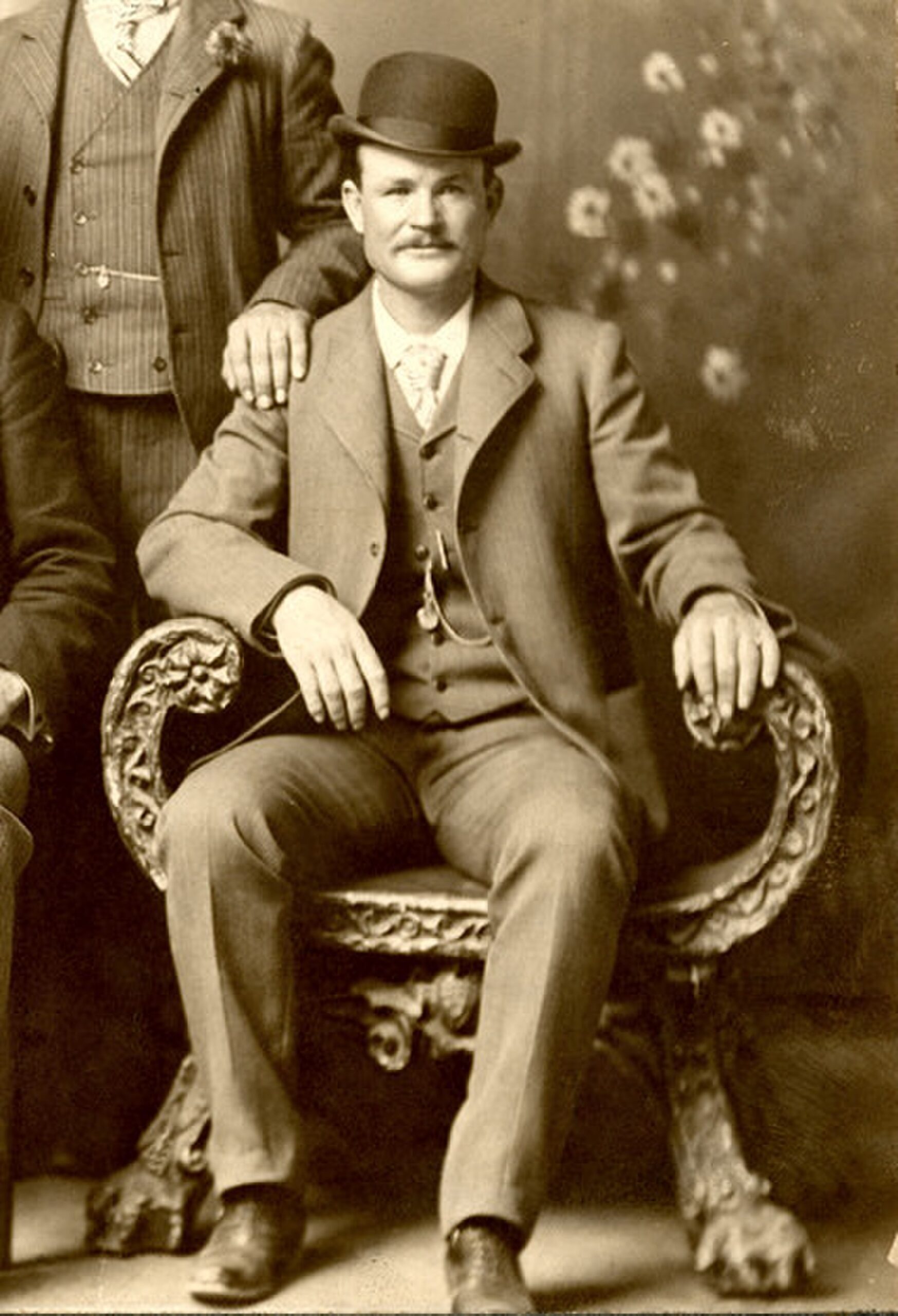
Butch Cassidy (1866):
Butch Cassidy was one of the names that Robert LeRoy Parker, born April 13, 1866, went by during his outlaw years. Riding with the Wild Bunch, he robbed trains and banks throughout the West. In the early 1900s he and Harry Longabaugh (The Sundance Kid) headed to South America and to an uncertain, legendary end.
Born Robert LeRoy Parker to a hardworking pioneer family, he adopted the name ‘Butch Cassidy’ specifically to protect his family’s reputation. He didn’t want his father’s honest name appearing on ‘Wanted’ posters, so he created a legendary persona to keep his two lives separate. He took his name from a mentor, Mike Cassidy.
Image via Wikimedia Commons, public domain in the US {PD-US}.
Phyllis Fraser (1916):
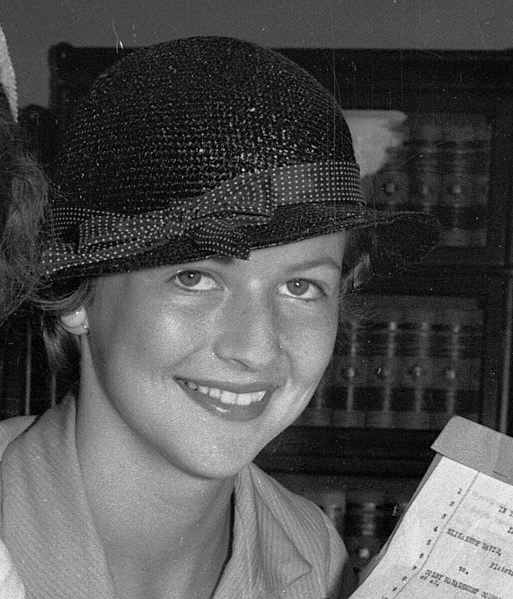
Former film star Phyllis Fraser, born April 13, 1916, married Random House publisher Bennett Cerf in 1940. She teamed up with Ted “Dr. Seuss” Geisel to found Beginner Books in 1957, producing the Cat in the Hat, Go, Dog. Go!, Green Eggs and Ham, the Berenstain Bears, and other classics – many of which YOU read, right?
She challenged Dr. Seuss to write The Cat in the Hat with a vocabulary of only 236 words—and changed how the world learned to read
Image via Wikimedia Commons, Los Angeles Times, CCA 4.0 International.
Bonnie & Clyde (1933):
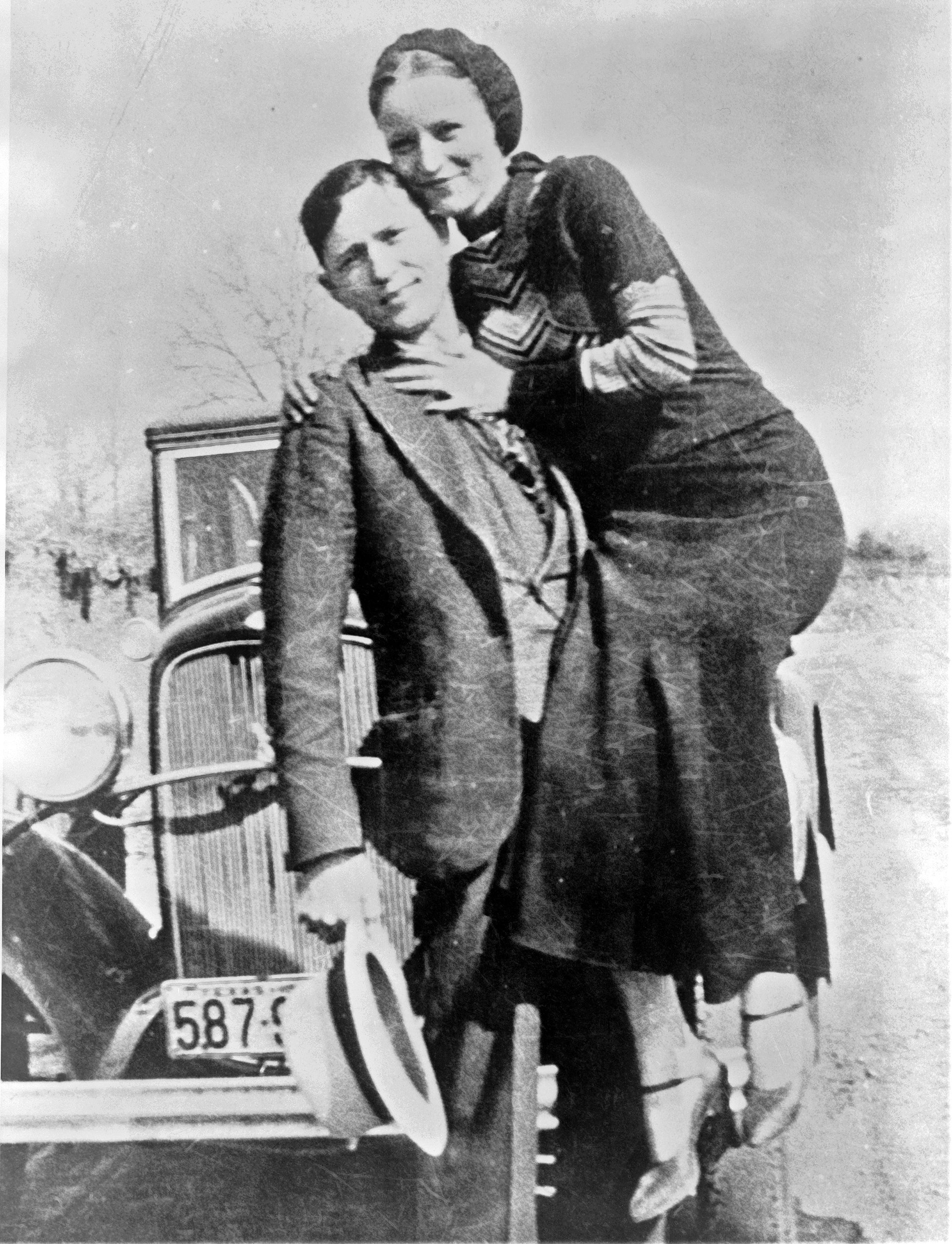
On April 13, 1933, the garage apartment of Bonnie & Clyde located at 3347+1⁄2 Oak Ridge Drive in Joplin, Newton County, Missouri was raided by police. Bonnie & Clyde survived the shootout while two officers were killed.
Despite their escape key evidence such as undeveloped photos and written items were discovered in the apartment that eventually helped lawmen track down the fugitives. The “undeveloped photos” were of Bonnie holding a shotgun and smoking a cigar. The police developed these images, turning them into international pop-culture outlaws overnight.
Image via Wikimedia Commons, public domain
A Soldier’s Watch: Columbus, Georgia
April 13, 1942
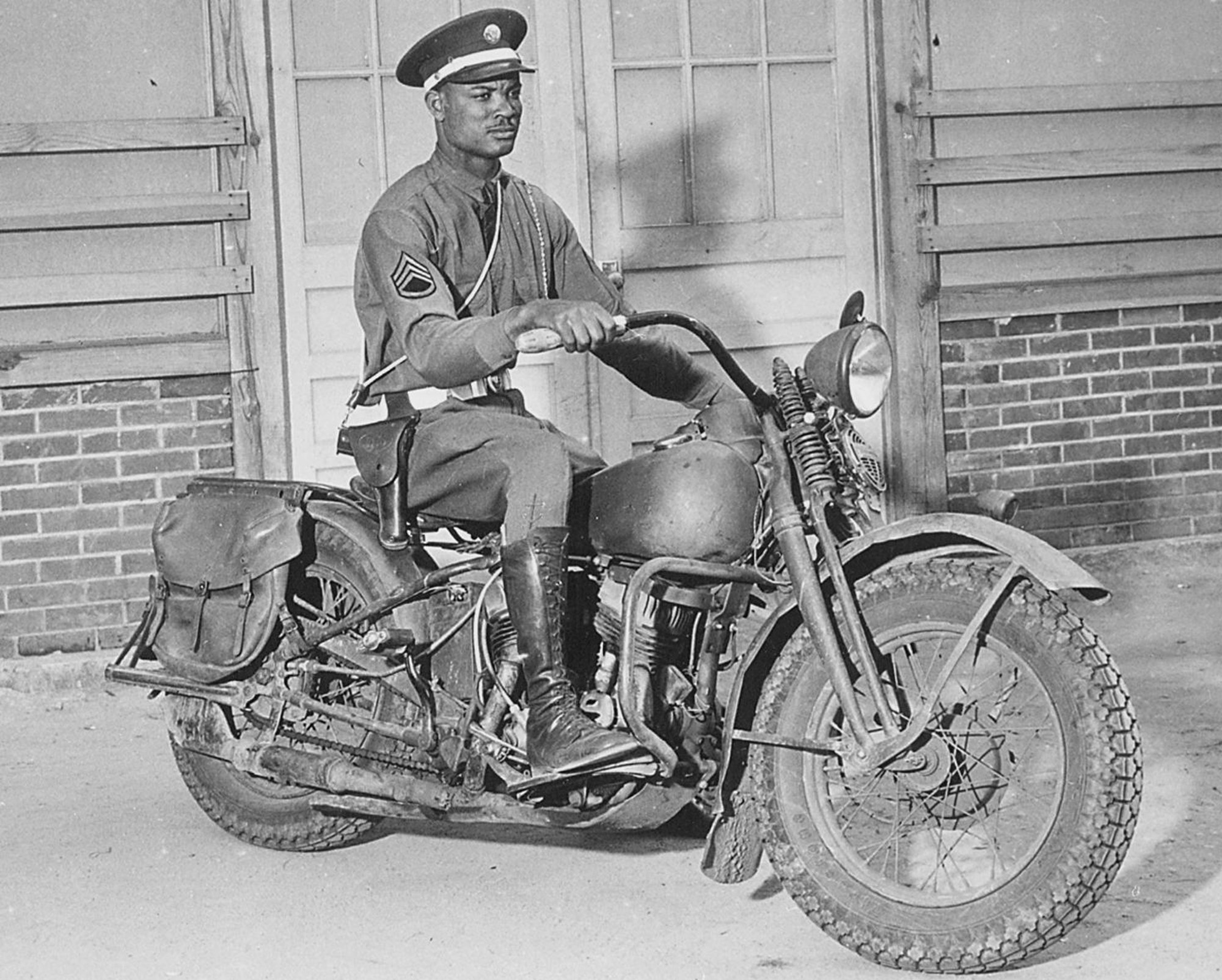
Staff Sergeant of the US Army Military Police at Columbus, Georgia, ready to answer all calls around his area.
On April 13, 1942, this Staff Sergeant of the US Army Military Police in Columbus, Georgia, was poised and ready to answer all calls around his area. At this time, Columbus was a booming “soldier town” struggling to keep up with the massive influx of troops at nearby Fort Benning just four months after Pearl Harbor. This image captures a poignant moment in a segregated military; the Sergeant is stationed in front of a sign designated “Military Police — Colored,” representing the dignity of Black soldiers who served a country that had not yet granted them full equality at home. Dressed in a sharp garrison cap and white MP gloves designed to make his hand signals visible to drivers at night, he served as a vital bridge between the civilian community and the thousands of young men preparing for global war.
Image from NARA via Wikimedia Commons, public domain
Thomas Jefferson (1743):
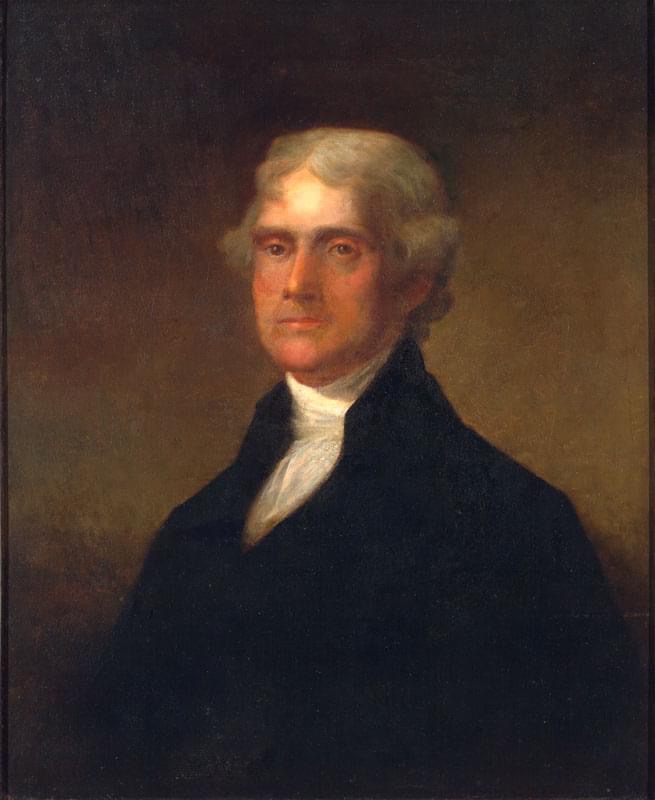
Thomas Jefferson was born on April 13, 1743 in
Shadwell, Virginia.
While he loved his “modest cottage,” he spent over 40 years rebuilding Monticello. He lived in a constant construction site because he couldn’t stop changing the design.
Quote: “I had rather be shut up in a very modest cottage with my books, my family and a few old friends, dining on simple bacon, and letting the world roll on as it liked, than to occupy the most splendid post, which any human power can give.”
Image of Thomas Jefferson via Wikimedia Commons, public domain
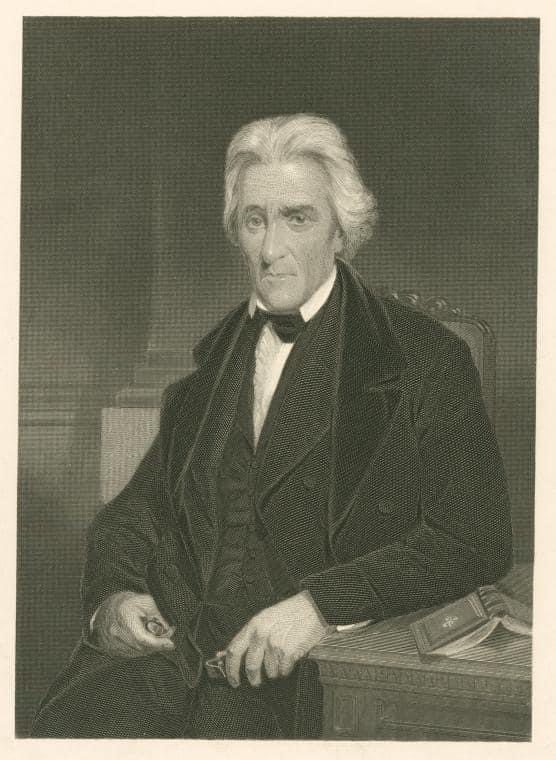
Andrew Jackson (1830):
What did President Andrew Jackson allegedly say on the evening of April 13, 1830 during a dinner to honor the late Thomas Jefferson on the 3rd US President’s birthday?
“Our Federal Union, it must be preserved”
Jackson looked John C. Calhoun straight in the eye. Calhoun’s hand trembled, spilling wine from his glass as he gave his rebuttal.
The words were mentioned by Jackson, a President from the South, just 31 years before the American Civil War.
Image: Engraving of Andrew Jackson via NYPL Digital Collections, no known restrictions
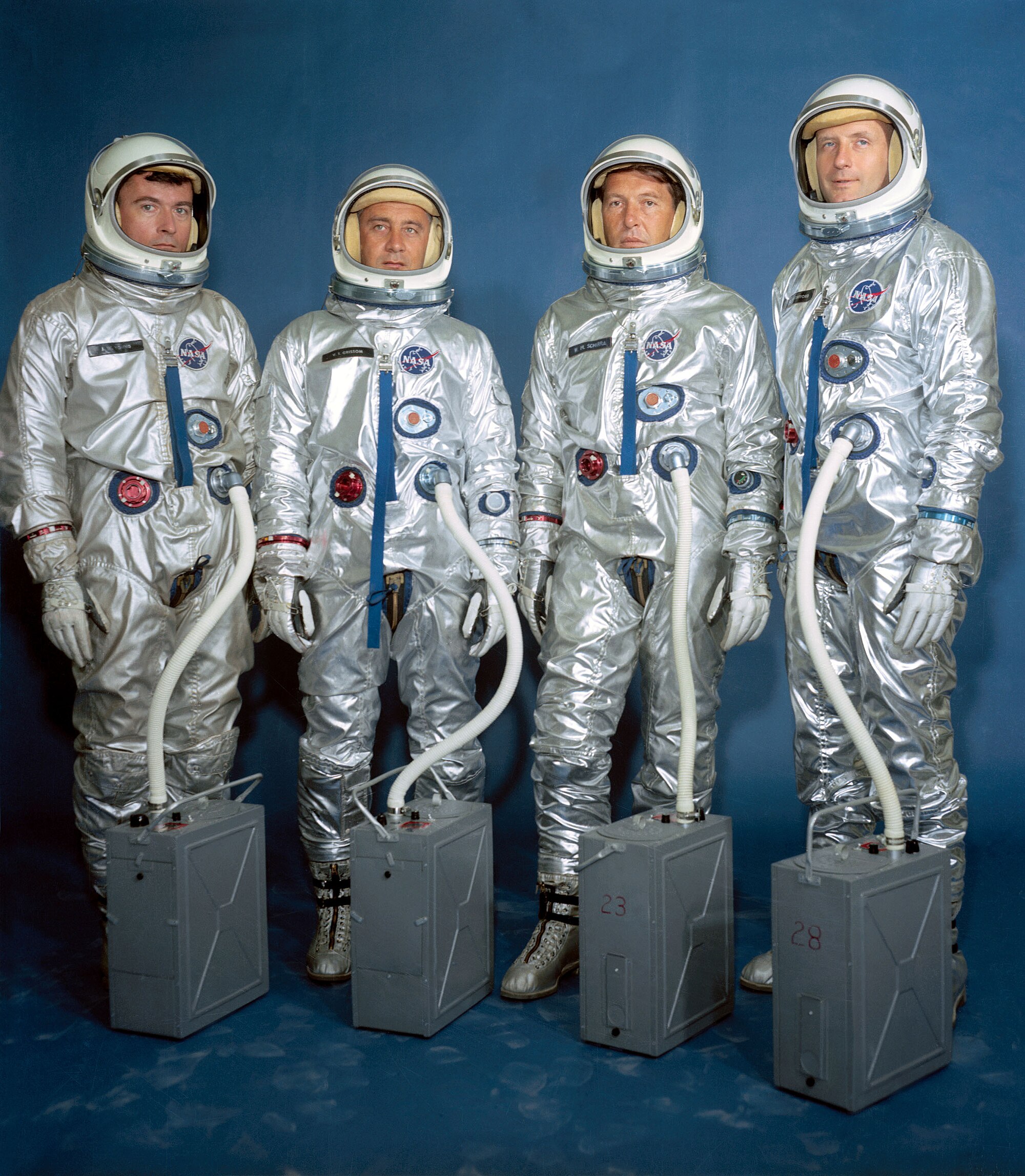
Gemini III (1964):
Prime crew and backup crew of Gemini III
Left to right are astronauts John W. Young, Virgil I. Grissom, Walter M. Schirra Jr. and Thomas P. Stafford.
Photo taken April 13, 1964.
During the flight, Gus Grissom smuggled a corned beef sandwich into the capsule. It was the first unauthorized meal in space, nearly causing a scandal because of the crumbs.
Image via Wikimedia Commons, public domain
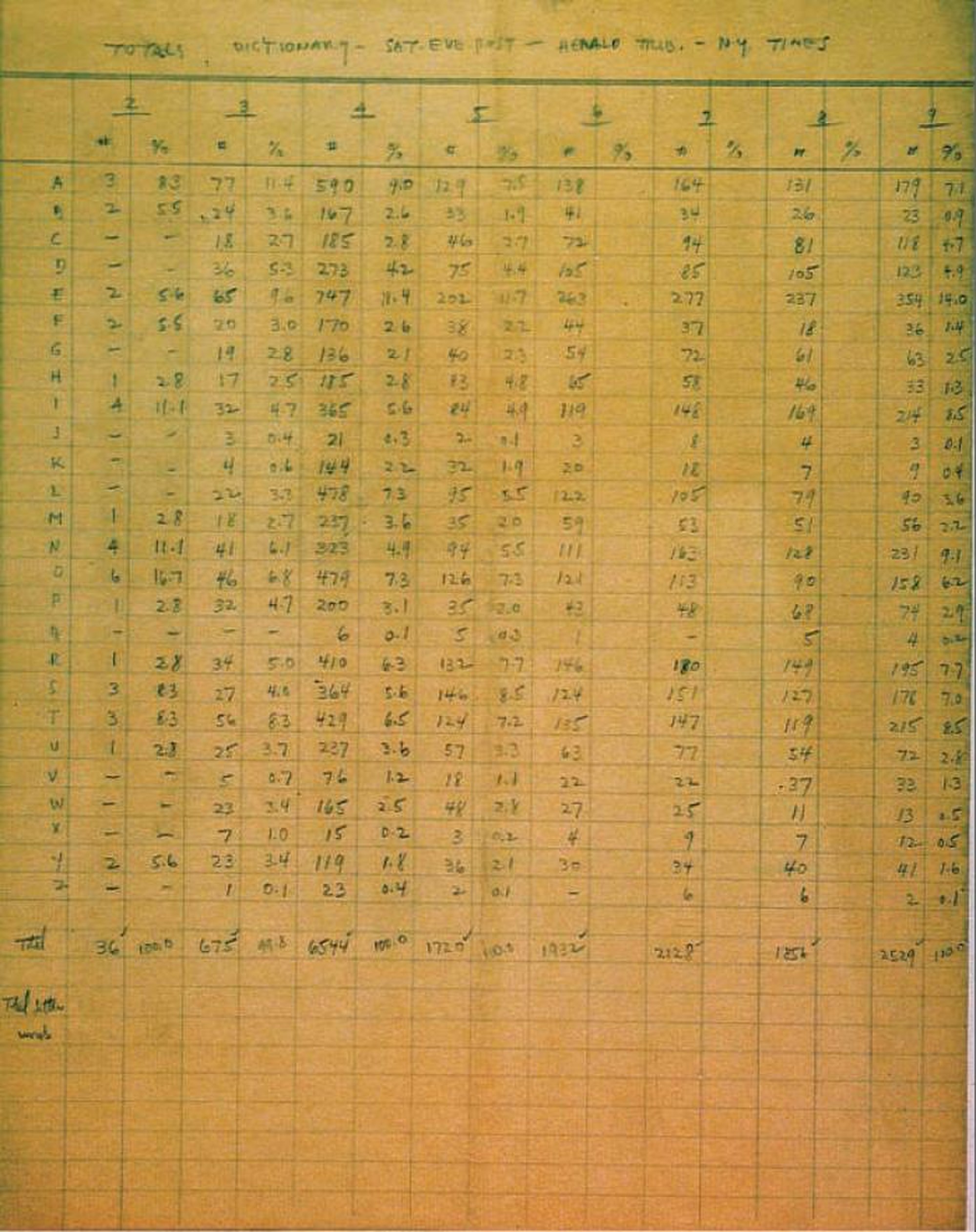
Scrabble (1899):
On today’s date, April 13, 1899, Alfred Mosher Butts, the inventor of the popular game Scrabble, was born in Poughkeepsie, New York.
Every game manufacturer rejected it. He only saw it become a hit because he partnered with a businessman who simplified the board and named it “Scrabble.”system used by Alfred Mosher Butts to determine the frequency of letters in words that he gathered from various newspapers and publications. Butts originally called the game “Lexiko” and then “Criss-Cross Words.”
Image via Wikimedia Commons, public domain
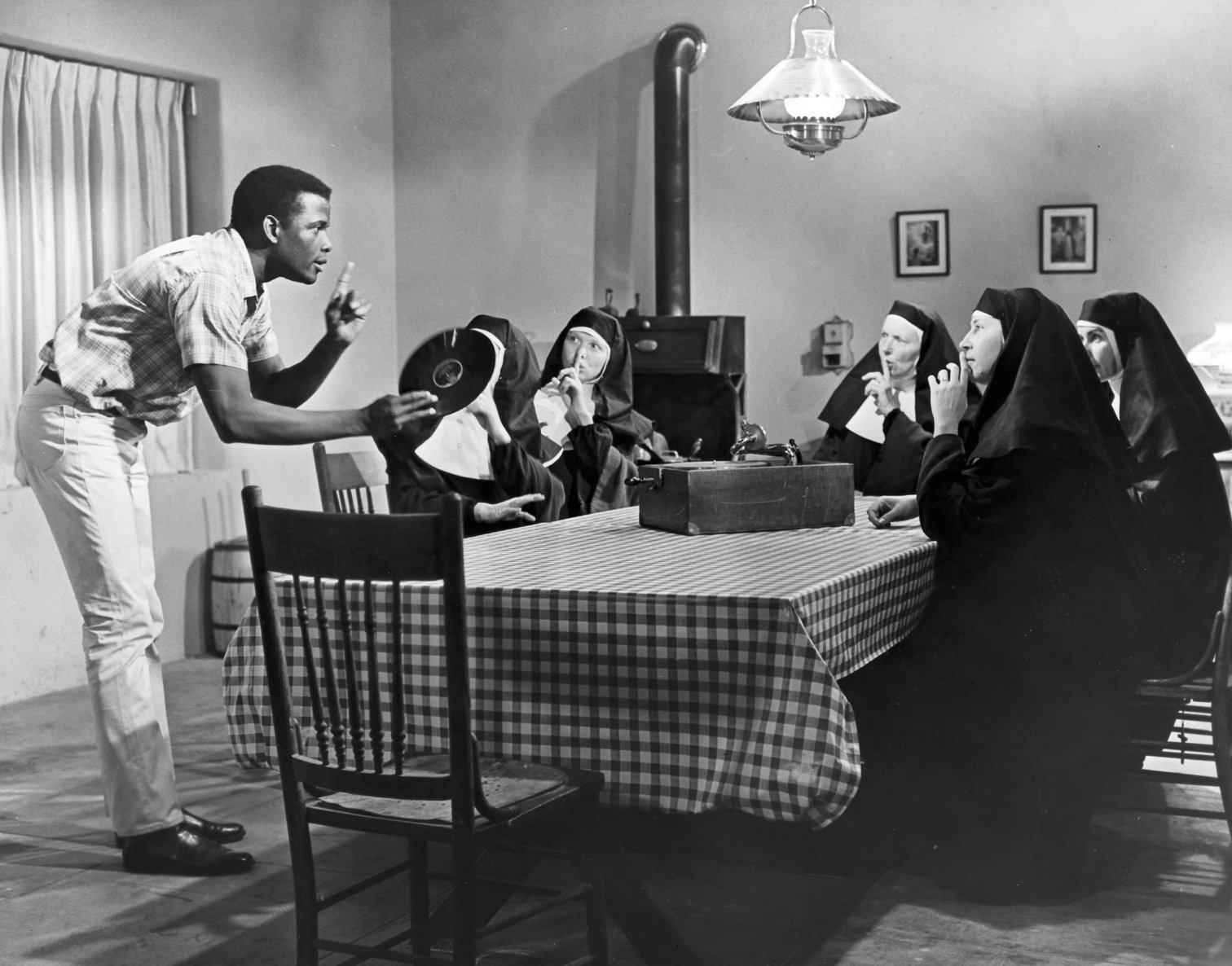
Sidney Poitier (1964):
On April 13, 1964, Sidney Poitier won an Academy Award for Best Actor for his portrayal of an unemployed construction worker who was inspired to build a chapel for European nuns in the Arizona desert in “Lillies of The Field”
Filming on location was completed in just 2 weeks.
He was the first Black man to win Best Actor. The “two weeks” of filming was done on a small budget. Poitier gave up his salary for a percentage of the profits.
Image via Alamy
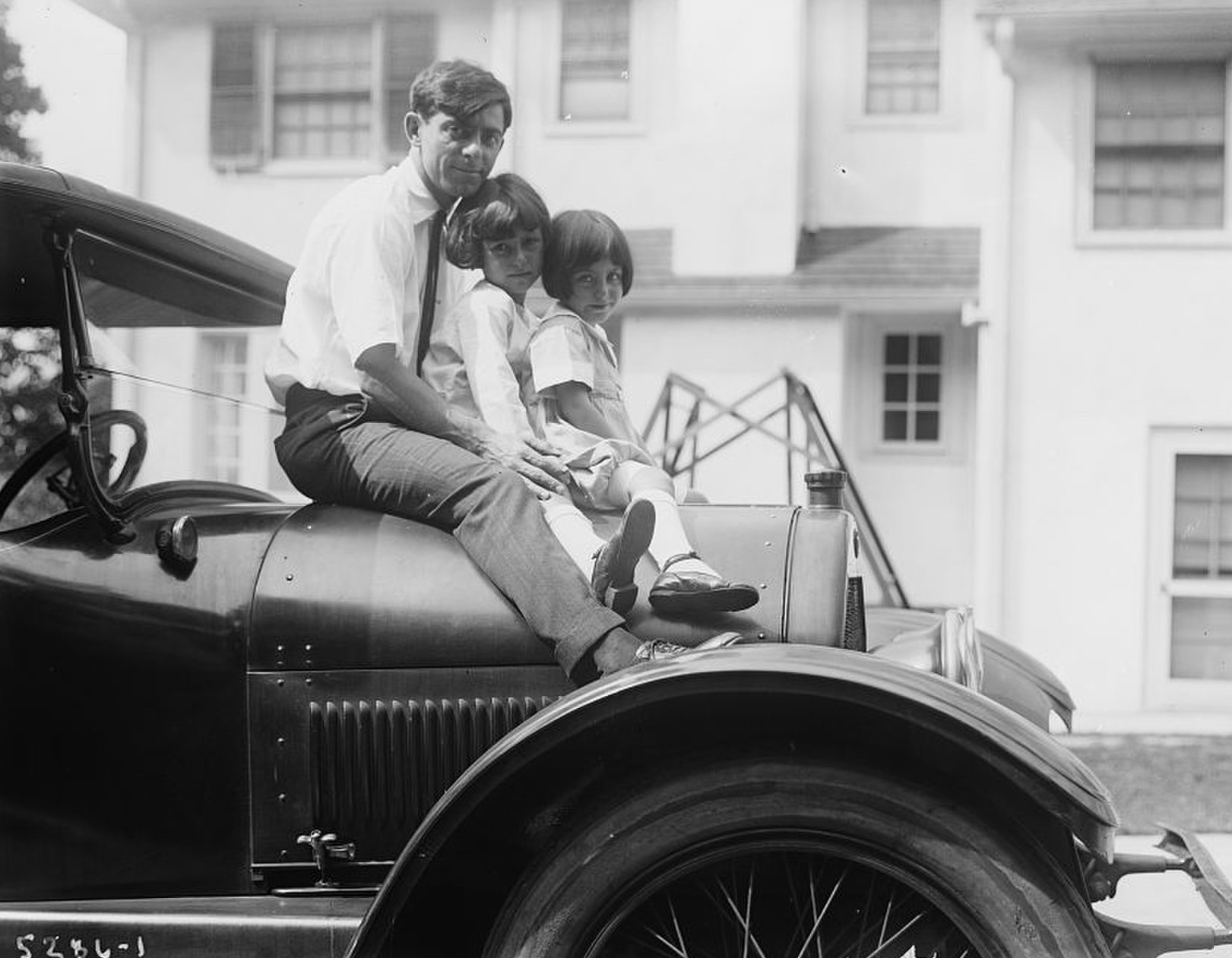
Eddie Cantor (1922):
On April 13, 1922, Eddie Cantor introduced the hit song “Yes! We Have No Bananas” during the musical revue “Make It Snappy” at the Winter Garden Theatre on Broadway.
The song “Yes! We Have No Bananas” was inspired by a Greek fruit seller in Long Island who spoke that exact phrase. It became a hit, providing a laugh after WWI.
Image: American entertainer Eddie Cantor with two of his daughters Marjorie (middle) and Natalie (right) sitting on the hood of a car in the early 1920s.
via LOC, no known restrictions
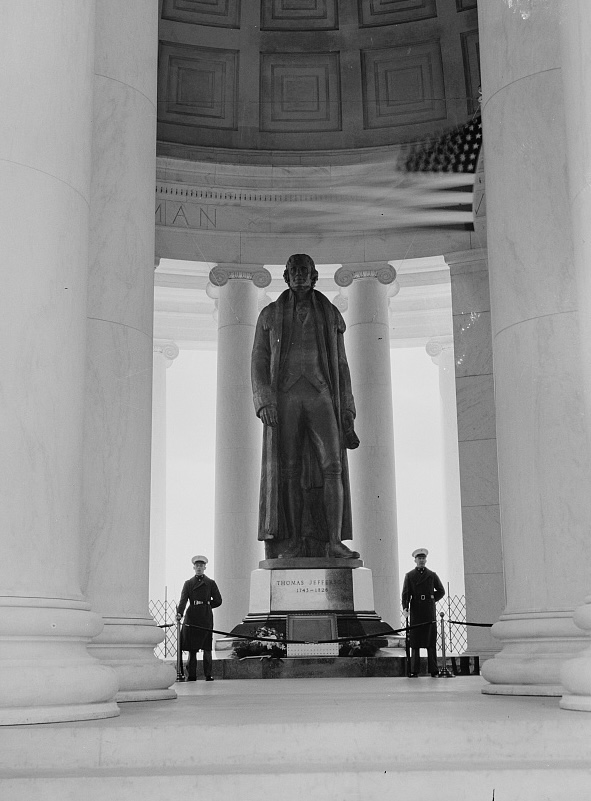
Jefferson Memorial (1943):
Jefferson Memorial. Within the rotunda of the Jefferson Memorial in Washington, D.C., stands a striking nineteen-foot statue of America’s third president. To commemorate the bicentennial anniversary of Thomas Jefferson’s birth on April 13, 1943, a Marine Honor Guard stands watch at its base, where the original Declaration of Independence has been placed. The statue, created by sculptor Rudolph Evans, is made of plaster of Paris and will be cast in bronze after the war.
Because of metal shortages, the “bronze” statue was plaster painted to look like bronze. The 19-foot bronze version wasn’t installed until 1947, four years after the dedication.
On this day in 1943, President Franklin D. Roosevelt presided over the dedication ceremony, delivering a powerful address to mark Jefferson’s bicentennial and reaffirm his ideals of liberty and democracy.
Image via LOC, no known restrictions
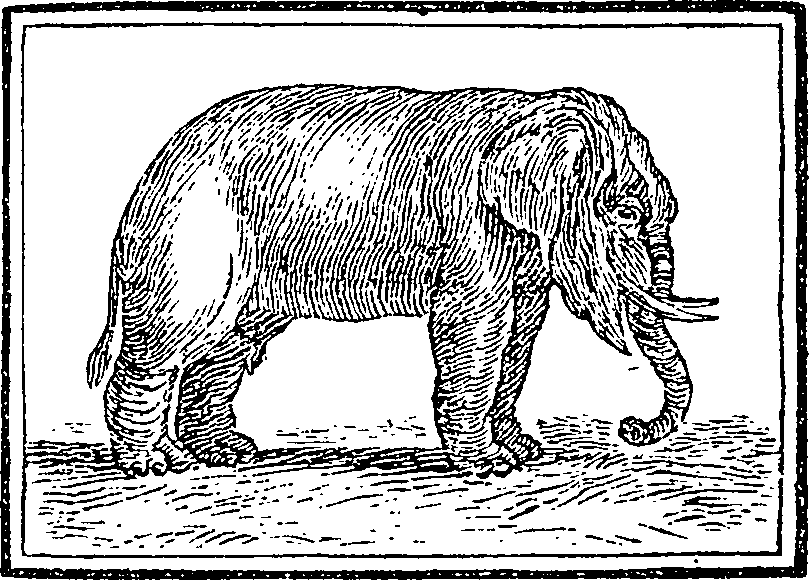
April 13, 1796: The Day America Met Its First Elephant
On this day in history, the ship America docked in New York Harbor, carrying a passenger unlike any the young nation had ever seen. Purchased in Bengal for $450 by Captain Jacob Crowninshield, this unnamed two-year-old Asian elephant became an overnight sensation.
She wasn’t just a sight to behold; she was a performer. During her years touring the East Coast, she famously amazed crowds by using her trunk to uncork and drink bottles of beer—a “party trick” that made her the original American celebrity. From being visited by George Washington to sold for a staggering $10,000, her arrival marked the very beginning of the country’s fascination with exotic animals.
History is often “elephant-sized,” and it all started with one curious voyage from India to the shores of Manhattan.
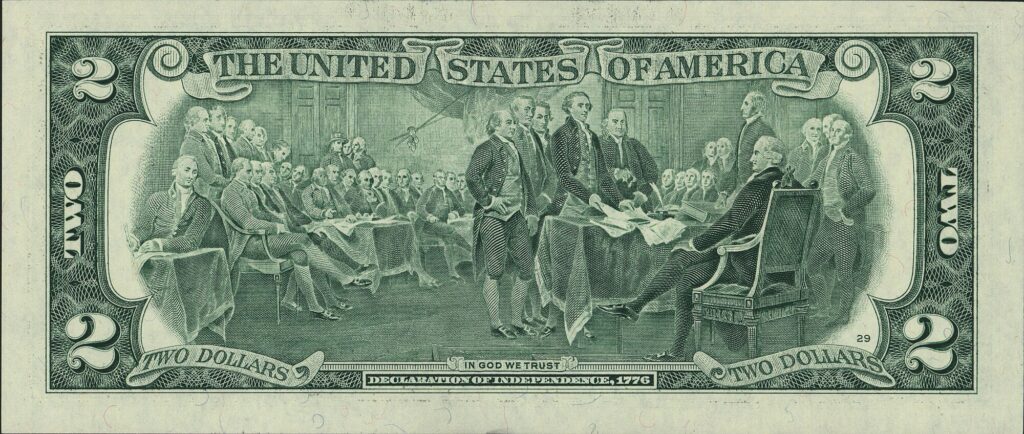
Reverse of the Series 1976 Two‑Dollar Bill
When the two‑dollar bill returned to circulation on April 13, 1976—deliberately timed to coincide with Thomas Jefferson’s 233rd birthday—its reverse unveiled a new national icon: an engraved adaptation of John Trumbull’s 1818 painting The Declaration of Independence. The redesign replaced the Monticello vignette used since 1928 and became one of the most ambitious engravings ever attempted on U.S. currency.
A “Living Document” in Americans’ Hands
The Bicentennial release sparked an unexpected tradition. Across the country, people carried their crisp new $2 bills to local post offices to have them canceled with a postage stamp dated April 13. These “First Day of Issue” hybrids—part currency, part philatelic artifact—became instant collectibles, each one a small, hand‑stamped record of the nation’s 200th year.
The Edited‑Out Delegates
Trumbull’s original canvas included 47 figures, far too many for the banknote’s dimensions. Engravers removed five men—not for political reasons, but for spatial clarity. Among those omitted were:
- George Wythe, William Whipple, Josiah Bartlett, and Thomas Lynch Jr. (far left of the painting)
- Thomas McKean and Philip Livingston (far right)
- George Walton, one of the rear seated figures
The resulting 42‑figure composition preserved the painting’s core drama while remaining legible at pocket scale.
Quiet Corrections and Hidden Details
- The Foot Controversy: In Trumbull’s painting, Jefferson’s foot appears to overlap Adams’s—a detail long interpreted as symbolic tension. The engraving subtly corrected this by separating the feet.
- The Wrong Room: Trumbull depicted the Committee of Five presenting their draft on June 28, 1776, not the signing on July 4. The bill therefore shows a moment of debate, not the act of signing.
A Tradition That Outlived the Bicentennial
The bill’s cultural afterlife continues. At Clemson University, fans still bring $2 bills stamped with an orange tiger paw to away games—a tradition begun in 1977 to demonstrate the economic impact of traveling supporters. What began as a Bicentennial novelty became a regional ritual of pride.
