May 27 - Heartfelt History™

On This Day In American History

May 27

Loading posts…
Now viewing: May
1 2 3 4 5 6 7 8 9 10 11 12 13 14 15 16 17 18 19 20 21 22 23 24 25 26 27 28 29 30 31
Pick a Day 🔺

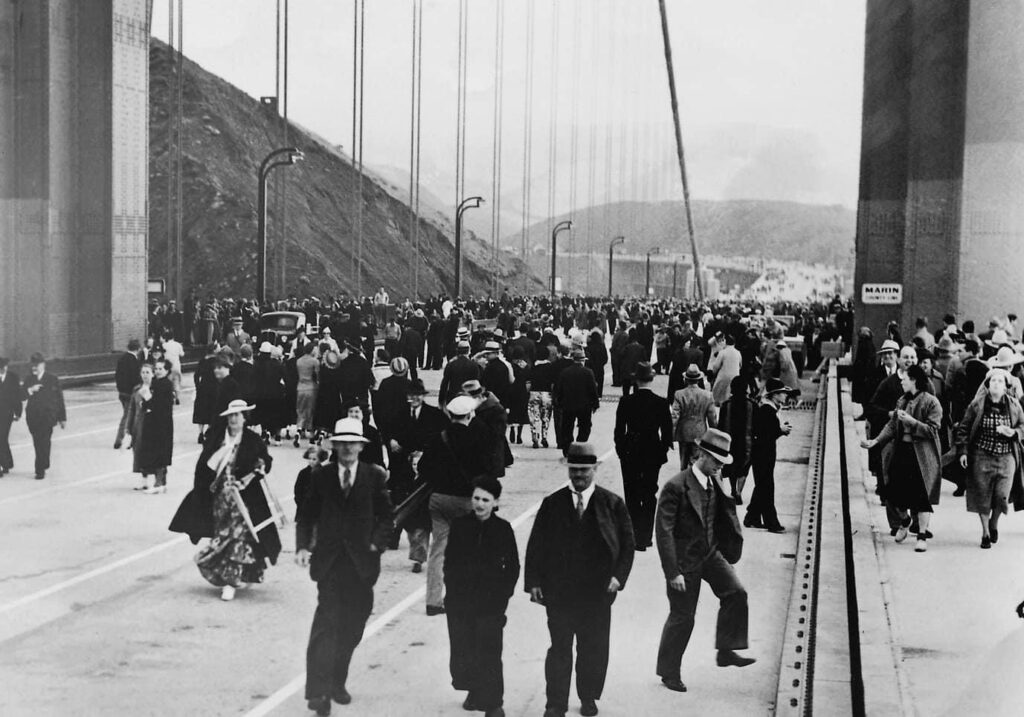
On May 27, 1937, the Golden Gate Bridge in San Francisco, California was opened to pedestrian traffic.

Image: Pedestrians walking on the Golden Gate Bridge in 1937 via Alamy


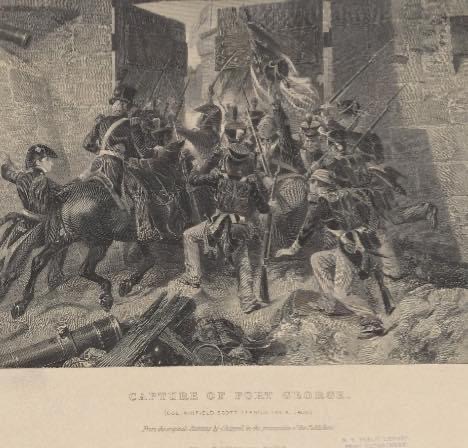
“Capture of Fort George. (Col. Winfield Scott leading the attack)”

May 27, 1813

“Scott was not long in being exchanged after his capture, and in May, 1813, joined the army at Niagara, with the titular rank of Adjutant-General. On the 27th of that month he participated in the attack on Fort George, leading the forlorn hope, and scaling the bank on landing, in face of the enemy’s bayonets. When the fort fell he hauled down the British flag with his own hands. He afterwards pursued the enemy for several miles, and would probably have captured most of the fugitives, but that he was recalled by his superior, General Boyd, at the very moment he had overtaken the British rear. Scott could not conceal his chagrin. He had already neglected two successive orders sent him to return, saying to the messengers, “Your General does not know I have the enemy in my power; in twenty minutes I shall capture his whole force.”

From: The military heroes of the war of 1812:
by Charles Peterson, published in 1858
https://archive.org/details/militaryheroesof00pete/page/214
Source says not in copyright

Image: The Miriam and Ira D. Wallach Division of Art, Prints and Photographs: Print Collection, The New York Public Library. New York Public Library Digital Collections.


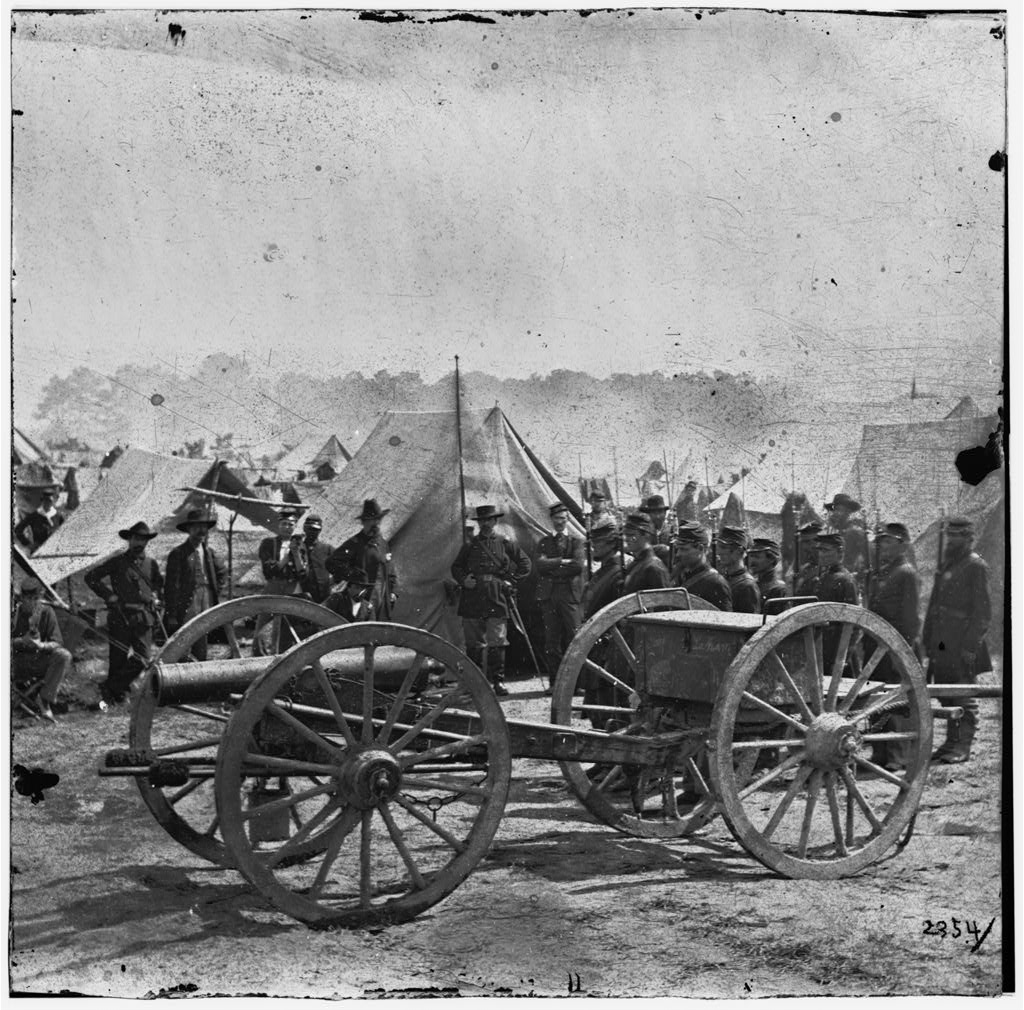
The Peninsula, Va. A 12-pdr. howitzer gun captured by Butterfield’s Brigade near Hanover Court House, May 27, 1862

via LOC, no known restrictions


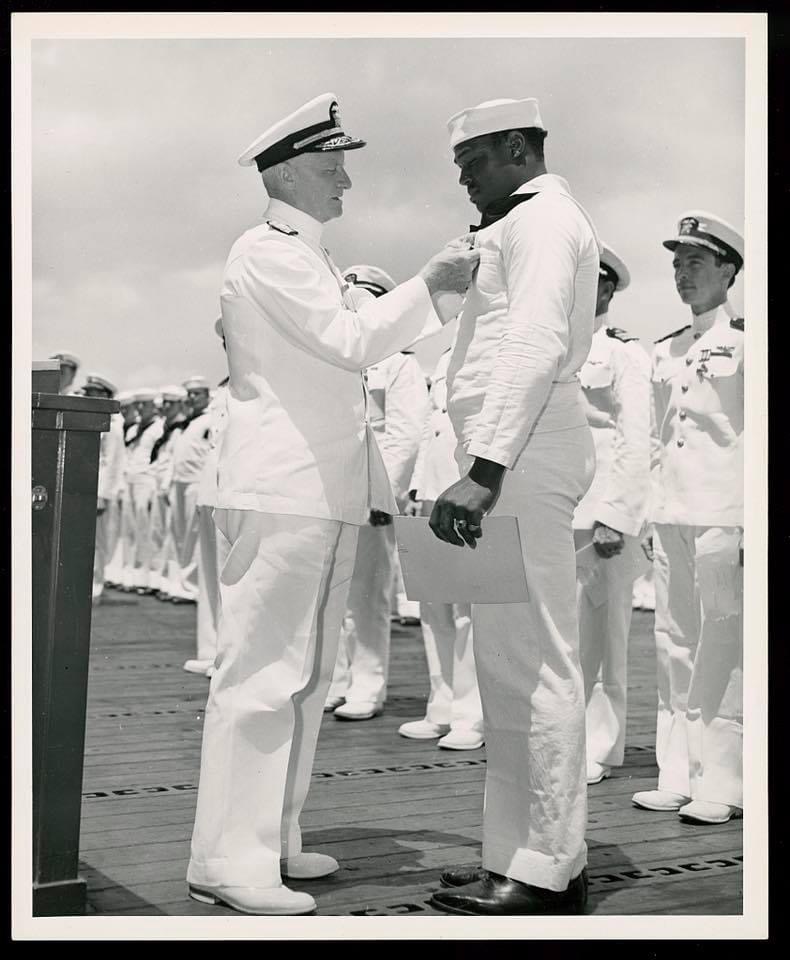
“Admiral Chester W. Nimitz, USN, Commander-in-Chief, Pacific Fleet, pins the Navy Cross on Doris Miller, Steward’s Mate 1/c, USN, at a ceremony on board a U.S. Navy warship in Pearl Harbor, T.H., May 27, 1942”

Image via LOC, no known restrictions


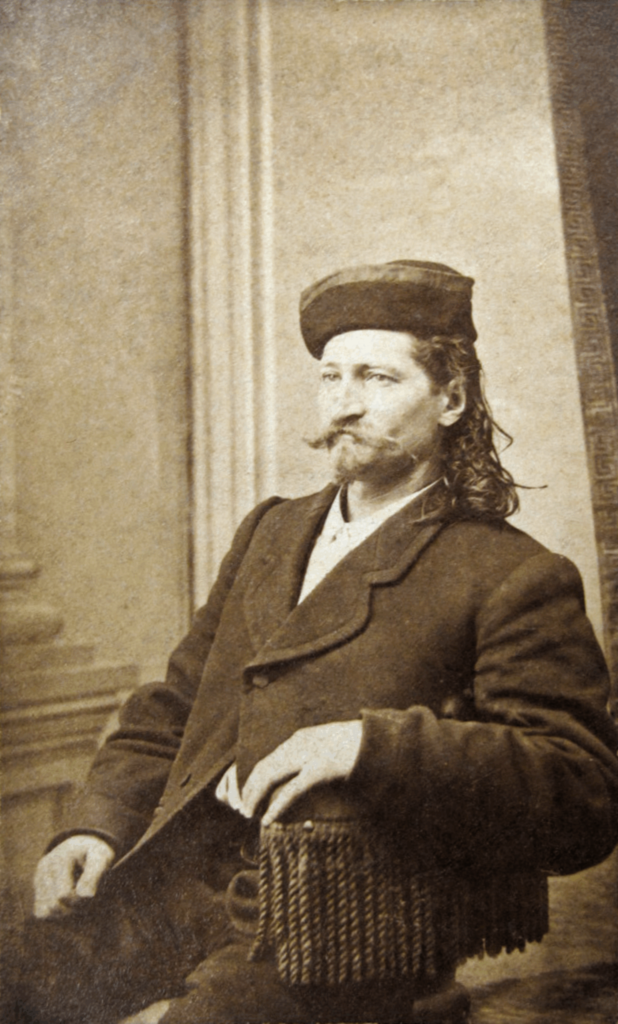
James Butler “Wild Bill” Hickok was born on May 27, 1837 in LaSalle County, Illinois.

“On the evening of the second day after Bill’s arrival in Chicago, in the company of his friend Baldwin, he went into the billiard hall that was attached to the St. James hotel. Being dressed in the genuine garb of a frontiersman, buckskin clothes trimmed with leather fringe, he naturally attracted much attention everywhere on the streets, but at no place did the curiosity of Chicagoans display itself so much as in the billiard hall ; men actually left off in the midst of their games to gaze inquiringly at the singular stranger, and Bill soon found himself the cynosure of all eyes. Among those who made up the crowd in the saloon were seven compatriots of hoodlumism, fellows whose airy tongues, swaggering style, and noses bedizened with the torch-light of whisky’s ensign, indicated plainly their belligerent and crime loving proclivities. They fixed their gaze on Bill with curious interest until the seven concluded it would afford them much satisfaction and redound no little to their reputation to give the stranger a severe threshing — just by way of illustrating how tame Chicago boys could handle the wild plainsman. In order to introduce the social affray one of the party accosted Bill in the following manner : “Say, you, leather breeches, where did you come from?”

“I came from a section of country where everybody minds his own business, a place you never saw,” responded Bill.

“Why, the Indian scalper is a little sharp ; but there are some feathers in his wings that ought to be cut,” another of the roughs suggested.

To this second insult Bill paid no attention because he anticipated the object of the crowd and was anxious to avoid trouble.

A third one, however, considering his turn had come to say something witty, addressed Bill : “I suppose that everybody in your country dresses in raw-hide and washes every morning in a pot of fresh blood ; ain’t that so, Wild-Bull-of-the-Woods? ”

“Well, a country of that kind is better than the one you came from, where there isn’t a fellow who knows his own father,” replied Bill.

This cutting rebuke created a perfect tempest among the irascible hoodlums. Another quickly walked toward Bill and fairly spit out between his teeth the inquiry : “Do you mean to say that our mothers are not honest women?”

“I mean,” answered Bill, “if they are it was d — d bad business they got into when you were begotten.”

The words were scarcely out of his mouth before the bullies gathered billiard cues and assailed Bill with an expressed determination to take his scalp in a manner peculiar to the lake-side city. Although still lame and sore from the wounds in his hip and arm, Bill forgot these in the fight which ensued. In a second he had grabbed a cue, which was as quickly broken convenient to his hand, and then the trouble became at once very serious. The fight, in fact, was a counterpart of Gilhooley’s affair at Tim Finnigan’s wake, when a shillalah was worth a crown a second. Baldwin, Bill’s friend, was, of course, engaged and did splendid service as a reserve, wielding a cue with much dexterity. Bill was struck several times on the head and arms, one of the strokes cutting a long, deep gash in his forehead, but he fought with the same cool desperation which had brought him so much glory and a decisive victory at Rock Creek. At the end of ten minutes the seven Chicago braggarts were extended on the floor, each nursing bruises and cuts the evidence of whicli will abide with them through life. They had thoroughly interviewed “leather breeches” and definitely determined the product of that queer country from whence the stranger had come. They each felt like the little barefooted boy who delivered a vicious kick at an old plug hat only to find that under it were purposely concealed three big bricks. Bill returned to Troy Grove on the following morn with his head well bandaged, wearing painful mement of his Chicago visit.“

From: Heroes of the plains, or, Lives and wonderful adventures of Wild Bill, Buffalo Bill, Kit Carson, Capt. Payne, Capt. Jack, Texas Jack, California Joe, and other celebrated Indian fighters, scouts, hunters and guides : including a true and thrilling history of Gen. Custer’s famous “last fight” on the Little Big Horn, with Sitting Bull

Source says not in copyright:
https://archive.org/details/heroesofplains00buel/page/104/mode/1up


American actor Vincent Price was born on May 27, 1911 in St. Louis, Missouri.

He was a man of many talents.
Between the late 1950s-late 1970s he wrote at least 8 books. One of his books, “The Vincent Price Treasury of American Art” reviews various fine art paintings throughout the history of The United States.

Image: Vincent Price in 1959 via Wikimedia Commons, public domain


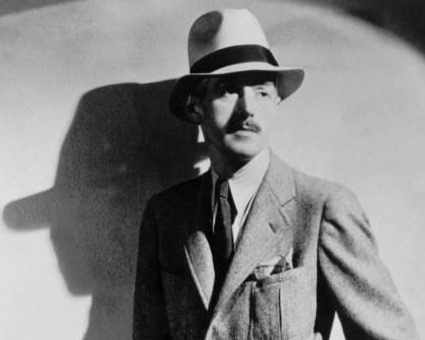
Born May 27, 1894 author Samuel Dashiell Hammett was called “The dean of the ‘hard-boiled’ school of detective fiction. “ A veteran of both world wars, Hammett created memorable characters like Sam Spade of “The Maltese Falcon” fame and Nick and Nora Charles of “The Thin Man” series.

Image via Wikimedia Commons, public domain in the US.


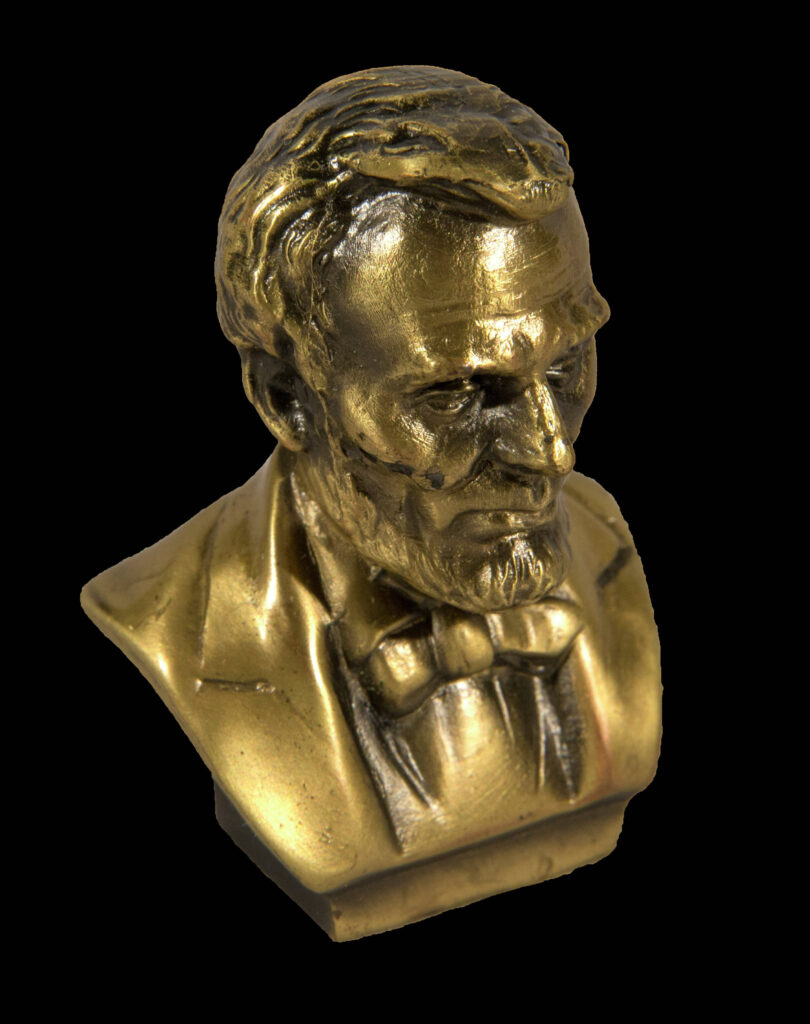
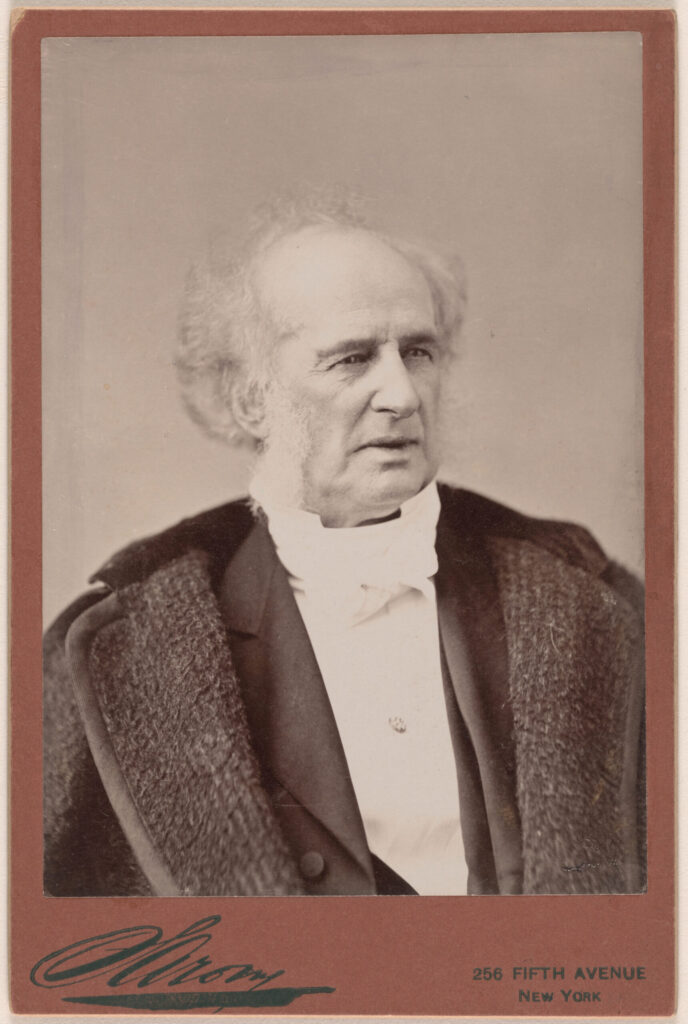
American railroad tycoon Cornelius Vanderbilt, one of the wealthiest men in American history, controlled 13 railroad companies with lines that covered a vast area between New York and Chicago by the 1870s.

He was born on May 27, 1794 in Staten Island, New York.

During the American Civil War he donated his own ship “The Vanderbilt” to the Union Navy.
For this he was awarded a Congressional Gold Medal.

Vanderbilt University in Nashville, Tennessee is named in his honor.

Image: National Portrait Gallery, Smithsonian Institution c. 1870


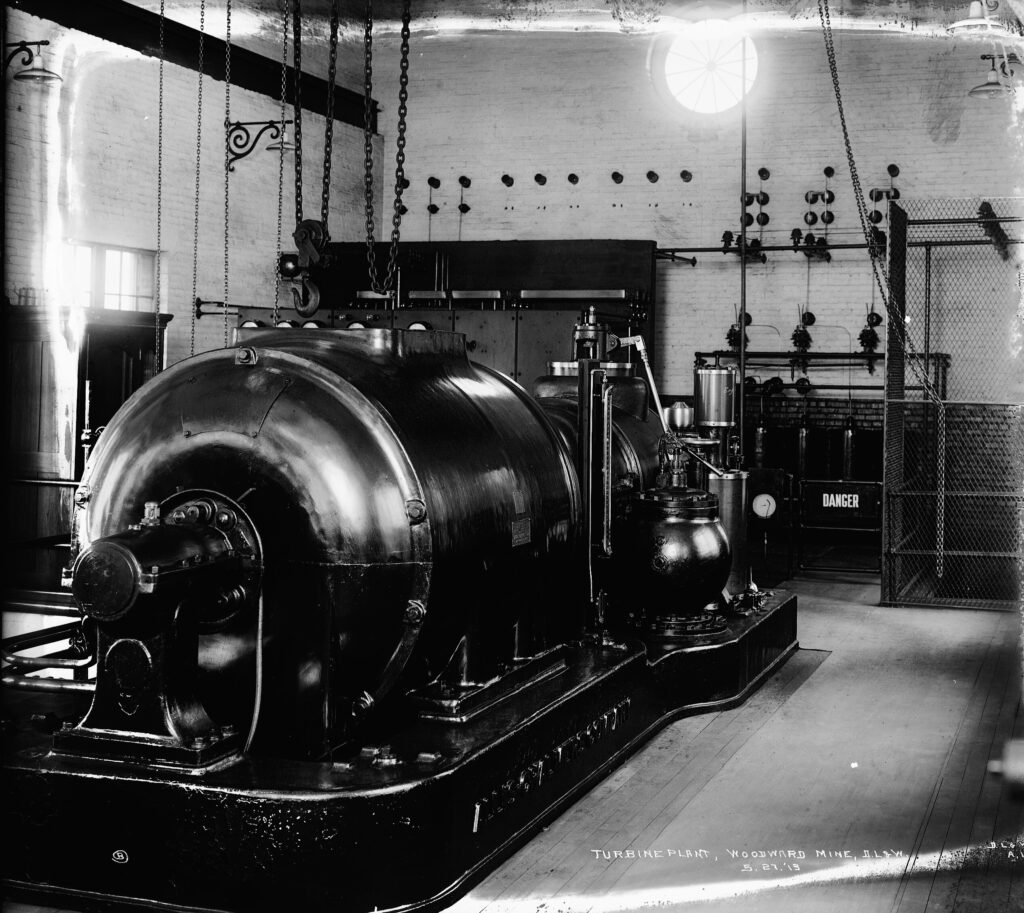
Edwardsville, PA–Woodward Mine–Electric Plant Steam Turbine

Steam turbines like this one were essential for generating electricity efficiently, supporting mining operations and the surrounding communities.

May 27, 1913

Image via Wikimedia Commons, public domain


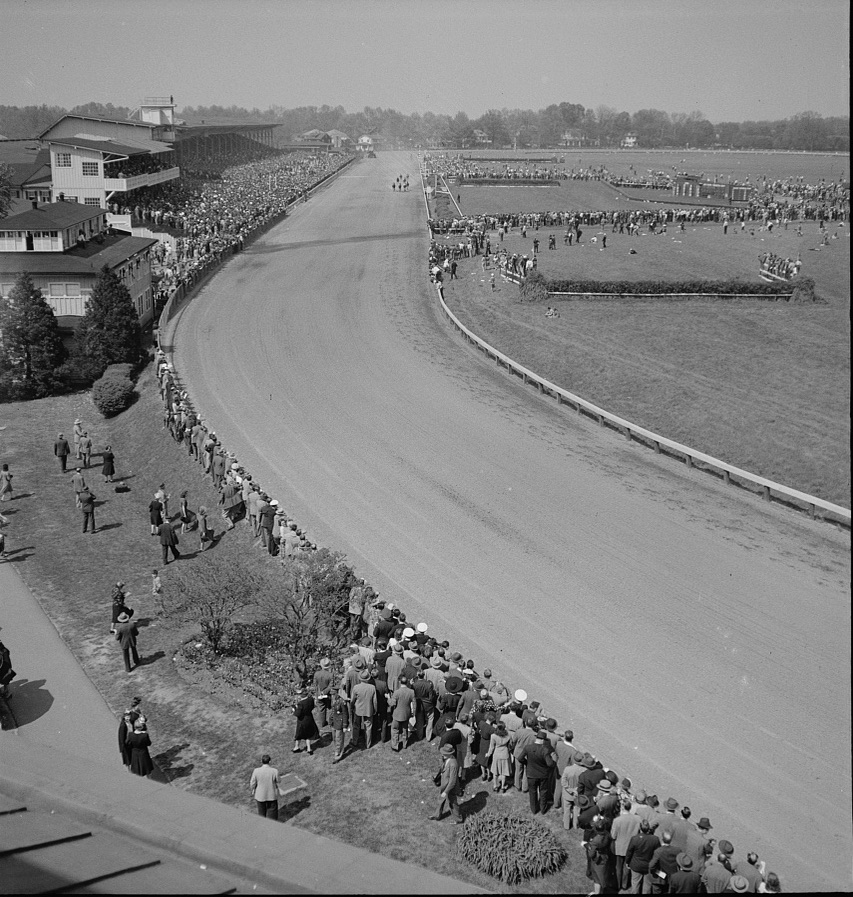
Photograph of Pimlico Race Course near Baltimore, Maryland on race day in May 1943 which was 70 years after the first Preakness Stakes took place on May 27, 1873.

Image via LOC, no known restrictions


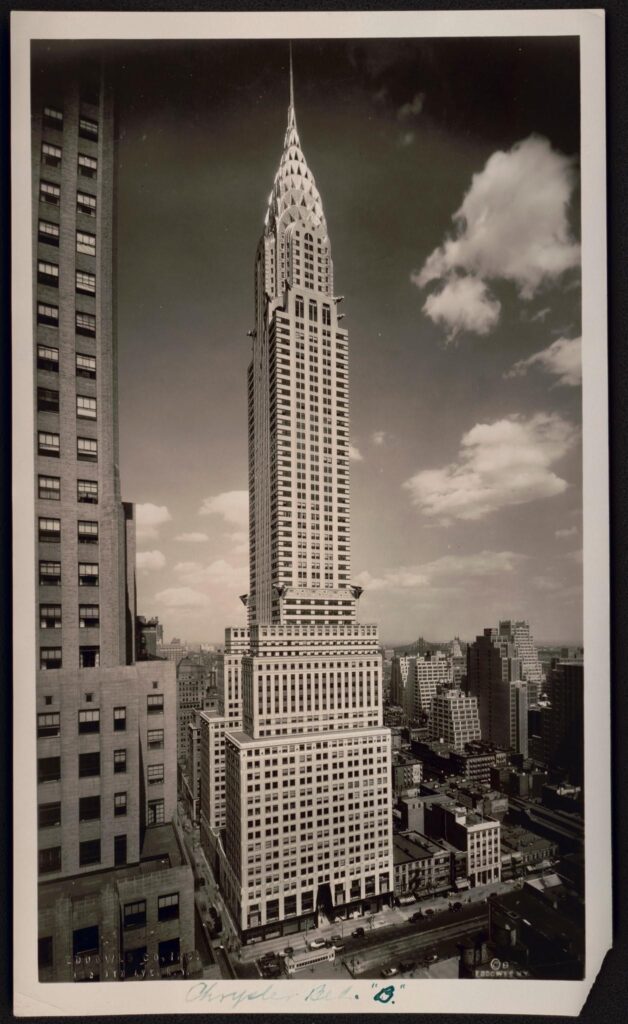
On May 27, 1930, The Chrysler Building in Manhattan was opened to the public.
It would hold the distinction as the world’s tallest building until the following year.

Image of The Chrysler Building via Wikimedia Commons, public domain


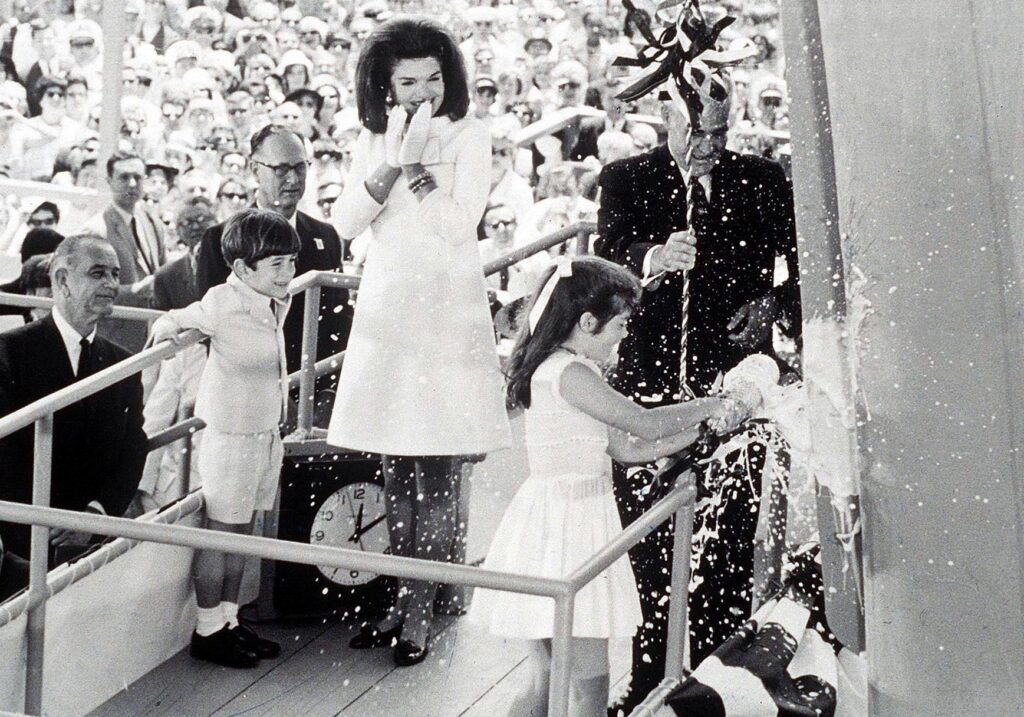
May 27, 1967 – New York, New York, – Caroline Kennedy christens USS John F. Kennedy (CVA-67). In the background, From Left to Right: Lyndon B. Johnson, John F. Kennedy, Jr., Mrs. Jacqueline Kennedy and Mr. D. A. Holden, President of Newport News Shipbuilding and Drydock Co. (Credit: Globe Photos/zumapress.com)
via Alamy


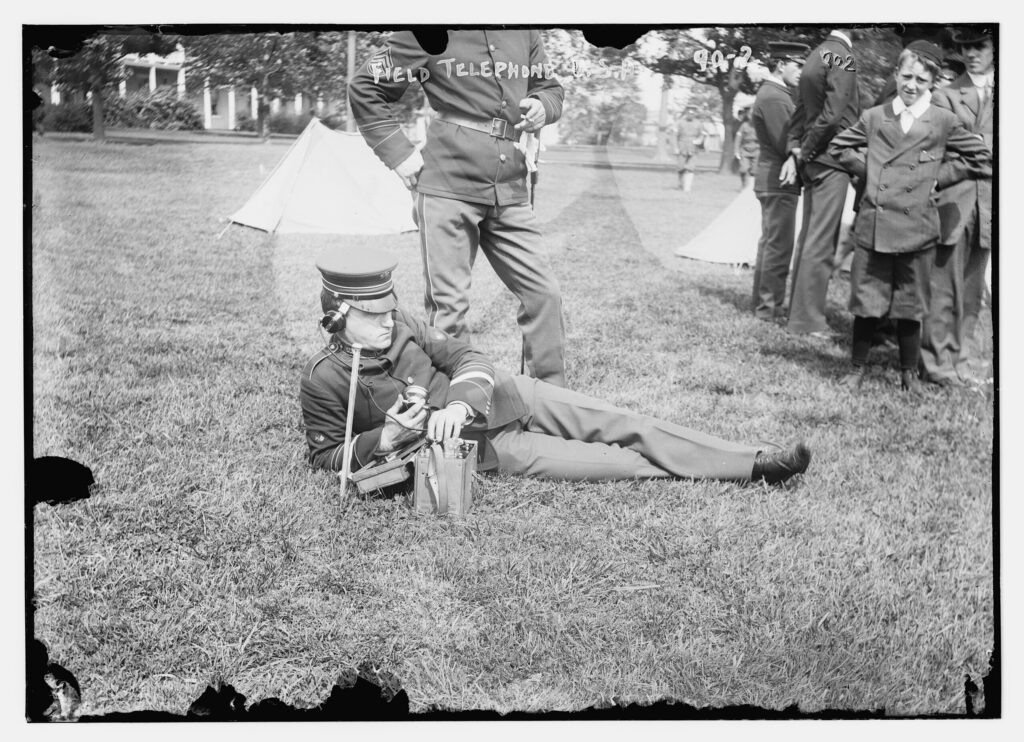
Field Telephone, U.S.A.

A U.S. soldier uses a field telephone in 1908, showcasing early military communication technology. His hat bears the insignia of the U.S. Army Signal Corps-two crossed flags with a torch or signaling device-marking him as part of the division responsible for transmitting vital battlefield communications before the rise of radio.

May 27, 1908


A Rhyme for Memorial Day
by American poet Julia Ward Howe

“Keep fond remembrance of thy brave,
Columbia! Twice by blood redeemed;
Once, from thy foes beyond the wave,
And once from evil nearer outschemed.

Bring forth the banners, faded now,
Reconsecrate each stain and rent
With patriot pledge and solemn vow
To Freedom’s glorious intent.

Thy champions at the call of Fate
Their pleasures and their toil forsook,
They left their firesides desolate,
But wrote their names in Honor’s book.

Heap high the wreaths above their dust!
Sound the war trumpet for their meed,
But keep thee faithful to the trust
Bequeathed in each heroic deed.

Of the shorn beauty of their days
Let Memory her broad blazon make,
And point her lesson, while our lays
Call the land blessed for their sake.”

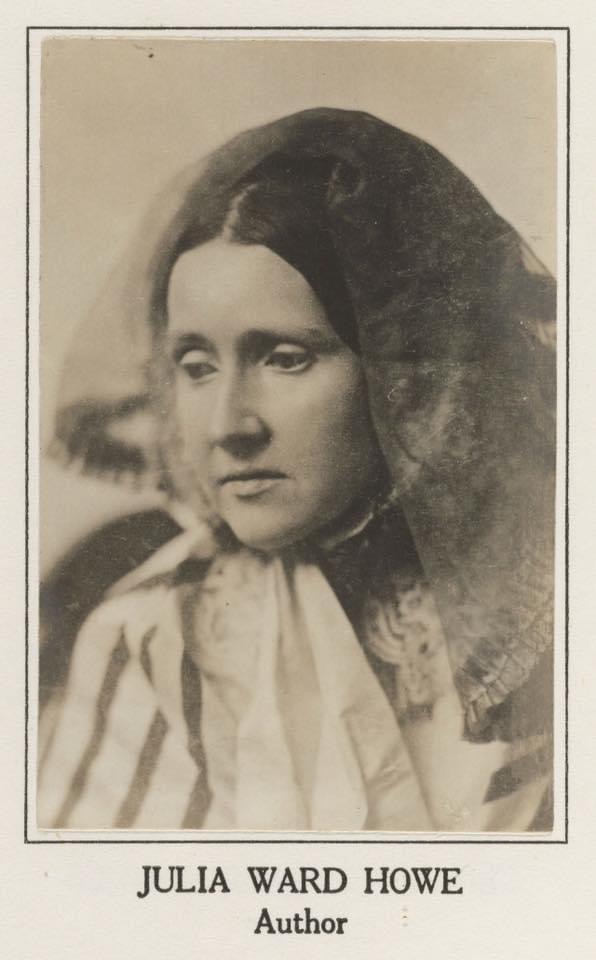
Julia Ward Howe was born on May 27, 1819 in New York City.

Image via Wikimedia Commons, public domain

Shopping Cart
Scroll to Top