
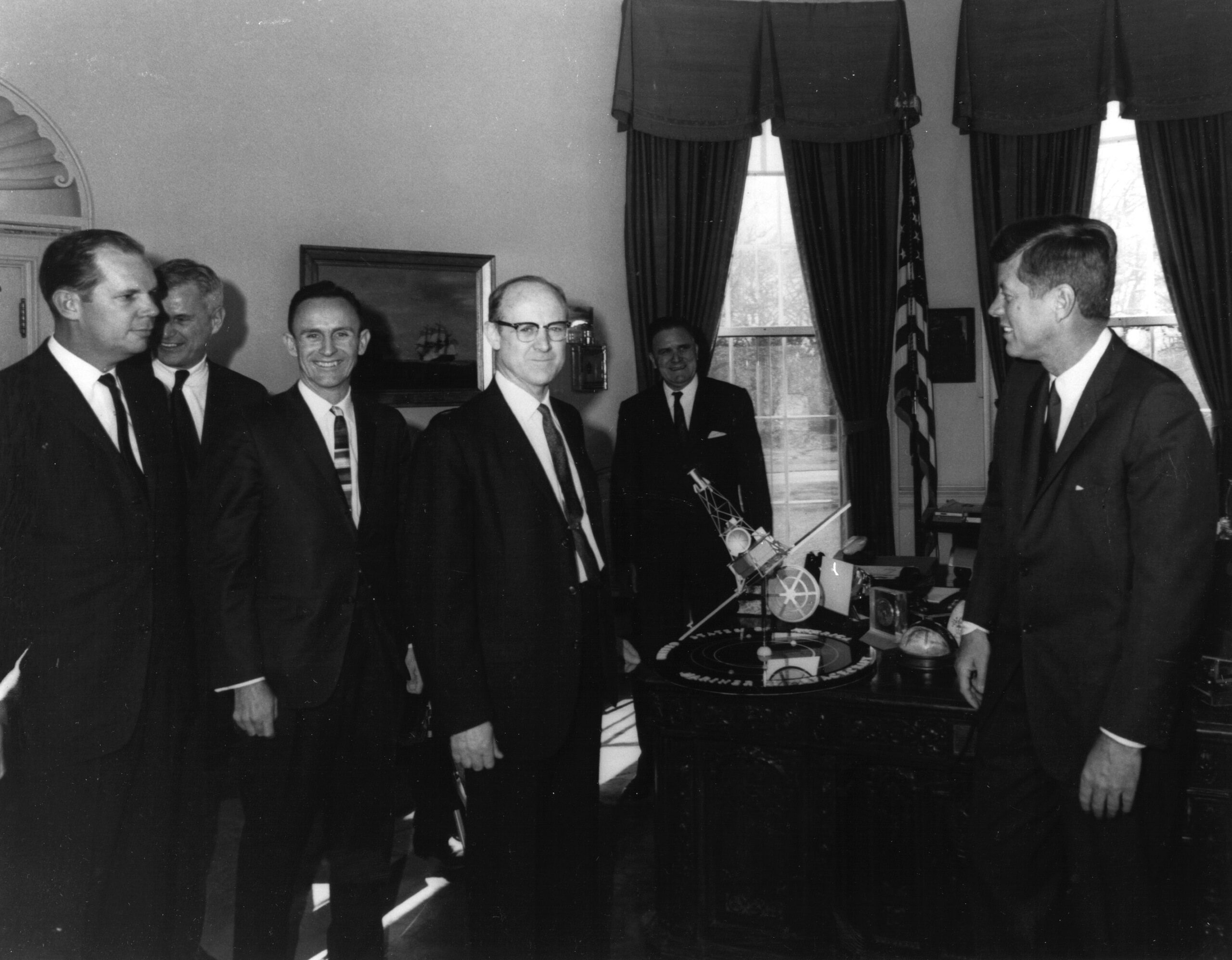
On August 27, 1962, NASA successfully launched the Mariner 2 robotic space probe into an interplanetary trajectory from the Cape Canaveral launch complex, initiating humanity’s very first successful mission to another planet.
The technological deployment executed on August 27th marked a critical milestone in the history of the Cold War space race and deep-space exploration. Prior to this breakthrough, multiple automated tracking attempts by both the United States and the Soviet Union had suffered catastrophic mechanical failures during liftoff, leaving scientists blind to the atmospheric conditions of our nearest celestial neighbors. By successfully executing its orbital insertion and navigating a grueling, three-month journey through space, the nuclear-powered probe arrived at Venus that December, providing the first high-resolution telemetry from an alien world.
The automated data transmitted by Mariner 2 permanently upended previous scientific assumptions, revealing an extreme, greenhouse-driven surface environment that effectively ended science fiction daydreams of habitability. This successful mission provided an invaluable boost to American technological confidence, proving that automated instruments could comfortably navigate millions of miles away from Earth. The historic launch remains a definitive standard of aerospace statecraft, illustrating the immense intellectual labor and mechanical precision required to open the solar system to human understanding.
Image: A historic photograph captures President John F. Kennedy and senior NASA staff reviewing a technical model of the Mariner 2 space probe following the successful completion of its planetary flyby mission. (Image via Wikimedia Commons, public domain).
