
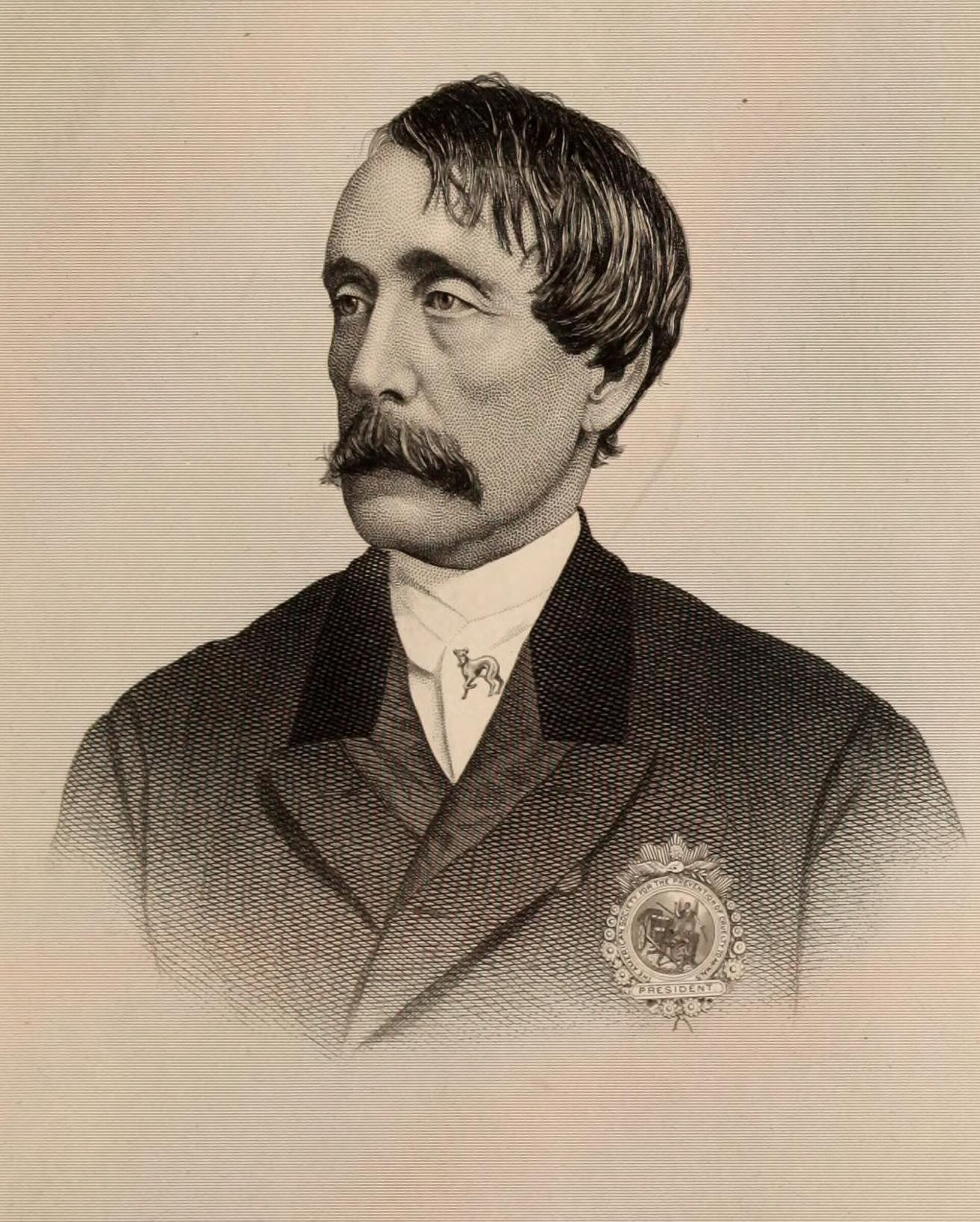
Pioneering animal-welfare advocate Henry Bergh was born on August 29, 1813, in New York City. After experiences abroad helped sharpen his opposition to cruelty, Bergh returned to the United States and founded the American Society for the Prevention of Cruelty to Animals in 1866. The ASPCA became the nation’s first animal-welfare organization and, through its New York charter and subsequent anti-cruelty laws, gained unusually significant authority to enforce protections for animals.
Bergh became especially visible during the Great Epizootic of 1872, an equine-influenza outbreak that swept across North America and incapacitated enormous numbers of horses and mules. In New York City, where animal power moved streetcars, freight, fire equipment, deliveries, and much of daily commerce, the epidemic brought urban life close to a standstill. The ASPCA later recalled that roughly 20,000 animals were sick in Manhattan alone.
As the outbreak spread, Bergh stationed himself at major city intersections, stopping wagons and horse-drawn trolleys to inspect the animals pulling them. When he found horses showing signs of illness, he ordered drivers to return them to their stables; in some cases, drivers were taken to court. His actions drew resentment and threats from transit companies and teamsters, but they made a direct public case that sick working animals deserved rest rather than further exploitation. Bergh’s legacy was not simply one of personal confrontation; he helped turn objections to animal cruelty into an organized program of enforcement, public advocacy, and legislation. Through the ASPCA and the anti-cruelty movement it helped inspire, he pushed animal welfare from the margins of public concern into American civic and legal life, leaving a notable example of how persistent reformers can challenge accepted practices and change the standards by which a society treats vulnerable beings.
Image: A portrait of Henry Bergh, founder of the ASPCA. Public domain via Wikimedia Commons
