
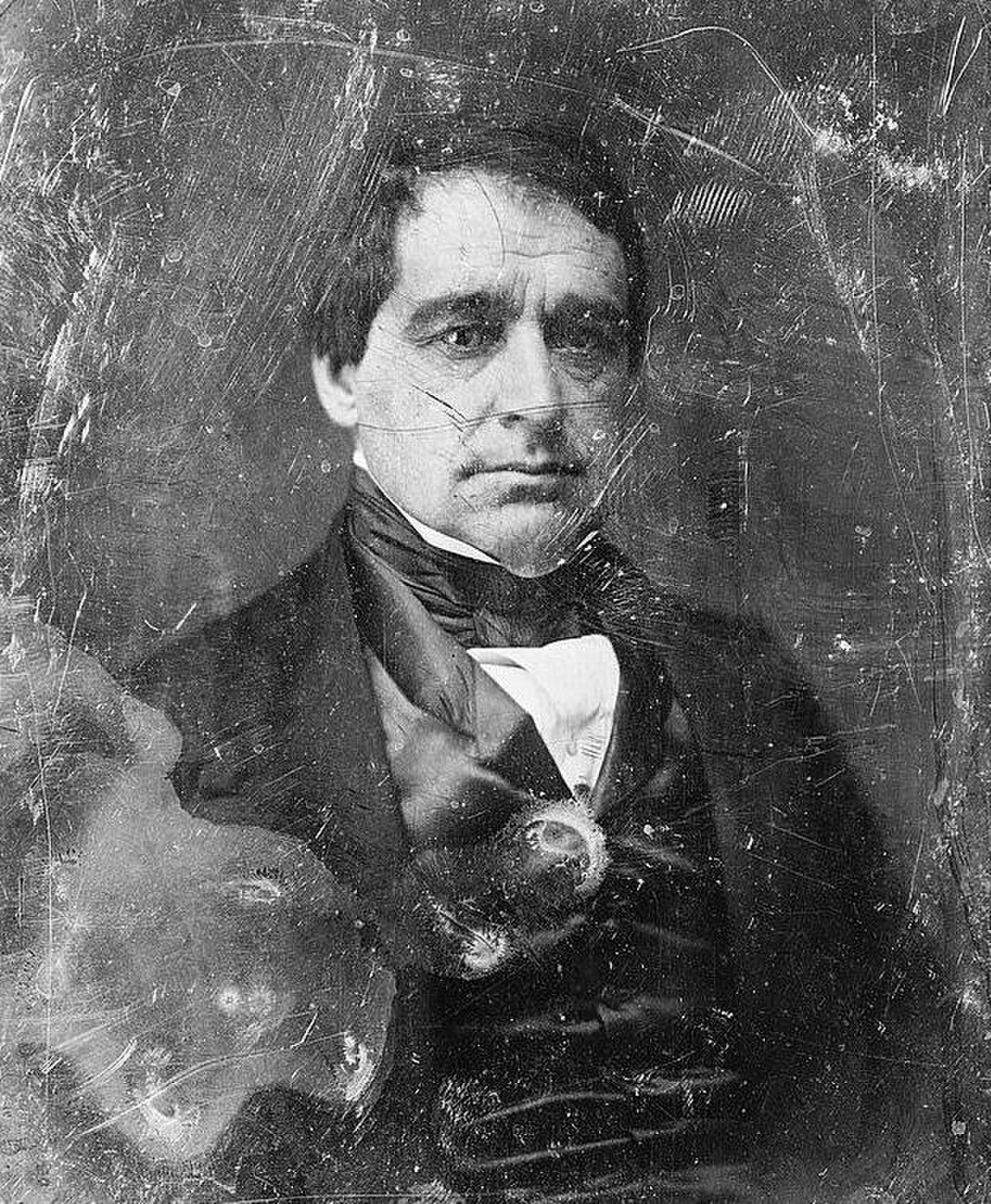
Distinguished statesman and legislative administrator Hannibal Hamlin was born on August 27, 1809, in Paris, Maine. Developing a formidable reputation for legal precision and absolute personal integrity within New England politics, he spent his early adulthood serving in the state legislature before successfully advancing to represent Maine within both the United States House of Representatives and the Senate.
Hamlin’s birth on August 27th introduced a principled political force whose unyielding opposition to the expansion of slavery altered the calculus of national party coalitions. Originally a lifelong Democrat, he broke away from his party in a high-stakes protest against the passage of the 1854 Kansas-Nebraska Act, aligning himself with the newly emerging Republican movement. His unique capacity to project an air of calm, traditional integrity made him the ideal geographic and ideological complement to Abraham Lincoln on the historic 1860 presidential ticket, bridging the political divide between western frontiersmen and northeastern abolitionists.
While he was largely sidelined from executive military decision-making during his tenure as the 15th Vice President, Hamlin remained a fierce, vocal champion of radical emancipation policies and strict federal unionism throughout the Civil War. Following his term, he continued his long record of national service by serving as the Governor of Maine and returning to the Senate, concluding his public life as the U.S. Minister to Spain. His reserved temperament and unwavering commitment to the Union cause leave an insightful record of early Republican statecraft, showing how quiet discipline supported the executive branch during the republic’s greatest internal breakdown.
Image: A portrait captures a younger Hannibal Hamlin in his 30s or 40s during his early legislative career. (Image by Mathew Brady via Wikimedia Commons, public domain).