
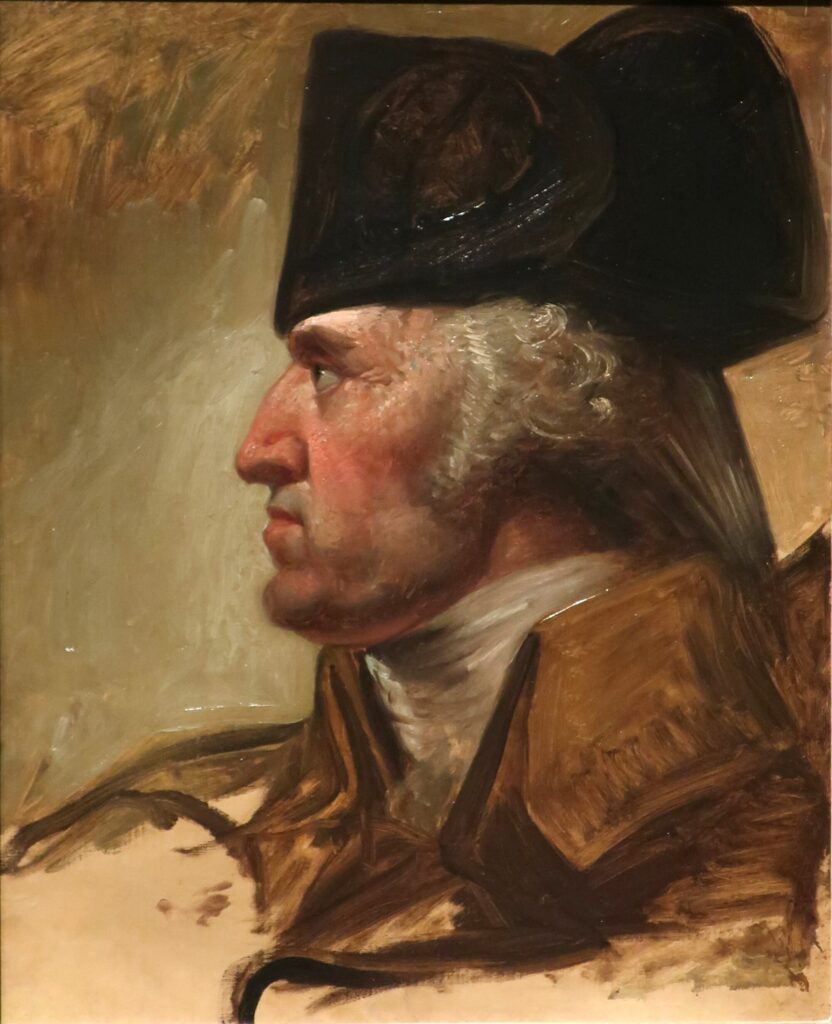
George Washington’s resolve was not the cinematic kind—no sweeping speeches, no self‑mythologizing, no hunger for applause. His was a subdued, colder resolve that appears when conditions are miserable, options are few, and the stakes are national survival. Across the Revolution, the Delaware crossings, the Constitutional Convention, the presidency, and his final years at Mount Vernon, Washington’s steadiness became the spine of a fragile new nation. His life offers a chain of moments where he chose endurance over ego, restraint over spectacle, and duty over comfort.
- Valley Forge, 1777–1778: Resolve in the Depth of Hardship
The winter encampment at Valley Forge remains the clearest crucible of Washington’s resolve. By February 1778, nearly 2,000 soldiers were unfit for duty due to disease, exposure, and malnutrition. Washington wrote to Henry Laurens that the army was “barefoot and otherwise naked,” a blunt indictment of Congress’s failure to supply its own forces. Snow and mud froze to men’s feet; horses died faster than they could be buried; the army’s food supply collapsed repeatedly.
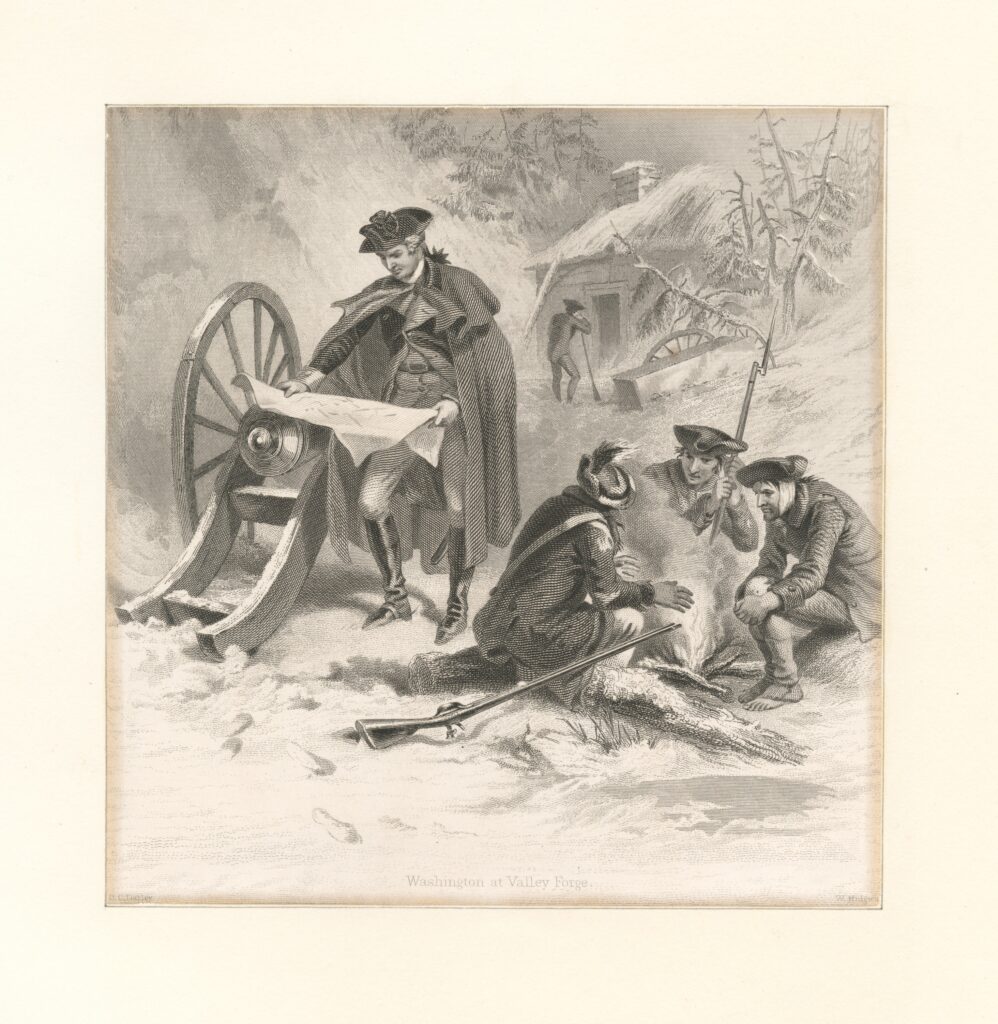
Washington refused to abandon camp or retreat to safer quarters. Instead, he reorganized supply lines, enforced sanitation reforms, and supported Baron von Steuben’s drilling program, which transformed the Continental Army into a disciplined fighting force. His resolve here was administrative, not theatrical—holding a collapsing army together long enough for it to survive.
- The Delaware Crossings, 1776: Resolve in the Teeth of a Storm
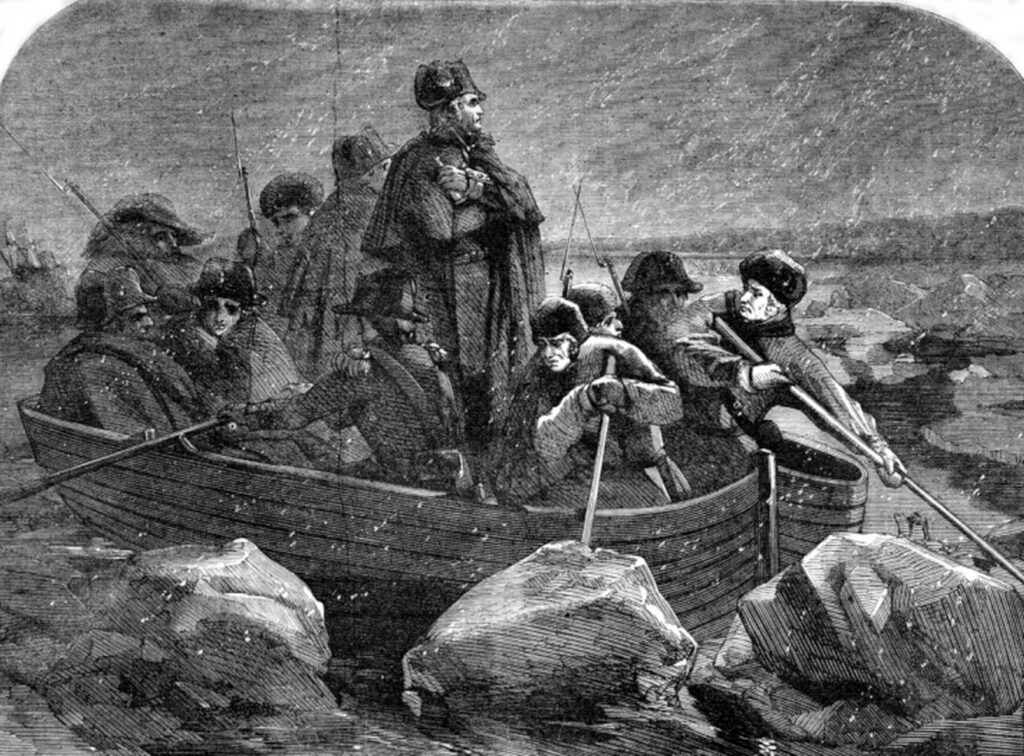
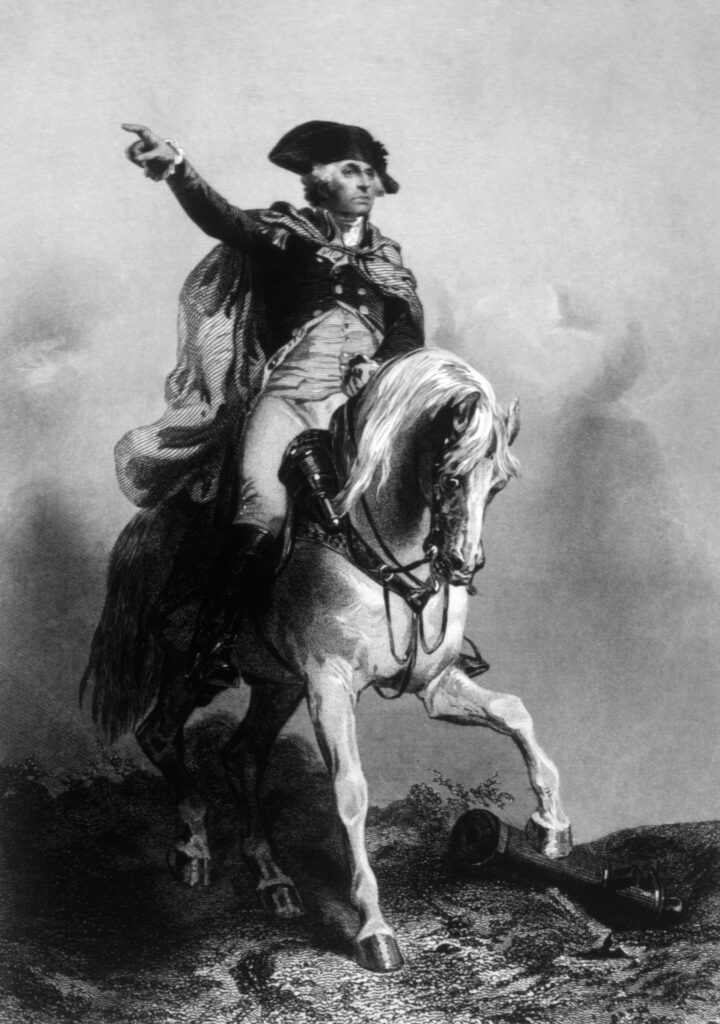
Washington’s resolve was never more visible than on the night of December 25–26, 1776, when he led the Continental Army across the ice‑choked Delaware River. The operation was a desperate gamble. His army was shrinking by the day, enlistments were about to expire, and the British believed the rebellion was on the verge of collapse. Washington responded not with retreat, but with a bold winter offensive that required extraordinary physical and moral endurance.
A Crossing at the Edge of Collapse
The army gathered at McConkey’s Ferry in a freezing gale. Ice floes slammed against the Durham boats; sleet blinded the men; artillery had to be man‑handled down muddy banks and loaded into flat‑bottomed ferries. Washington rode up and down the riverbank, urging the troops forward, refusing to let the operation fail. Officers later recalled him standing in the storm, “calm and determined,” as if the weather itself were an adversary to be mastered.
Leadership by Example
Washington did not cross first—he crossed with his men. He remained on the Pennsylvania shore until the last units embarked, then boarded a boat and made the passage in the same brutal conditions. His presence in the boats, soaked and freezing, mattered. Many soldiers later said they kept moving because Washington was there, visible, enduring the same misery.
The March to Trenton
Once across, the army still faced a nine‑mile march through sleet and mud. Two men froze to death along the route. Washington rode at the front, urging the column forward, knowing that if they did not reach Trenton before dawn, the entire operation would unravel. His resolve here was operational: he held the army together by sheer force of will.
Three Crossings in a Week
The Christmas night crossing was only the beginning. Washington would cross the Delaware three times in a single week—first to attack Trenton, then to return to Pennsylvania with prisoners and captured stores, and finally to recross into New Jersey to hold the ground he had won. Each crossing was dangerous; the third was the worst, dragging on for two days through drifting ice. Washington later wrote with pride that the final passage was “safely effected with the troops that were with me on the morning of the 26th”—the veteran core who had carried the cause through the storm.
Washington’s resolve at the Delaware was not just courage. It was stamina, discipline, and the ability to impose order on weather, darkness, and exhaustion. It was the resolve to act boldly when the cause seemed lost, and to lead from the front when his men needed to see him most.
- The Anonymous Plot to Dethrone Washington
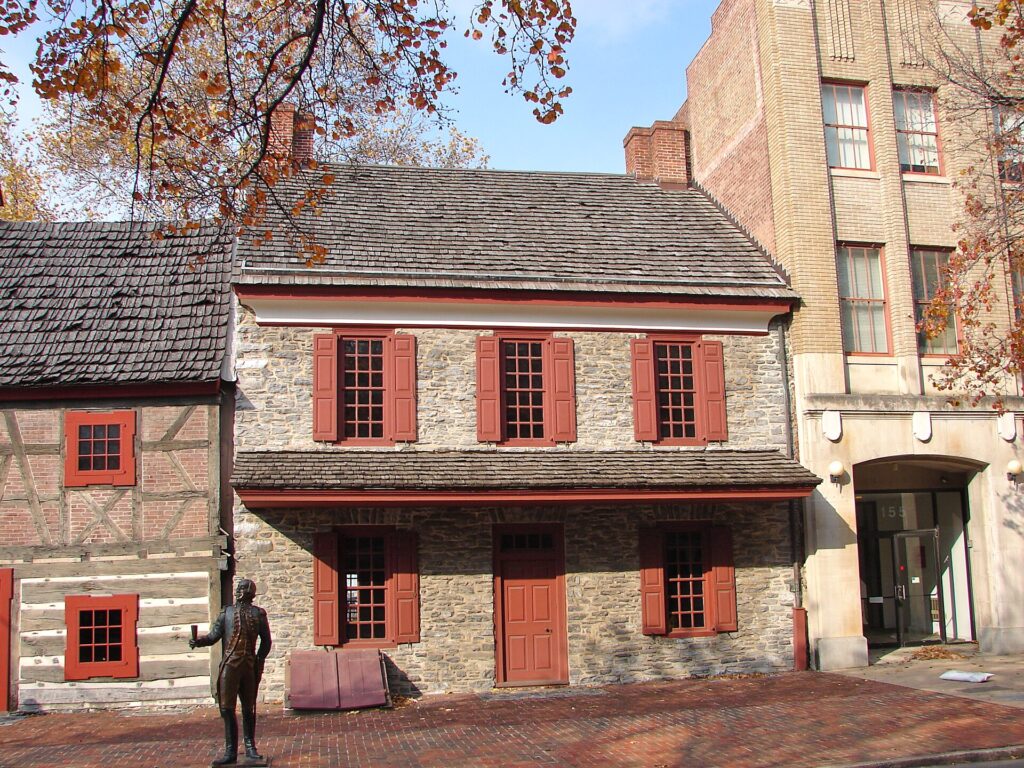
During that same winter, whispers circulated through Congress and the officer corps about replacing Washington with General Horatio Gates. The so‑called Conway Cabal never became a formal coup, but it was a real attempt to undermine his leadership. Washington did not lash out or threaten resignation. He responded with measured letters, calm dignity, and a refusal to engage in political knife‑fighting. He trusted that character, conduct, and the loyalty of his officers would outlast intrigue.
He was right.
- The Constitutional Convention, 1787: Resolve Through Presence, Restraint, and Reputation
If Valley Forge revealed Washington’s endurance, the Constitutional Convention revealed his gravity. When he arrived in Philadelphia in May 1787, delegates unanimously elected him president of the convention—an office with no real power except the authority his character supplied.
The Power of Presence
Washington sat in a high‑backed chair on a raised platform, overlooking the delegates in the Pennsylvania State House. He rarely spoke on substantive issues, but his silence was not absence—it was discipline. Delegates later wrote that his presence alone imposed “gravity and purpose” on the room. Tempers cooled because Washington was watching.
The Unspoken Template
Many delegates feared creating a strong executive. But they also assumed Washington would be the first to hold the office. Their trust in his restraint shaped the presidency itself. The powers granted to the executive branch—veto authority, command of the military, the ability to enforce laws—were built on the expectation that Washington would wield them with moderation.
His resolve here was the resolve of character lending: he staked his reputation on a radical new structure of government.
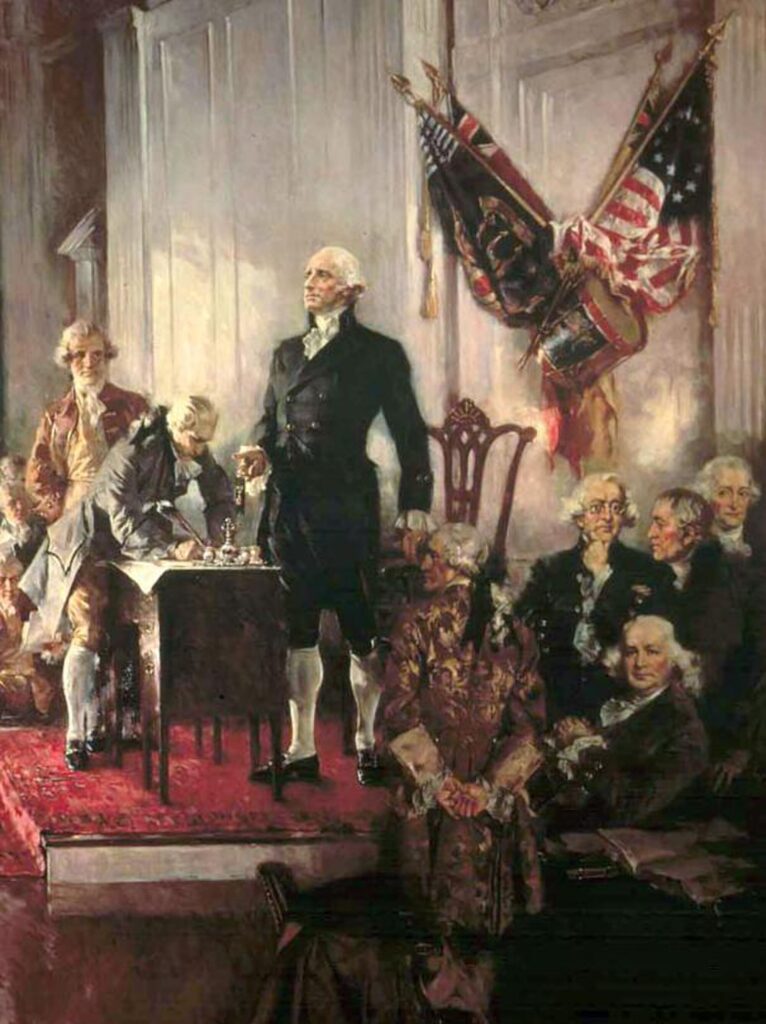
Forging Consensus
Though he spoke little, Washington acted decisively when it mattered. Through his vote within the Virginia delegation, he supported the Great Compromise, which balanced representation between large and small states. He believed that a failed convention would lead to national ruin, and he used his influence—quietly but unmistakably—to keep the delegates unified long enough to produce a workable Constitution.
Washington’s resolve at the convention was not about argument. It was about steadiness, legitimacy, and the willingness to risk his own legacy for the nation’s future.
- The Newburgh Crisis, 1783: Resolve Through Unscripted Vulnerability
The most revealing test of Washington’s resolve came not during war, but at its end. With the Revolution won, unpaid officers at Newburgh circulated anonymous calls for coordinated pressure—possibly force—against Congress. A military coup was not impossible.
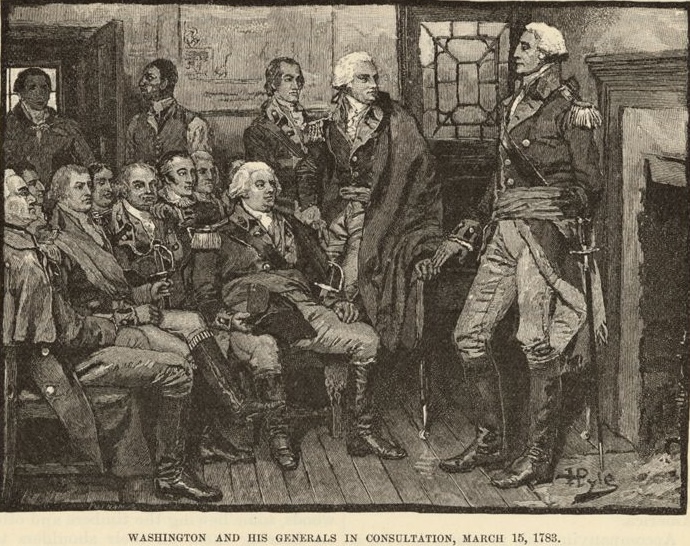
Washington intervened personally. His prepared remarks were firm, but the turning point was entirely unplanned. As he reached for a letter from Congressman Joseph Jones, he fumbled with his new spectacles—rarely worn in public. Apologizing softly, he told the room:
“Gentlemen, you must pardon me. I have grown gray in your service and now find myself growing blind.”
This was not part of the speech. It was an unscripted admission of age, strain, and sacrifice. Surviving accounts describe the room falling into tears. Washington’s resolve here was moral: he refused to let the army become a political weapon. His vulnerability, not his authority, defused a crisis that could have ended the American experiment before it began.
- The Presidency, 1789–1797: Resolve as Restraint
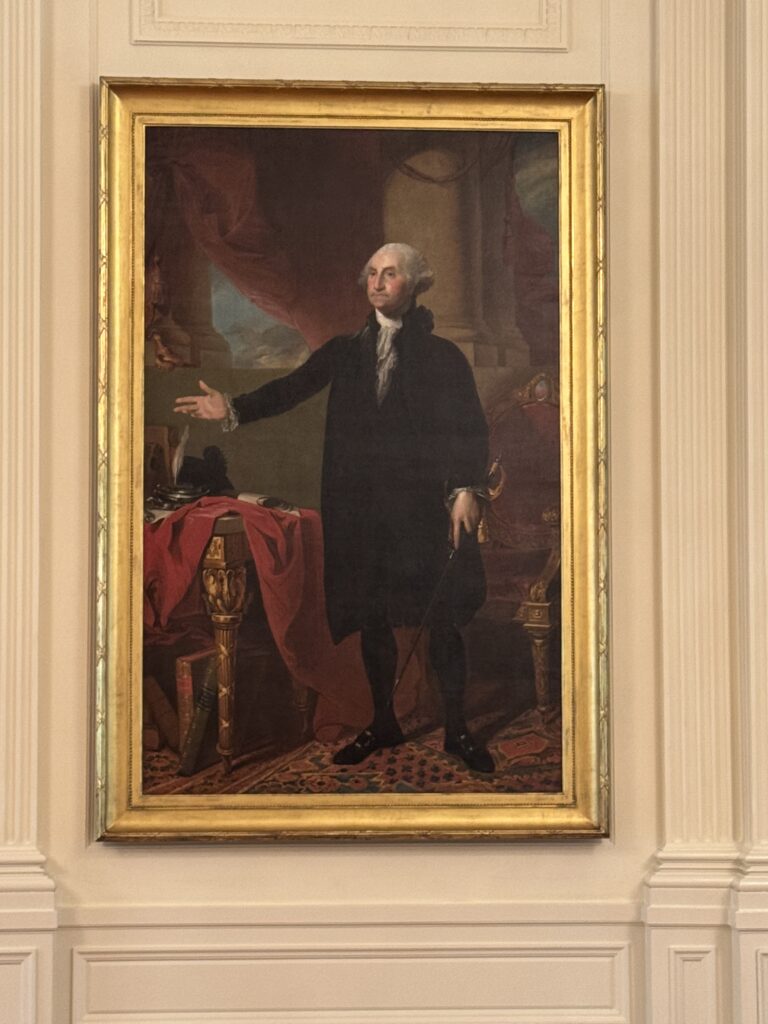
Washington’s presidency required a different kind of resolve—one rooted in precedent. Every decision set a template for the future.
- He insisted on civilian supremacy, even when the Whiskey Rebellion (1794) tested federal authority.
- He rejected monarchical trappings, refusing titles like “His Highness” and choosing the plain “President of the United States.”
- He navigated the French Revolutionary Wars with neutrality, absorbing fierce criticism rather than dragging the fragile nation into European conflict.
- He established the first Cabinet, the two‑term tradition, and the expectation that presidents would act with dignity rather than partisanship.
His resolve was the resolve to absorb pressure without bending the office.
- The Farewell, 1796: Resolve in Letting Go
Washington’s final act of resolve was the one most leaders fail at: stepping away. His Farewell Address—drafted with Alexander Hamilton but grounded in Washington’s own anxieties—warned against factionalism, foreign entanglements, and the corrosion of national unity. By refusing a third term, he established the principle that American presidents are temporary stewards, not permanent rulers. His departure was a deliberate act of nation‑building.
- Mount Vernon, 1799: Resolve to the End
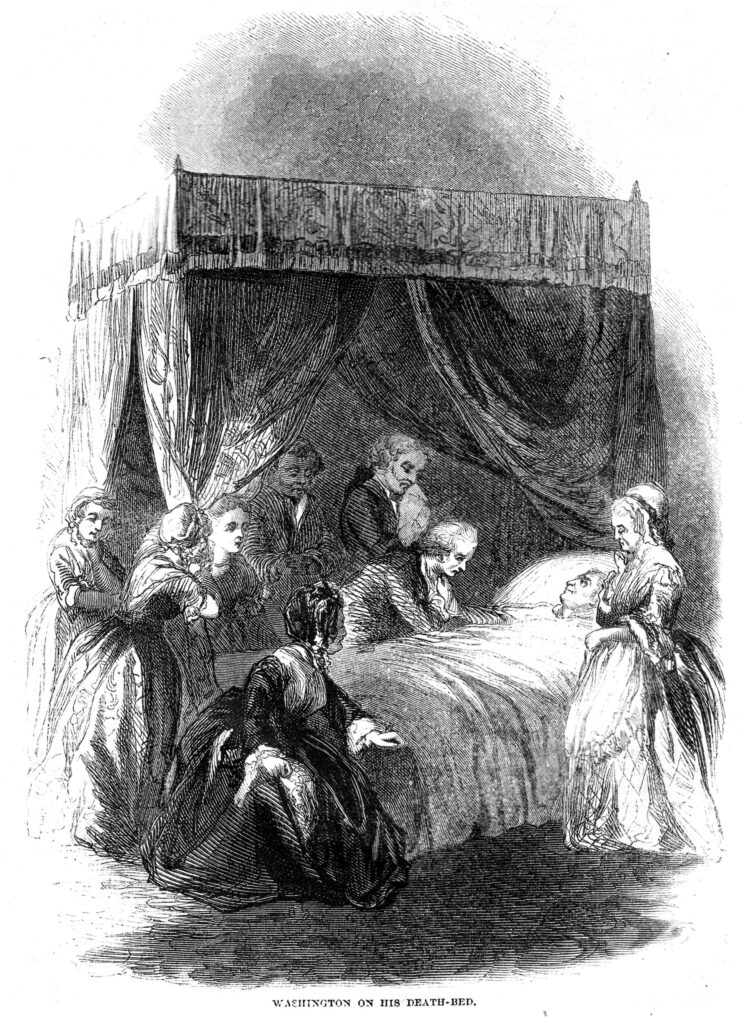
Even in retirement, Washington’s resolve remained visible. He managed Mount Vernon with meticulous attention, corresponded on national defense, and—at age 67—accepted command of a provisional army during the Quasi‑War with France. In December 1799, after riding through freezing rain to inspect his estate, he fell ill. His final hours were marked by composure and clarity. Though he cooperated with aggressive treatments like bloodletting, he eventually resigned himself to the inevitable, asking his doctors to let him ‘go off quietly’ when it became clear his condition would not improve. He died as he had lived: steady, disciplined, and unafraid.
Washington’s Resolve, Summarized
Washington’s resolve was not loud or theatrical; it was a disciplined steadiness that shaped the nation at every fragile juncture. It showed itself in his endurance through logistical collapse, in his audacity at the Delaware, in his restraint when offered power, in his moral courage during the Newburgh Crisis, in his quiet authority at the Constitutional Convention, and in his determination to build institutions that would outlast him. Above all, it appeared in his willingness to step away at the height of his influence, proving that the republic would be governed by laws rather than by the ambitions of any one man. His resolve held the Revolution together, stabilized the presidency, and set the tone for a nation still learning how to govern itself.

Products by Category
-
3′ x 5′ Betsy Ross Flag
$85.00 -
30 Ounce Travel Mug – George Washington
$28.99 -
6-1/4″ George Washington in Uniform Print in Antiqued Beaded Brass Frame – Antique Vintage Style
$32.00 -
6-1/4″ George Washington Print in Antiqued Beaded Brass Frame- Antique Vintage Style
$32.00 -
A Short Biography of George Washington
$8.50 -
Betsy Ross & George Washington Painting
$112.50 -
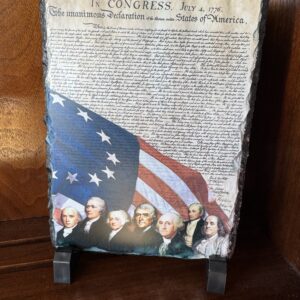
Declaration of Independence slate w. Founding Father portraits
$15.99 -
Founding Father Quill & Ink Sets with Medallion
$14.99 -
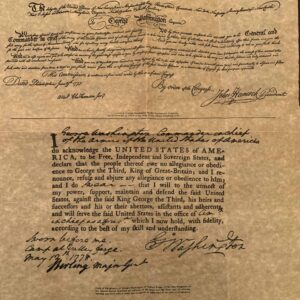
General George Washington Oath of Allegiance and Commission (replica)
$3.00


Leave a Reply