
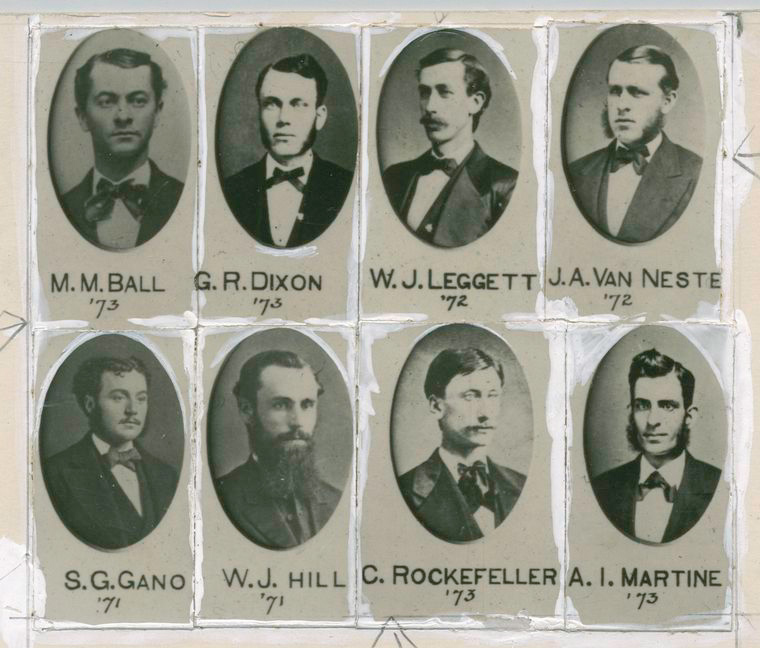
On November 6, 1869, twenty-five students from the College of New Jersey—now Princeton University—traveled to New Brunswick, New Jersey, to face twenty-five players from Rutgers College. Played on ground now occupied by Rutgers’ College Avenue Gymnasium, the contest is widely recognized as the first intercollegiate football game in the United States. But anyone expecting touchdowns and forward passes would have barely recognized it: the teams competed with a round ball under rules far removed from modern gridiron football.
The home team’s “Rutgers Rules,” adapted from the English Football Association’s rules, prohibited carrying or throwing the ball. Players instead advanced it by kicking or batting it with their feet, hands, heads, or sides, trying to send it into the opposing goal. Each goal counted as a “game,” and the teams changed ends after every score. Rutgers won the ten-game contest, 6–4.
The match marked a beginning, not the arrival of American football in its familiar form. That transformation unfolded over subsequent decades as colleges revised their rules. Yale’s Walter Camp helped establish some of the defining features: a scrimmage system that assigned possession to one team in 1880, followed by a requirement to gain a specified distance within a limited number of downs in 1882. The significance of November 6, 1869, lies in that contrast: a round-ball contest between neighboring colleges became the traditional starting point for a sport that would eventually look—and play—very differently.
Image: Some of the members of the Rutgers Football team which defeated Princeton on November 6, 1869.
