
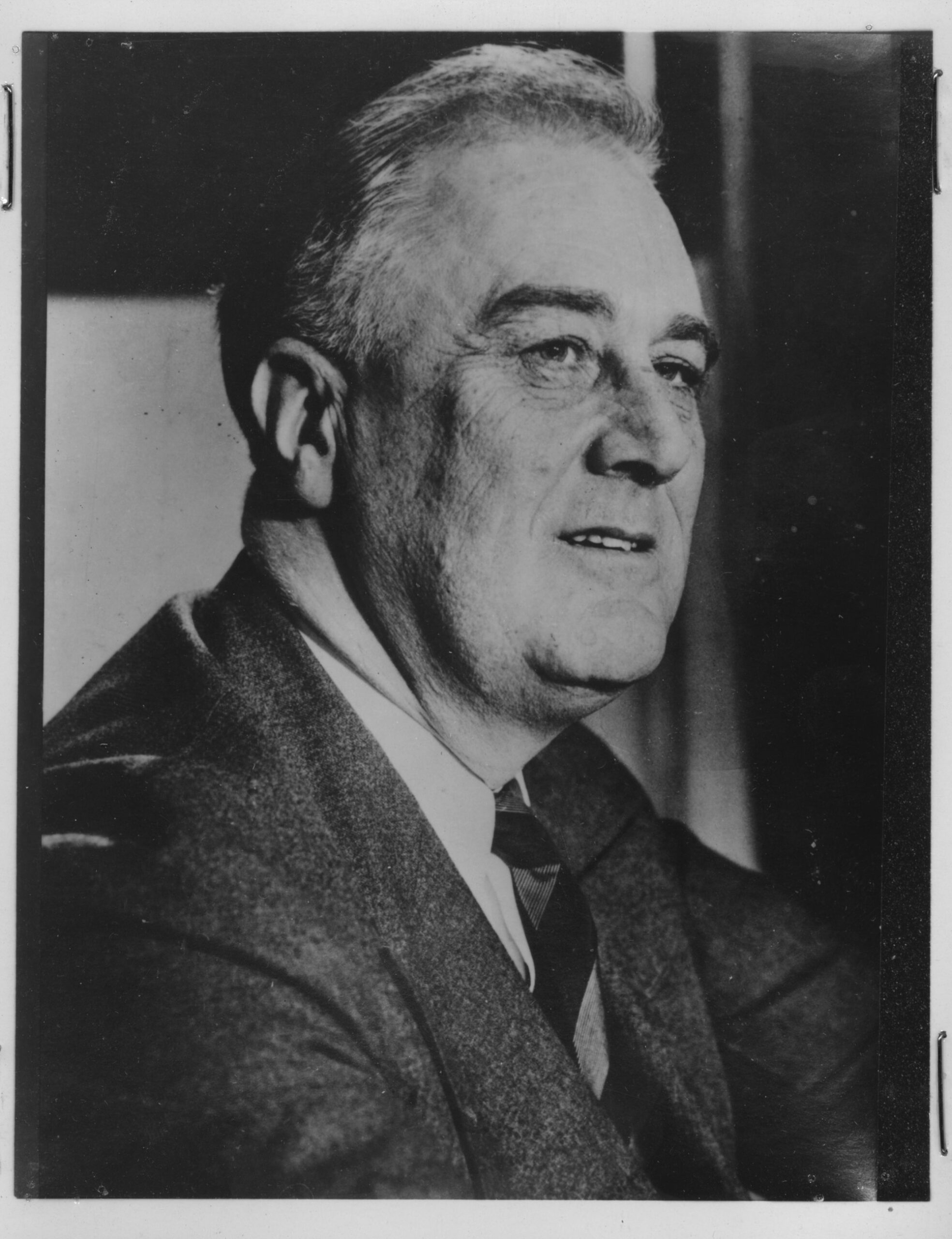
On November 5, 1940, President Franklin Delano Roosevelt broke the two-term tradition by defeating Republican challenger Wendell Willkie and winning an unprecedented third presidential election. George Washington had established the precedent by declining to seek a third term in 1796. Although the Constitution placed no limit on presidential terms, no president before Roosevelt had won election more than twice.
With World War II underway, the campaign raised urgent questions about American security, presidential leadership, and the concentration of executive power. Opponents made Roosevelt’s departure from the two-term tradition a central issue, while his supporters presented continuity in leadership as an advantage during an international crisis. Roosevelt won 54.7% of the popular vote and carried 38 states, securing 449 electoral votes to Willkie’s 82—a decisive victory, though smaller than his victories in 1932 and 1936.
The election’s constitutional legacy emerged over the following decade. Roosevelt won a fourth term in 1944, intensifying opposition to the possibility of an indefinitely reelected president. In 1947, a Republican-controlled Congress approved the proposed Twenty-Second Amendment; its ratification in 1951 generally limited presidents to being elected twice. Roosevelt’s third-term victory thus marked both a departure from Washington’s precedent and a step toward replacing that unwritten tradition with an explicit constitutional restriction.
