
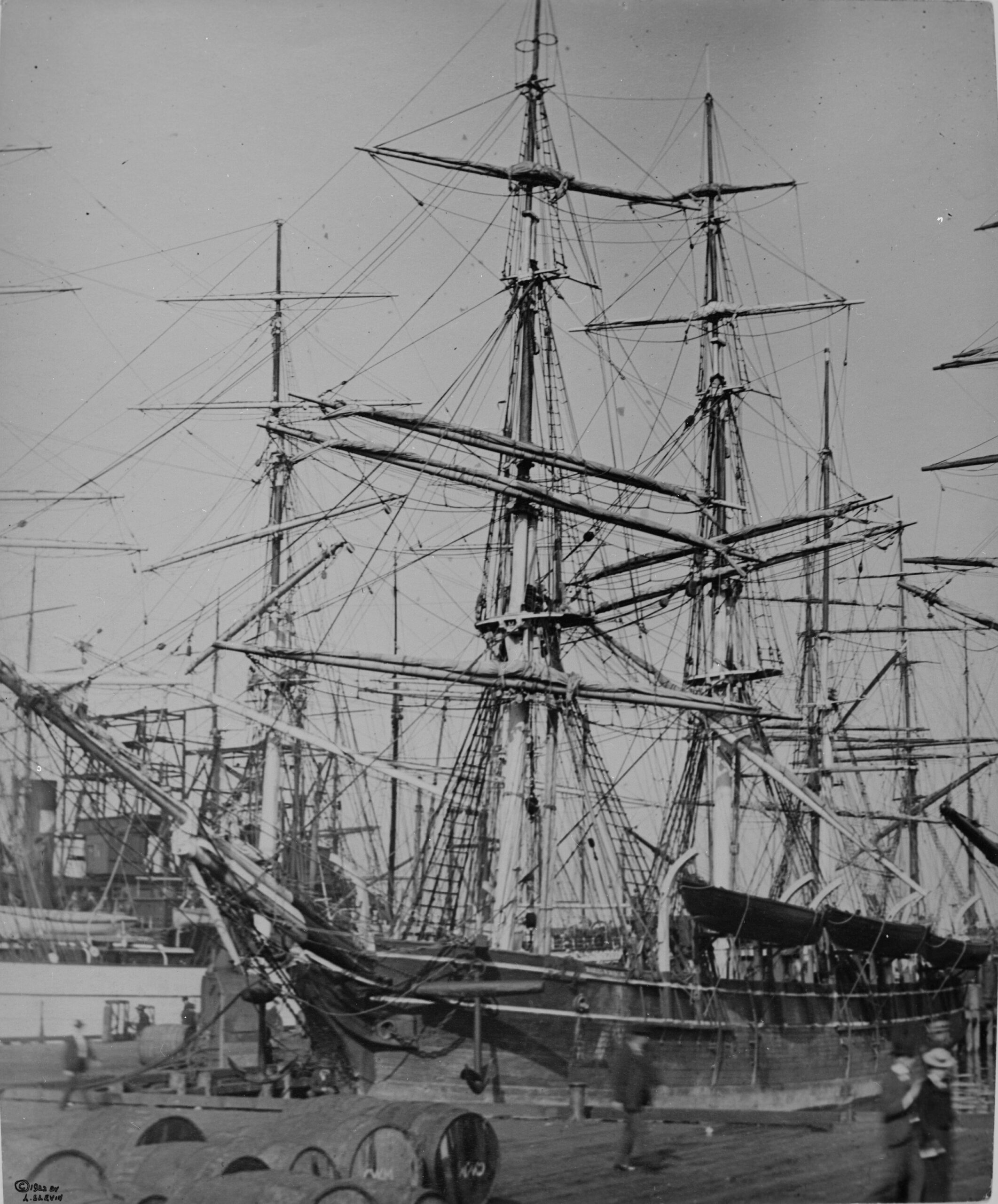
On November 5, 1900, the Charles W. Morgan departed San Francisco for Japan and the Sea of Okhotsk, beginning another voyage in a remarkable working career. Built in New Bedford, Massachusetts, in 1841, she completed thirty-seven whaling voyages over eighty years. Her journeys carried her crews across distant oceans, including the North Pacific and Arctic, and could keep them away from home for years. Her longest voyage lasted nearly five years.
The ship was named for Charles Waln Morgan, the New Bedford businessman for whom she was built. Over her working life, she brought home more than 54,000 barrels of oil and nearly 153,000 pounds of whalebone—figures that reveal both the scale of the industry and the toll it took on whales. She returned from her final whaling voyage on May 28, 1921.
Today, preserved at Mystic Seaport Museum in Connecticut, the Charles W. Morgan offers visitors a close look at life aboard a nineteenth-century whaleship. Among her most revealing features are the tryworks: a brick furnace holding two cast-iron pots in which crews boiled whale blubber into oil. The ship preserves a tangible connection to the labor, danger, and environmental cost of American whaling.
