
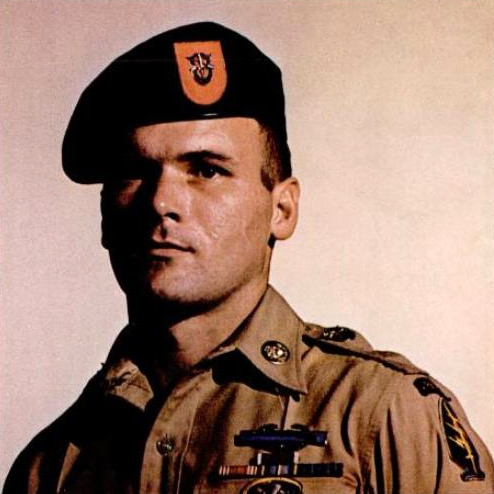
Born in Carlsbad, New Mexico, on November 1, 1940, Barry Sadler became an unlikely figure at the intersection of military service and American popular culture. Serving as a Green Beret medic with the 5th Special Forces Group in Vietnam, he was medically evacuated in May 1965 after a punji-stake wound became infected. He had already begun writing a tribute to his fellow Special Forces soldiers during training, and he continued developing it in Vietnam and during his recovery.
With help from writer and co-songwriter Robin Moore, that tribute became “The Ballad of the Green Berets.” Released in early 1966, it spent five consecutive weeks atop the Billboard Hot 100. Sadler’s January 30 appearance on The Ed Sullivan Show brought the uniformed soldier before a national television audience, while the Pentagon subsequently sent him on a fifteen-month promotional tour. The song’s success captured a moment when growing antiwar protests coexisted with substantial public support for American involvement in Vietnam.
Sadler later found another audience through military-adventure fiction. Beginning in 1979, his Casca series followed a Roman soldier condemned to live until the Second Coming after piercing Christ’s side at the Crucifixion. Sadler wrote twenty-two installments, and other authors continued the series. Its enduring soldier protagonist offered a darker fictional counterpart to the heroic military image that had made its creator famous.
His life beyond those successes was troubled. In December 1978, Sadler shot and killed former country singer Lee Emerson Bellamy; he subsequently pleaded guilty to voluntary manslaughter. A decade later, Sadler suffered a gunshot wound to the head in Guatemala under disputed circumstances. He died on November 5, 1989, four days after his forty-ninth birthday, leaving a legacy that encompassed a defining Vietnam-era recording, a continuing adventure series, and a deeply troubled personal history.
