
On October 31, 1753, twenty-one-year-old George Washington set out from Williamsburg on a dangerous diplomatic mission into the Ohio Country. Commissioned by Virginia’s royal lieutenant governor, Robert Dinwiddie, the young militia major carried a letter demanding that French forces withdraw from territory claimed by Britain. France disputed that claim, while Indigenous nations pursued their own territorial rights and diplomatic interests in the contested region.
The roughly 900-mile round-trip expedition tested Washington’s endurance through freezing weather, difficult terrain, and treacherous river crossings. Aided by frontiersman Christopher Gist, interpreters, and Indigenous guides and leaders, he reached Fort Le Boeuf in December. There, French commandant Jacques Le Gardeur de Saint-Pierre received him courteously but refused to withdraw. The return journey proved especially dangerous: Washington recorded that an Indigenous guide fired at him and Gist at close range but missed, and that he was later thrown into the icy Allegheny River while attempting to cross on a raft. He survived by catching hold of a raft log.
Washington returned to Williamsburg on January 16, 1754, bringing the French response and valuable intelligence about their frontier positions. Dinwiddie promptly ordered the publication of The Journal of Major George Washington. Its circulation in colonial newspapers and publication in London that June brought the young Virginian transatlantic recognition. The mission did not make war inevitable, but it exposed the deepening imperial confrontation and helped set the stage for the French and Indian War. For Washington, it offered an early and demanding education in diplomacy, reconnaissance, and leadership—years before he would command the Continental Army.
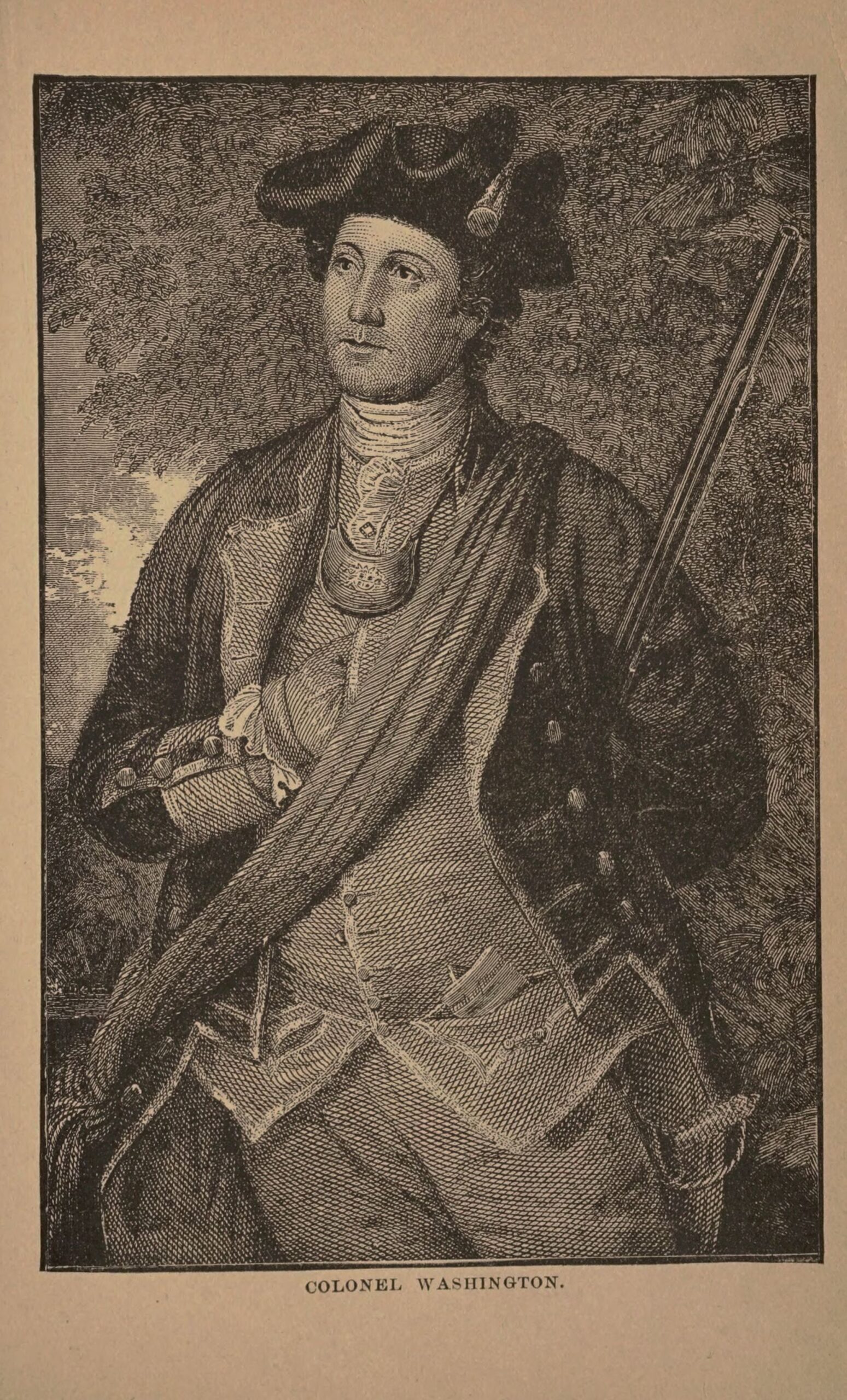
Image: At the time of this mission, Washington held the rank of major in the Virginia militia; he would become a colonel in 1754, after succeeding Joshua Fry as commander of the Virginia Regiment.
