
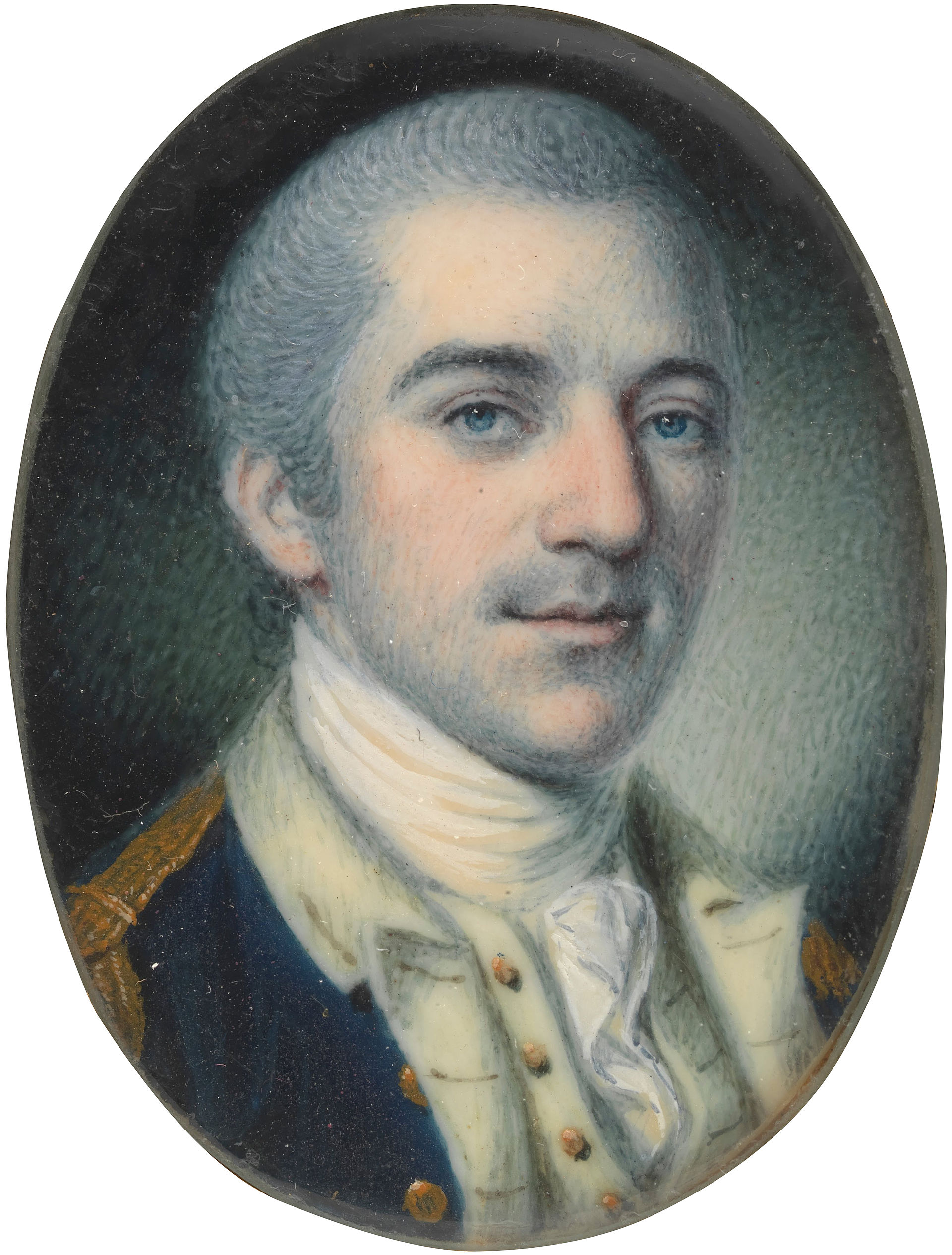
Born in Charleston, South Carolina, on October 28, 1754, John Laurens became a courageous Revolutionary War officer and an outspoken opponent of slavery. As an aide-de-camp to General George Washington, he served alongside Alexander Hamilton, with whom he formed a close friendship. His courage earned Washington’s admiration, though the general later acknowledged that Laurens’s fearlessness could border on rashness. His most challenging contribution to the revolutionary cause, however, lay in his attempt to connect military service with emancipation.
Laurens’s convictions placed him at odds with the society that had privileged him. His father, Henry Laurens, was a wealthy Charleston merchant and planter whose fortune was deeply entangled with the slave trade. John nevertheless argued that enslaved people were unjustly deprived of the rights of mankind. He proposed recruiting enslaved Black men into the Continental Army and securing their freedom through military service—a challenge to slavery in a state whose wealth and political power depended heavily upon it.
In March 1779, the Continental Congress endorsed a plan to recruit Black soldiers in South Carolina and Georgia, subject to those states’ agreement. Its terms promised emancipation to men who served faithfully through the end of the war and returned their weapons, while compensating their enslavers. The proposal was not without precedent: Rhode Island had already authorized the recruitment of enslaved men with a promise of freedom. But South Carolina’s political leadership rejected the threat that arming and emancipating enslaved men posed to its slaveholding order, and Laurens’s efforts failed.
His position was remarkable, but it also carried the contradictions of his time. Laurens linked emancipation to military usefulness, and his private correspondence sometimes treated enslaved people as resources to be exchanged or mobilized. Recognizing those limits does not erase his opposition to slavery; it gives a more honest account of a young revolutionary struggling against an institution embedded in his own family’s wealth and power.
