
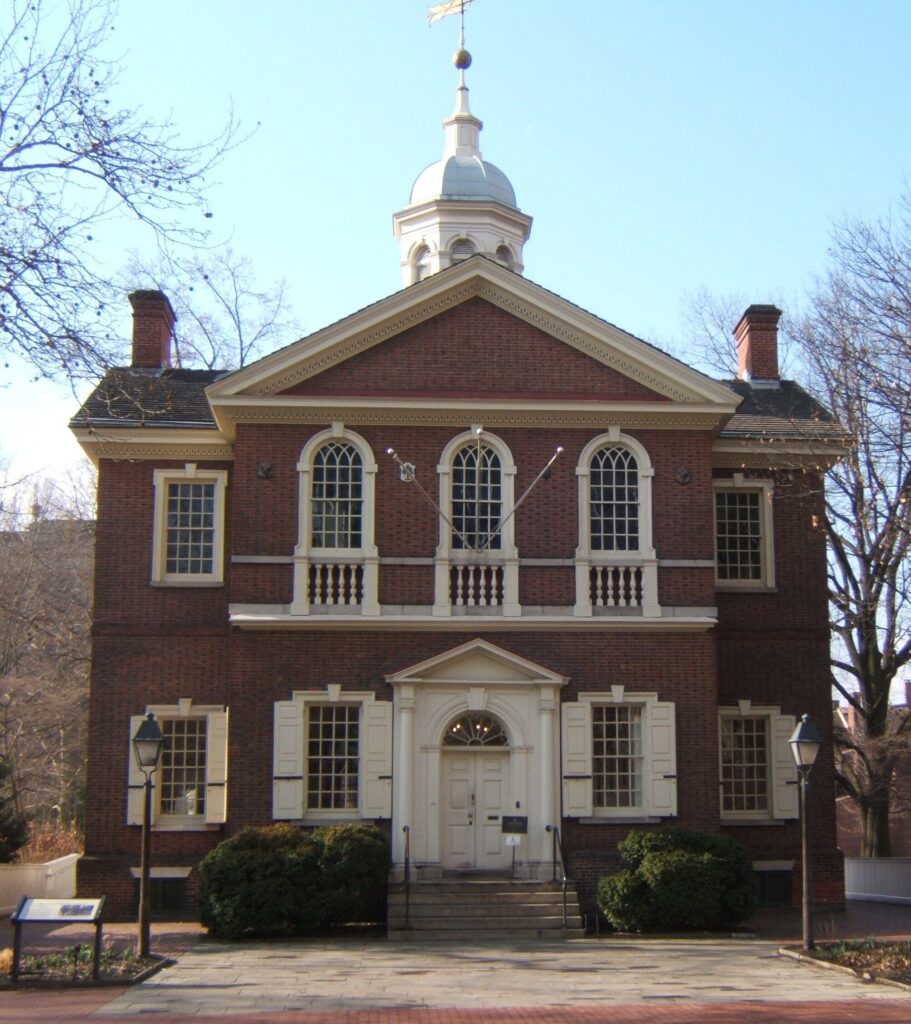
On October 26, 1774, the First Continental Congress adjourned at Carpenters’ Hall in Philadelphia, concluding more than seven weeks of deliberations over the colonies’ response to British imperial policy. Convened in response to the Coercive Acts, the gathering brought together fifty-six delegates from twelve colonies; Georgia alone sent no delegation. By the time they departed, the delegates had established a framework for coordinated resistance that would continue beyond their meetings in Philadelphia.
Before adjourning, the delegates agreed to reconvene in Philadelphia on May 10, 1775, unless Britain satisfactorily addressed their grievances. That decision preserved a means of collective action without foreclosing reconciliation. When the Second Continental Congress assembled, however, the fighting at Lexington and Concord had already transformed the crisis. The First Congress’s lasting importance lay not in anticipating that war, but in helping establish the political relationships and local institutions through which the colonies could respond together.
One of the Congress’s most consequential achievements was the Continental Association, adopted on October 20. It organized economic pressure through agreements against importing, consuming, and exporting specified goods, with restrictions taking effect in stages. Nonimportation was to begin in December 1774, while the ban on exports to Britain was scheduled for September 1775. These measures sought to turn colonial opposition into sustained commercial pressure on Britain.
The Association’s significance extended beyond trade. Local committees would monitor compliance, translating a continental agreement into action within individual communities. These bodies helped build a network of political organization outside the established machinery of royal government. In this sense, Congress did more than announce a boycott: it helped create the means to sustain coordinated resistance.
