
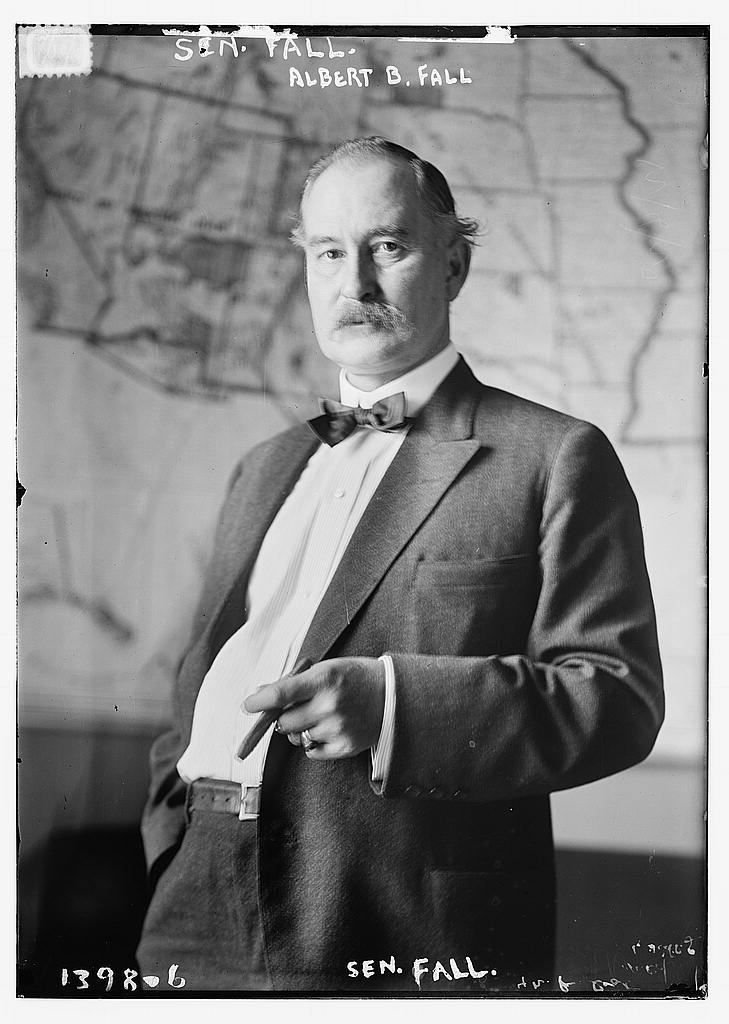
On October 25, 1929, a jury in Washington, D.C., convicted former Secretary of the Interior Albert B. Fall of accepting a $100,000 bribe from oil magnate Edward L. Doheny. The verdict made Fall the first former presidential Cabinet official convicted of a felony for misconduct in office and marked a major turning point in the Teapot Dome scandal.
The scandal centered on Fall’s leasing of naval petroleum reserves to private oil interests without competitive bidding. Harry F. Sinclair’s company obtained the Teapot Dome lease in Wyoming, while Doheny’s interests secured leases in California. A Senate investigation led by Senator Thomas J. Walsh exposed concealed financial dealings between Fall and the oilmen, including a $100,000 cash payment from Doheny that both men characterized as a loan. Fall’s bribery conviction concerned that payment and his subsequent award of leases to Doheny’s company.
Fall was sentenced to one year in prison and fined $100,000. Yet the legal outcome was far from straightforward: a separate jury acquitted Doheny of paying the very bribe Fall had been convicted of accepting. The government also succeeded in overturning the corrupt leases and recovering control of the naval reserves.
The conviction remains a landmark in the history of executive accountability—not because it eliminated corruption or produced uniformly successful prosecutions, but because a former Cabinet official faced criminal punishment for abusing public office. The broader scandal also demonstrated how congressional investigation could expose concealed dealings involving the nation’s public resources.
