
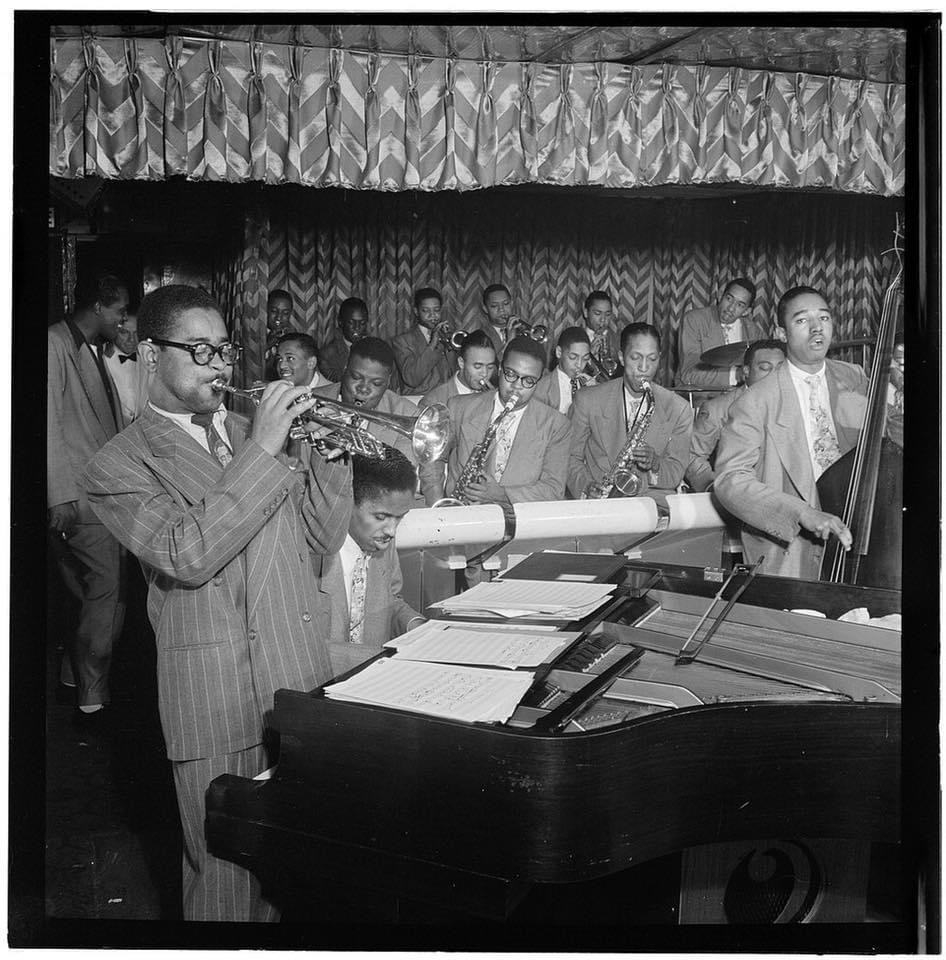
Born John Birks Gillespie on October 21, 1917, in Cheraw, South Carolina, Dizzy Gillespie became one of the defining figures of modern jazz. A virtuoso trumpeter, composer, and bandleader, he combined dazzling technique with harmonic imagination and rhythmic daring, helping reshape the sound and possibilities of the music.
During the 1940s, Gillespie and alto saxophonist Charlie Parker emerged as leading architects of bebop. Working within a wider circle of innovators that included Thelonious Monk and Kenny Clarke, they developed a musical language of intricate harmonies, rapid improvisation, and rhythmic surprise. Gillespie brought that language to both small groups and big bands, helping establish bebop as a major force in jazz.
His influence also extended to Afro-Cuban jazz. Through his relationships with Cuban trumpeter Mario Bauzá and percussionist Chano Pozo, Gillespie helped bring Afro-Cuban rhythms to wider jazz audiences. “Manteca,” co-written with Pozo and arranger Gil Fuller, became a landmark of that collaboration, while “A Night in Tunisia” remains among his best-known compositions.
Gillespie’s puffed cheeks and, from 1953 onward, his distinctive upturned trumpet bell made him instantly recognizable. Yet his enduring importance lies in the music: the compositions, performances, and bands through which he helped shape generations of jazz musicians. On the anniversary of his birth, his legacy remains one of invention, collaboration, and an expansive musical imagination.
Photo Caption:
Dizzy Gillespie and Fellow Jazz Innovators
Dizzy Gillespie pictured with John Lewis, Cecil Payne, Miles Davis, and Ray Brown at the Downbeat in New York City, between 1946 and 1948. Photograph by William P. Gottlieb, Library of Congress. The image captures a gathering of musicians during bebop’s formative era.
