
On October 21, 1965, Ohio motorcycle racer George Roeder drove a streamlined Harley-Davidson powered by a 250cc Sprint engine across Utah’s Bonneville Salt Flats at nearly 177 miles per hour. Reporting on the achievement the following spring, Cycle World recorded a two-way flying-mile average of 176.817 mph—an extraordinary speed for a motorcycle with such a small engine.
The distinction was important: Roeder had not set the outright speed record for all motorcycles. According to Cycle World, his machine went faster than any previous unsupercharged 250cc motorcycle, although the record was officially recognized only in the United States by the AMA. Its gasoline-burning, pushrod single-cylinder engine made the performance especially notable.
Roeder, a native of Monroeville, Ohio, was already an accomplished racer and a member of Harley-Davidson’s factory team. His Bonneville achievement added a land-speed milestone to a career that included eight AMA national victories during the 1960s. It demonstrated what a small-displacement engine could achieve in a purpose-built streamliner—and revealed another side of a rider best known for his success on dirt tracks.
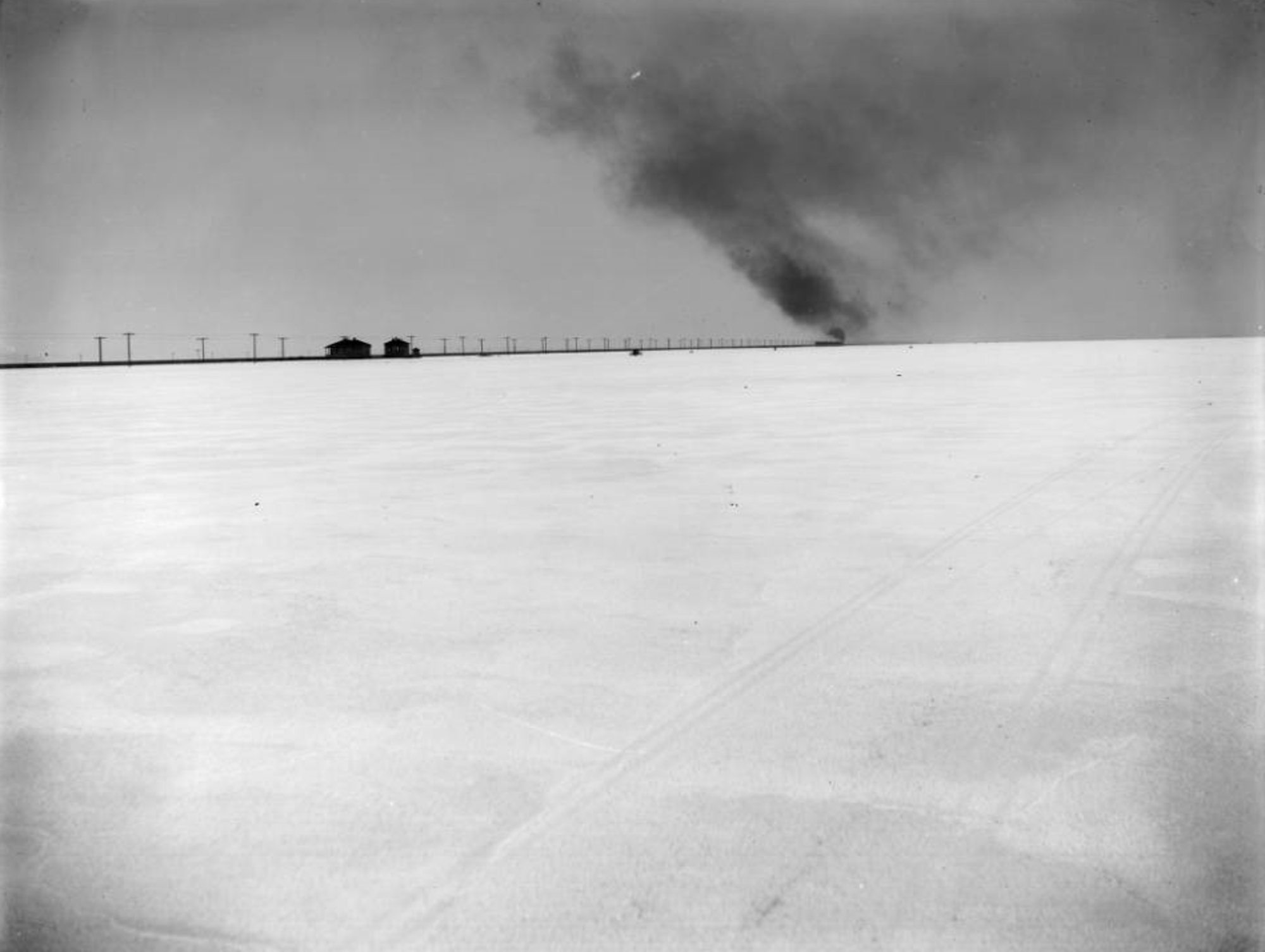
Photo Caption:
The Bonneville Salt Flats Before the Speed Run
An eastbound Western Pacific Railroad passenger train crosses the Bonneville Salt Flats near Salduro, Utah, around 1912. The photograph shows the landscape more than half a century before George Roeder’s October 21, 1965, run, when his 250cc Harley-Davidson-powered streamliner averaged nearly 177 mph over a measured flying mile in two directions.
