
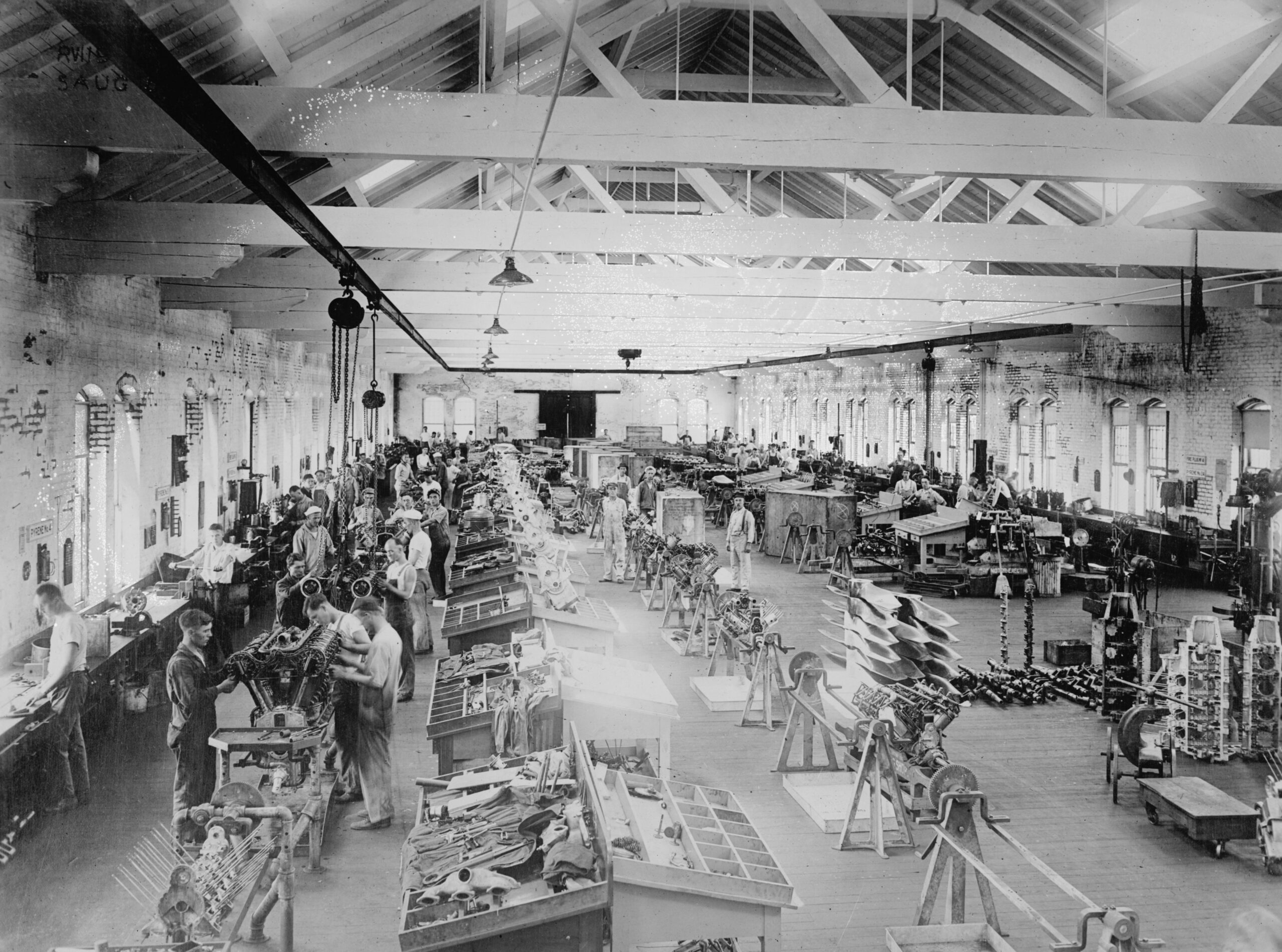
Captured on October 15, 1919, this archival photograph shows technicians working in a military machine shop devoted to the repair and maintenance of Liberty motors. Developed in 1917 through a rapid collaboration led by Packard’s Jesse Vincent and Hall-Scott’s Elbert Hall, the Liberty L-12 was a liquid-cooled, twelve-cylinder aircraft engine designed for high power, light weight, and mass production. American automobile manufacturers produced more than 20,000 of the engines, which became a mainstay of U.S. military aviation during and after World War I.
After the 1918 armistice, maintenance depots such as this one remained essential for testing, overhauling, and preserving the large surplus of military equipment left by the war. Machinists and mechanics worked to keep Liberty engines serviceable for training, peacetime military operations, and experimental aviation. The expertise developed in these facilities helped reinforce emerging standards in precision manufacturing and engine repair.
Surplus Liberty engines also helped fuel the growth of American aviation and marine engineering in the 1920s. They powered early airmail and commercial aircraft, contributed to record-setting flights such as the Navy-Curtiss NC-4’s 1919 transatlantic crossing, and found new life in high-speed Prohibition-era boats. This photograph is a vivid reminder of the industrial labor and technical craftsmanship that kept early aviation moving forward.
Image via LOC, no known restrictions.
