
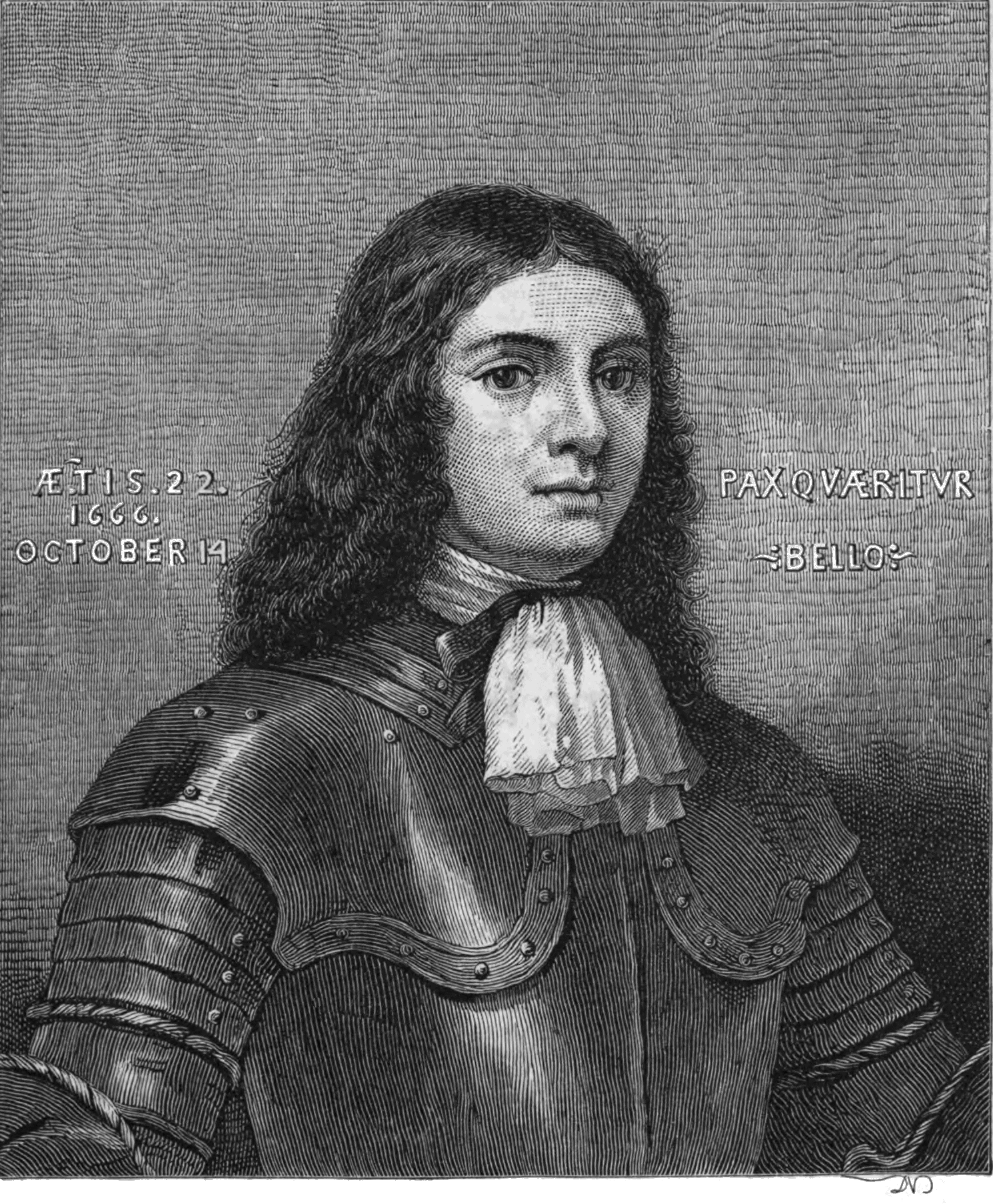
Born on October 14, 1644, in London, England, William Penn grew from a privileged child of the British aristocracy into one of the most influential colonial planners in American history. The son of a prominent Royal Navy admiral, Penn faced severe societal backlash and multiple imprisonments after he abandoned his expected aristocratic path—which included taking part in suppressing a mutiny at Carrickfergus in 1666—to embrace the persecuted Religious Society of Friends, commonly known as the Quakers. This conversion permanently reoriented his intellect toward the defense of conscience.
In 1681, Penn parlayed a substantial debt owed by the Crown to his late father into a historic charter from King Charles II, granting him a vast tract of land in North America that would become the Province of Pennsylvania. Penn viewed the colony not merely as a commercial venture, but as a “Holy Experiment”—a practical laboratory designed to prove that diverse religious groups could live together peacefully under a common system of law. He drafted the 1682 Frame of Government, which established a governor, council, and elected assembly, reflected his commitment to jury trials and fair legal process, and guaranteed freedom of worship to monotheists—an exceptionally broad protection for its era, though political rights remained limited for non-Christians.
Penn’s administrative vision also shaped the physical design of Philadelphia. Working with surveyor Thomas Holme, he laid out the city on a spacious grid with wide streets and public green spaces, intending to avoid the crowding, fire risk, and disease that plagued London. His approach to Indigenous relations was similarly distinctive: Penn generally sought negotiated purchases from the Lenape rather than outright seizure, helping establish an unusually peaceful early relationship between colonists and Native peoples. Yet this legacy was imperfect; later Pennsylvania land policies, including the 1737 Walking Purchase, exploited and displaced the Lenape.
On the anniversary of his birth, Penn is remembered as a foundational architect of American religious pluralism. His ideals of liberty of conscience, representative government, and peaceful coexistence helped shape later American political thought, even as their implementation in colonial Pennsylvania remained incomplete and sometimes contradictory.
