
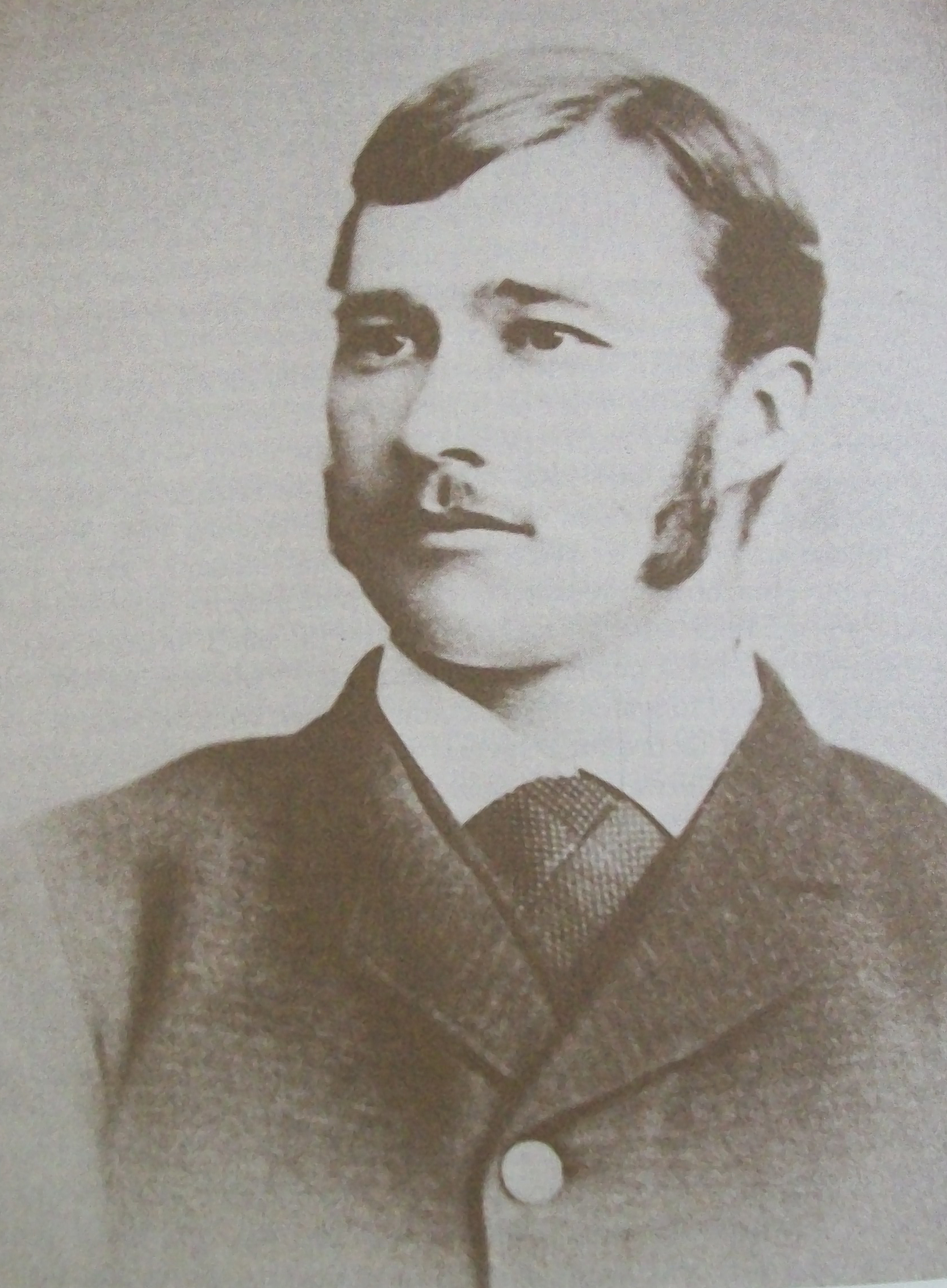
Born on October 14, 1857, in Portland, Indiana, Elwood Haynes was an inventor, metallurgist, engineer, and entrepreneur who helped establish the American automobile industry. After studying at Worcester Polytechnic Institute and Johns Hopkins University, Haynes worked in Indiana’s booming natural gas industry before turning his attention to the emerging “horseless carriage.” He recognized that practical personal transportation would require a lightweight, reliable gasoline engine mounted on a durable wheeled chassis.
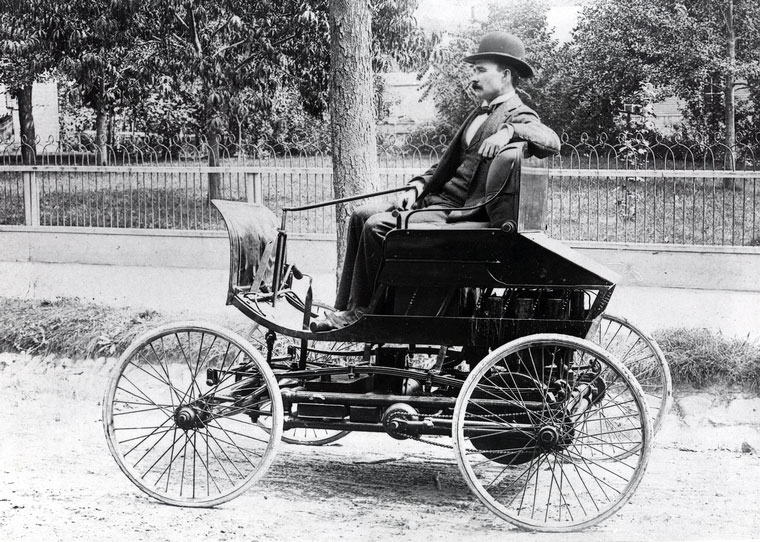
Haynes reached a historic milestone on July 4, 1894, when he road-tested the Pioneer, a gasoline-powered automobile he had designed and built, along Pumpkinvine Pike outside Kokomo, Indiana. The vehicle traveled about six miles at roughly seven miles per hour, demonstrating that the automobile could be more than an experimental curiosity. Building on that success, Haynes partnered with brothers Elmer and Edgar Apperson to form the Haynes-Apperson Company, which began manufacturing automobiles in 1898 and became one of the earliest car companies in the United States.
Haynes’s influence extended well beyond automotive engineering. As a metallurgist, he developed a remarkably hard cobalt-chromium alloy that was later marketed as Stellite, receiving a U.S. patent for the alloy in 1907. Stellite proved transformative for high-speed cutting tools and other demanding industrial applications. Haynes also independently developed an early form of stainless steel, for which he received a patent in 1919; he was one of several inventors working independently on corrosion-resistant steel during that era.
On the anniversary of his birth, Elwood Haynes is remembered as a pivotal American innovator whose work in both automotive design and metallurgy helped carry the country from the horse-drawn age into the industrial age. He died in Kokomo on April 13, 1925, leaving behind a legacy that spans the open road and the modern factory floor.
