
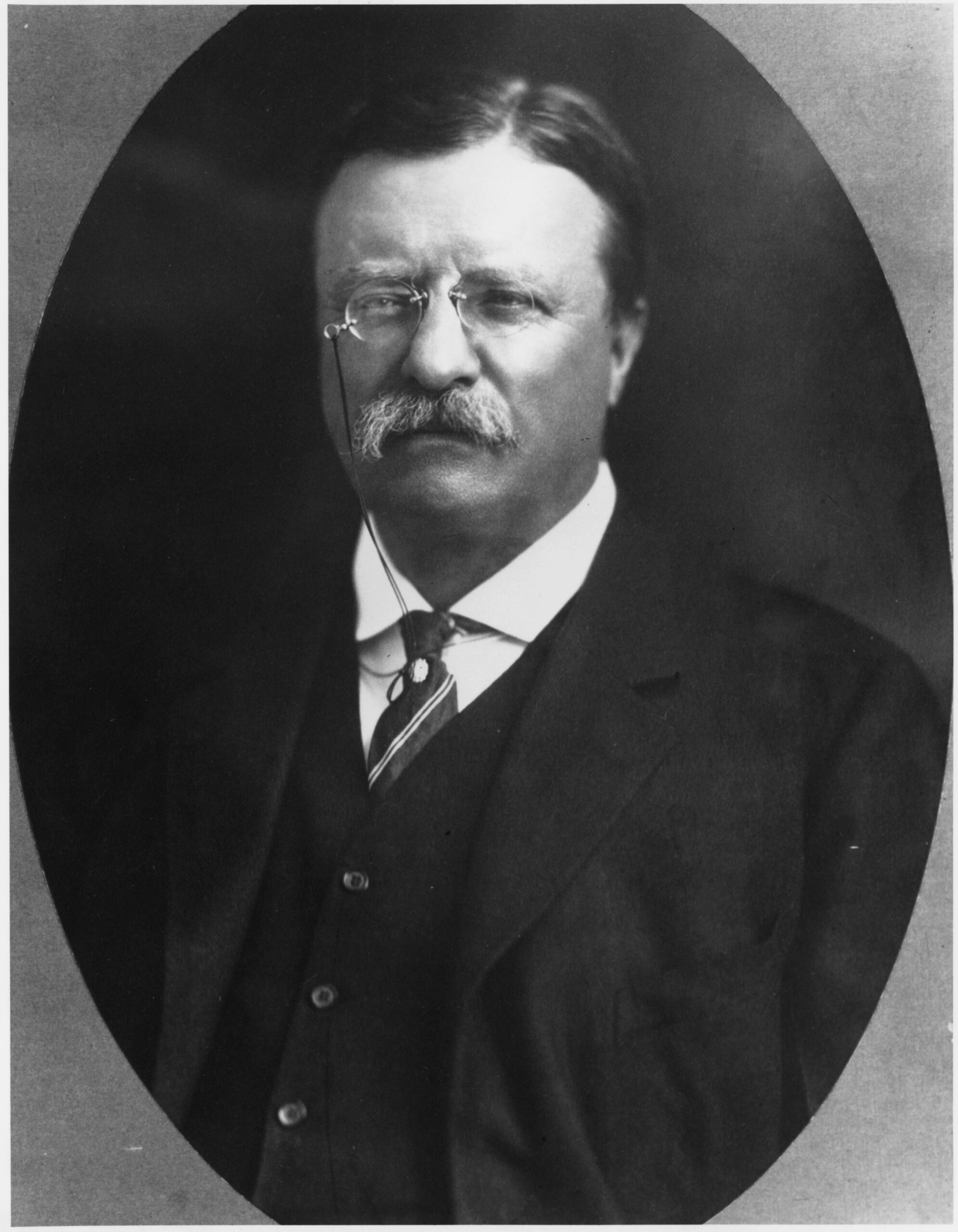
On October 14, 1912, former President Theodore Roosevelt survived an assassination attempt while campaigning for the presidency on the Progressive “Bull Moose” ticket in Milwaukee, Wisconsin. As Roosevelt prepared to enter an open-top car outside the Gilpatrick Hotel, John Schrank, a troubled former saloonkeeper, stepped from the crowd and fired a .38-caliber revolver into his chest at close range.
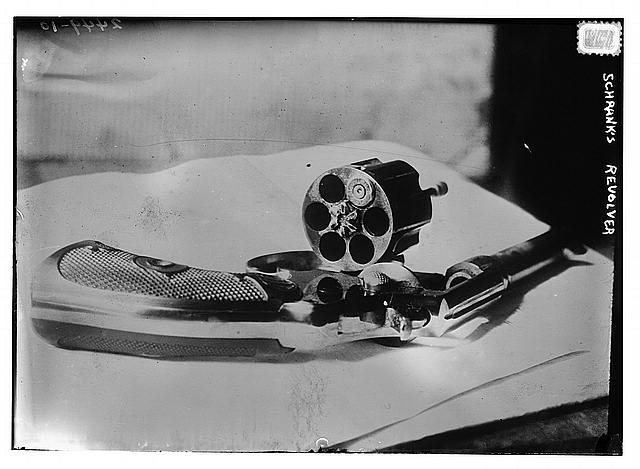
The Colt .38-caliber revolver used by John Schrank in his October 14, 1912 attempt on Theodore Roosevelt’s life is preserved as a historic forensic artifact. The weapon’s close-range velocity was miraculously neutralized by the thick bundles of Roosevelt’s folded manuscript speech and steel eyeglass case, preventing a fatal penetration of the chest cavity.
The bullet passed through Roosevelt’s heavy overcoat and was slowed by a folded, 50-page manuscript of the speech he was scheduled to deliver, along with the metal eyeglass case in his breast pocket. It broke his fourth rib and lodged near his right lung without penetrating vital organs.
Bleeding but refusing immediate hospital treatment, Roosevelt went on to the Milwaukee Auditorium and addressed the crowd for roughly an hour. Opening the speech, he told the stunned audience: “Friends, I shall ask you to be as quiet as possible. I don’t know whether you fully understand that I have just been shot; but it takes more than that to kill a Bull Moose.” Only afterward did he allow physicians to examine him.
