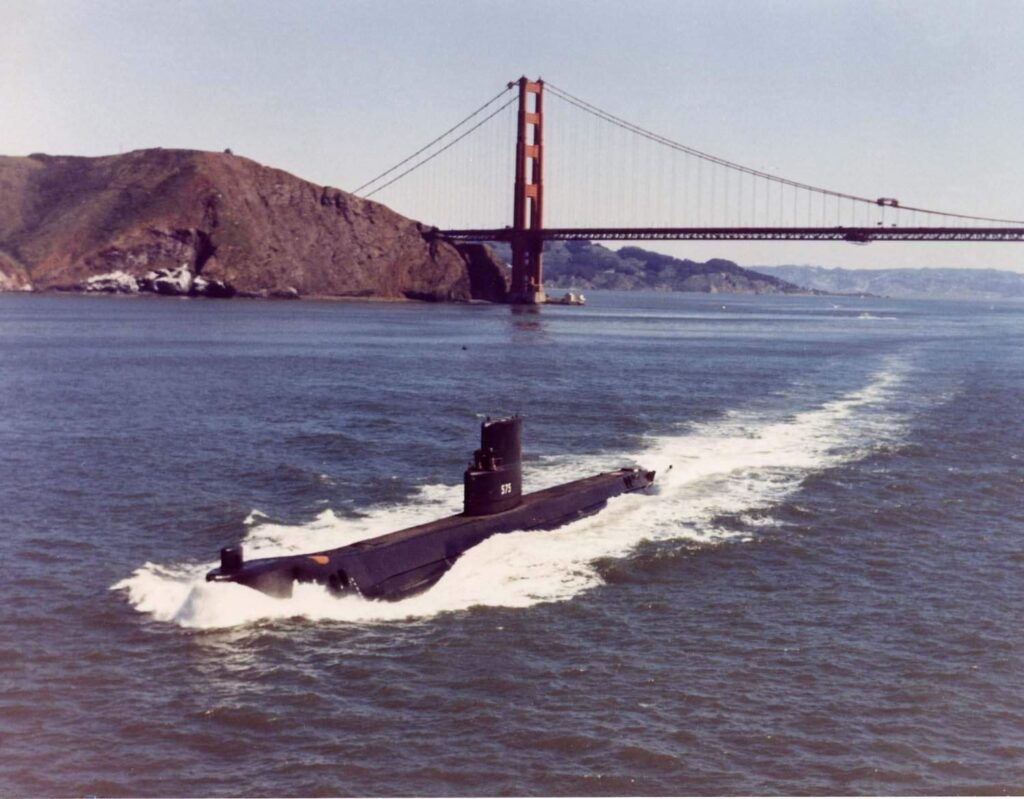
On October 6, 1958, the nuclear-powered submarine USS Seawolf surfaced about 15 miles south of Block Island after completing an extraordinary 60-day submerged voyage. Having gone beneath the surface on August 7, the submarine had traveled more than 13,700 nautical miles without surfacing, entirely independent of Earth’s atmosphere. The patrol nearly doubled the previous submerged-endurance record and offered a dramatic demonstration of how nuclear propulsion was changing undersea operations.
Commissioned in 1957 as the world’s second nuclear-powered submarine, Seawolf was originally fitted with an experimental sodium-cooled nuclear reactor—an alternative to the pressurized-water reactor used aboard USS Nautilus. During the two-month cruise, her crew sustained a closed onboard environment using the submarine’s atmosphere-control and life-support systems. The achievement demonstrated that a nuclear-powered submarine could remain submerged for the duration of a normal wartime patrol, rather than being constrained by the need to surface or snorkel for air.
After surfacing on October 6, Seawolf returned to New London, Connecticut. The crew received a Navy Unit Commendation for demonstrating the ability of a nuclear-powered submarine to remain independent of the atmosphere for a normal war patrol. In December 1958, the boat entered conversion; the Navy replaced her complex sodium-cooled power plant with a pressurized-water reactor.
The 1958 voyage remains an important milestone in naval history. It helped establish the nuclear submarine not merely as a more capable version of earlier boats, but as a vessel able to operate submerged for extended periods with unprecedented mobility and endurance.