
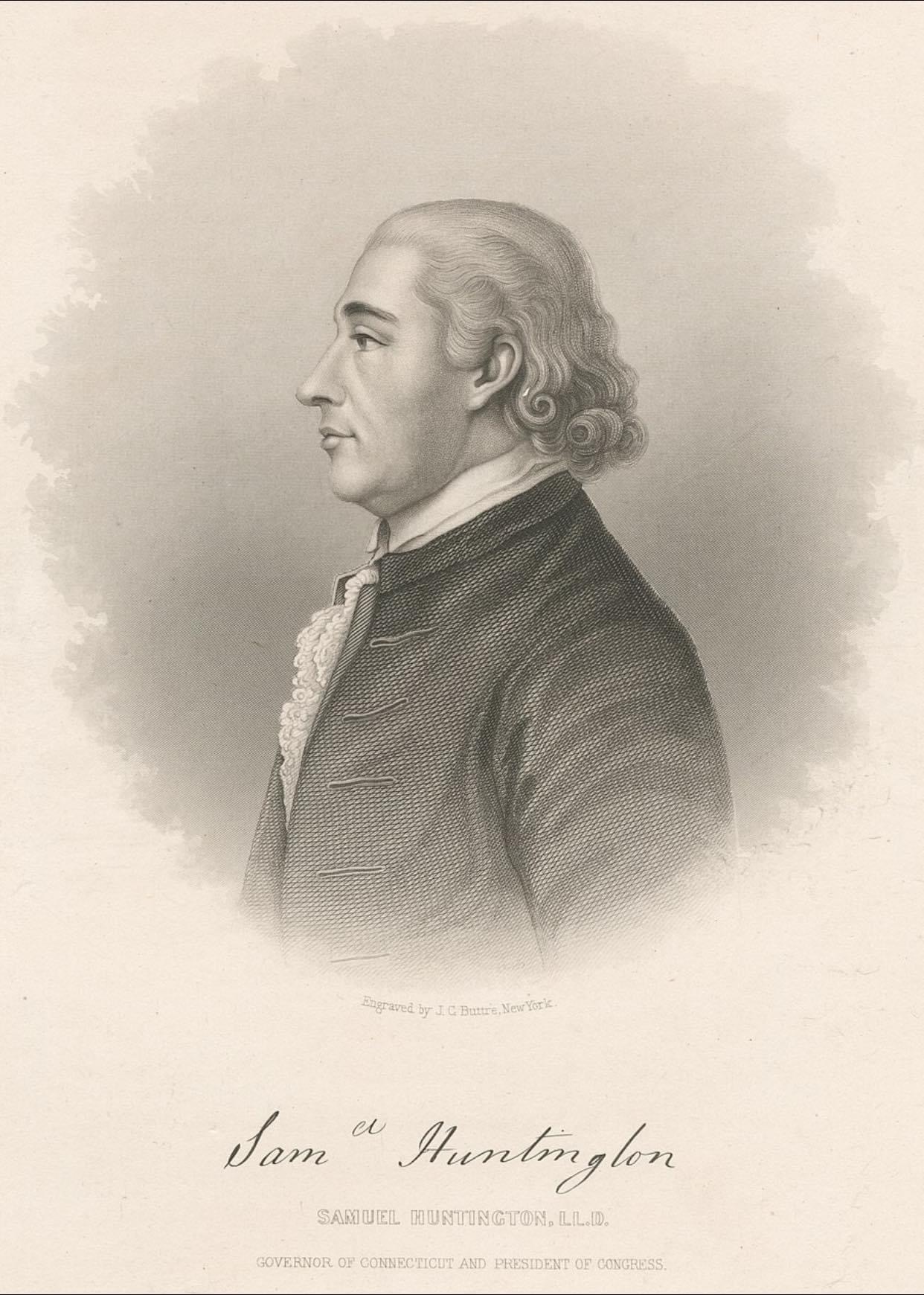
On September 28, 1779, Samuel Huntington of Connecticut was elected the sixth president of the Continental Congress, succeeding John Jay, who had been appointed minister to Spain. Huntington assumed the chair at a perilous point in the American Revolution: the war had entered its fourth grueling year, the states faced persistent strains of coordination and supply, and the Continental currency had sharply depreciated.
Just over three years earlier, Huntington had risked his life and property by signing the Declaration of Independence. A self-educated lawyer from modest agrarian beginnings, he had earned a reputation for diligence, legal judgment, and personal integrity. As president of Congress, he served chiefly as its presiding officer and principal correspondent—guiding debate, handling official communications, and helping Congress maintain contact with military leaders, the states, and foreign partners. The office carried influence, but not the independent executive authority associated with the modern presidency.
Huntington remained in the chair through a decisive constitutional transition. On March 1, 1781, after Maryland became the final state to ratify, the Articles of Confederation took effect and the Continental Congress gave way to the Confederation Congress. Huntington continued as president of the new body, formally titled the United States in Congress Assembled, until ill health forced his resignation later that year.
His presidency did not resolve the Revolution’s military or financial crises, but it provided steady procedural leadership during one of the new nation’s most difficult periods. Huntington’s service helped sustain the civilian institutions of the American cause as the war—and the experiment in self-government—endured its most demanding tests.
Image via Wikimedia Commons; no known restrictions.
