
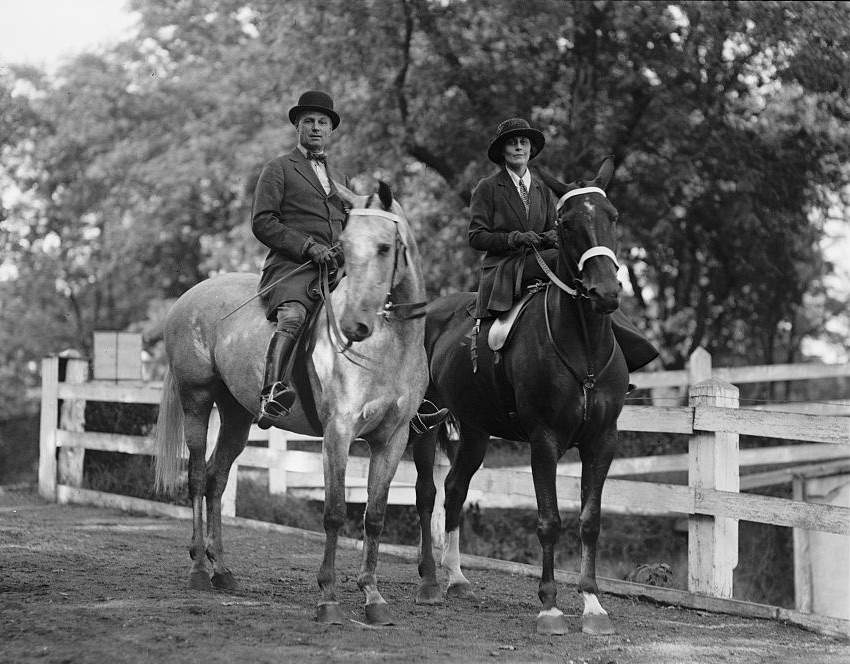
On September 24, 1924, a photograph captured Brigadier General William “Billy” Mitchell and his wife, Caroline Stoddard Mitchell, during an equestrian outing—a rare personal moment amid one of the most contentious campaigns in American military history.
At the time, Mitchell served as Assistant to the Chief of the U.S. Army Air Service. A decorated World War I commander and tireless advocate for aviation, he used his public stature to press for a stronger, more independent American air arm—one less constrained by the Army’s and Navy’s traditional command structures. He argued that aircraft had transformed warfare and exposed the vulnerability of even the largest warships.
Mitchell’s arguments drew national attention during the 1921 bombing tests against captured German vessels. His aircraft sank the former battleship Ostfriesland, a highly publicized event that demonstrated the destructive potential of air power against capital ships, even as military leaders continued to debate what the tests meant for naval strategy.
The image also comes from the final year of Mitchell’s appointment as an Air Service leader. After his term ended in April 1925, he reverted to his permanent rank of colonel and was transferred to San Antonio. Later that year, following the crash of the Navy airship USS Shenandoah and other aviation incidents, Mitchell publicly accused the War and Navy Departments of “incompetency, criminal negligence and almost treasonable administration of the national defense.”
He was court-martialed for insubordination, convicted, and suspended from active duty for five years without pay. Rather than accept the punishment, he resigned from the Army in February 1926. Although his methods and conclusions remained controversial, Mitchell became a foundational figure in the development of American air power and an enduring symbol of the struggle for an independent air force.
Image via the Library of Congress; no known restrictions.
