
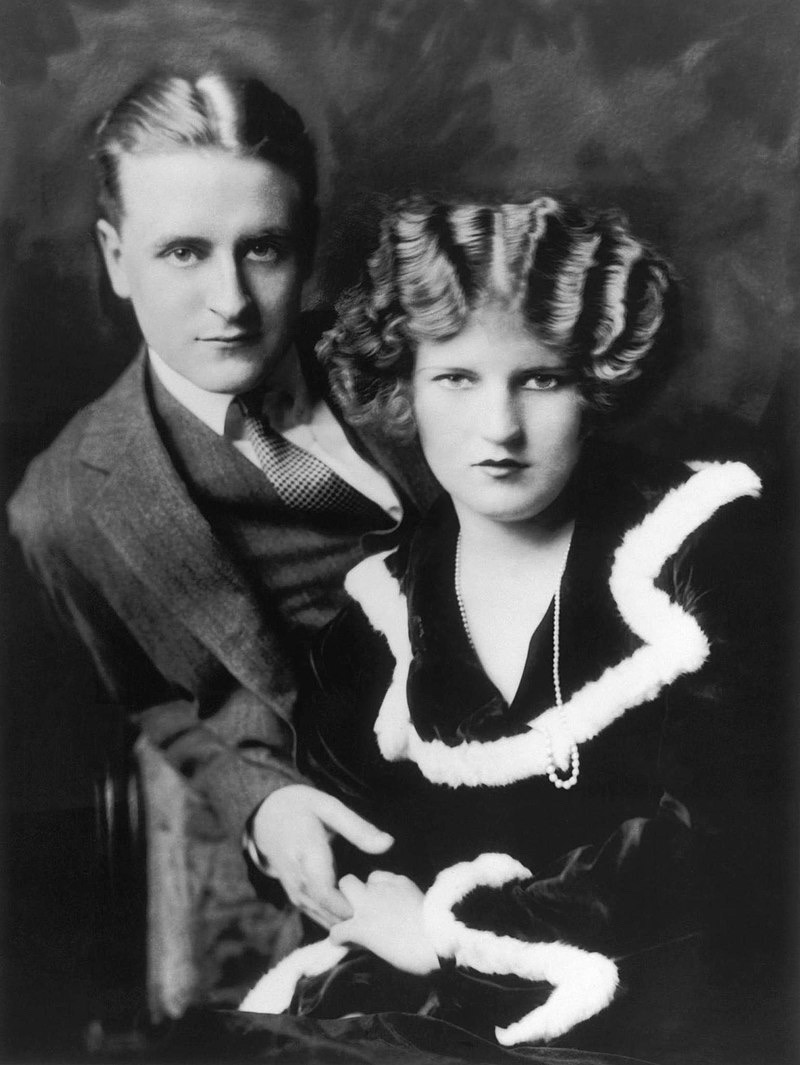
On September 24, 1896, F. Scott Fitzgerald—the novelist, short-story writer, and defining literary voice of the Jazz Age—was born in St. Paul, Minnesota. Named for his distant relative Francis Scott Key, Fitzgerald would transform his early experiences of ambition, romance, class insecurity, and financial pressure into some of the most enduring fiction in American literature.
In 1920, the commercial success of his debut novel, This Side of Paradise, made Fitzgerald an overnight literary celebrity. That same year, he married Zelda Sayre, a writer, artist, and central figure in the public mythology surrounding the Fitzgeralds. The couple became symbols of the Roaring Twenties: glamorous, restless, celebrated, and often living beyond their means as they moved between New York, Europe, and the French Riviera.
Fitzgerald captured both the exhilaration and emptiness beneath the decade’s surface. In works such as The Great Gatsby (1925), Tales of the Jazz Age (1922), and later Tender Is the Night (1934), he examined wealth, desire, social aspiration, and the precarious promise of the American Dream. His prose gave lasting shape to an era marked by speed, spectacle, excess, and disillusionment.
Although Fitzgerald died in 1940 at the age of 44, before he could see the full revival of his reputation, his work has become central to the American literary canon. Nearly a century later, The Great Gatsby remains one of the country’s most widely read and discussed novels—a haunting portrait of ambition, longing, and the dreams that recede just beyond reach.
Image via Wikimedia Commons; public domain in the United States.
