
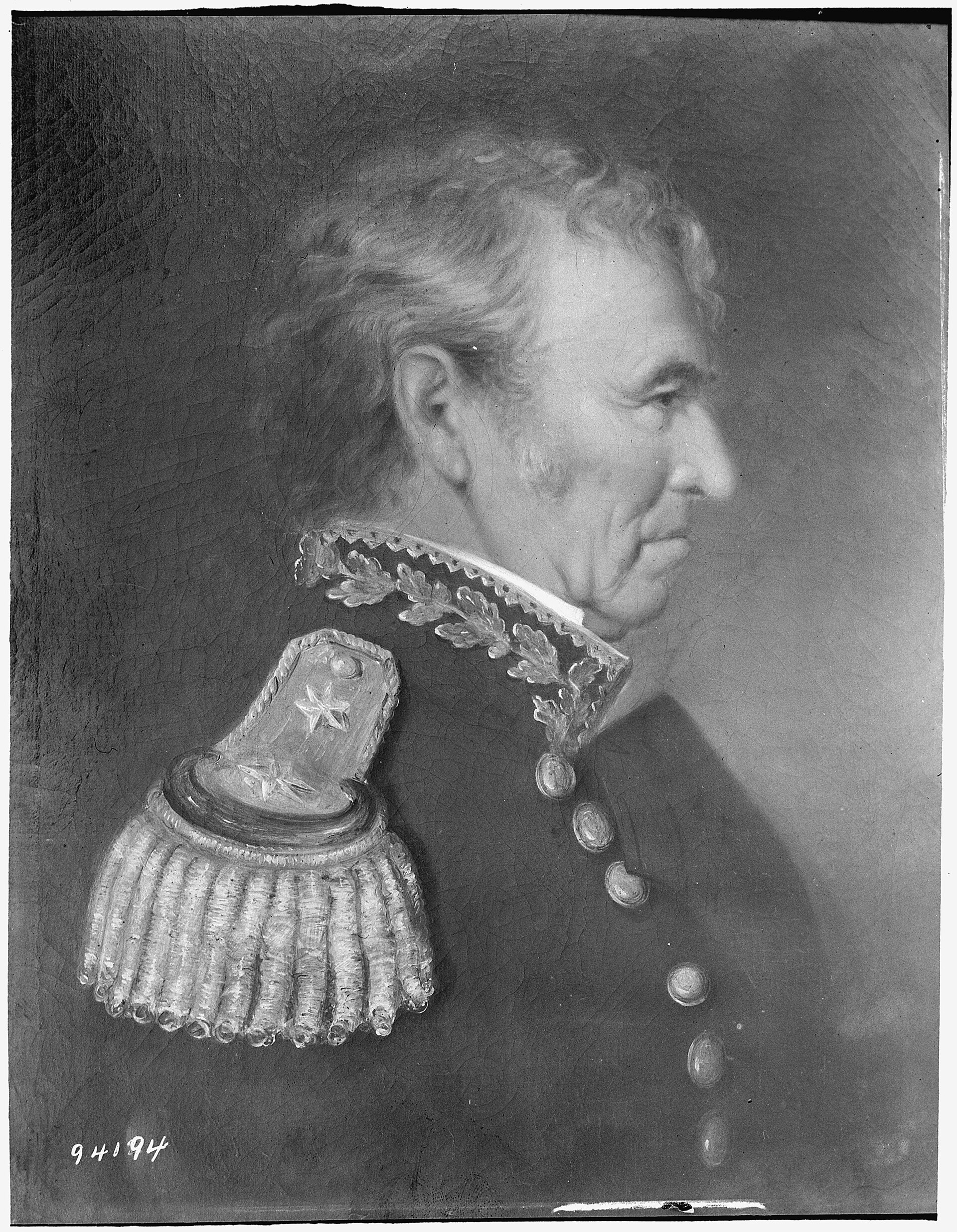
On September 24, 1846, during the Mexican-American War, General Zachary Taylor negotiated the capitulation of Monterrey, Mexico, and an eight-week armistice after four days of hard fighting. The battle, among the first major urban engagements fought by the U.S. Army, had become a brutal contest of street-by-street and house-to-house combat against Mexican forces commanded by General Pedro de Ampudia.
With his position increasingly untenable—and reportedly concerned that U.S. artillery might ignite ammunition stored in the city’s cathedral—Ampudia asked for a cease-fire and a conference. Taylor, who also faced supply and logistical constraints, agreed to have commissioners negotiate the terms of surrender. The American commissioners were General William J. Worth, General James Pinckney Henderson, and Colonel Jefferson Davis; Ampudia named Generals J. L. Ortega and P. Requena, along with Manuel María de Llano, governor of Nuevo León.
The resulting agreement gave the United States possession of Monterrey, its public property, artillery, and fortifications. In return, the Mexican garrison was permitted to evacuate with its personal arms and baggage, as well as one six-gun artillery battery. Taylor also accepted an eight-week suspension of hostilities, during which neither army was to advance beyond the agreed line.
The terms were immediately controversial. While the armistice gave Taylor’s army time to occupy the city, treat its wounded, and stabilize its position, President James K. Polk regarded it as unnecessarily generous. Polk believed Taylor had failed to exploit an opportunity to destroy Ampudia’s army, and he condemned the agreement—partly amid concern that the increasingly popular Taylor could become a political rival.
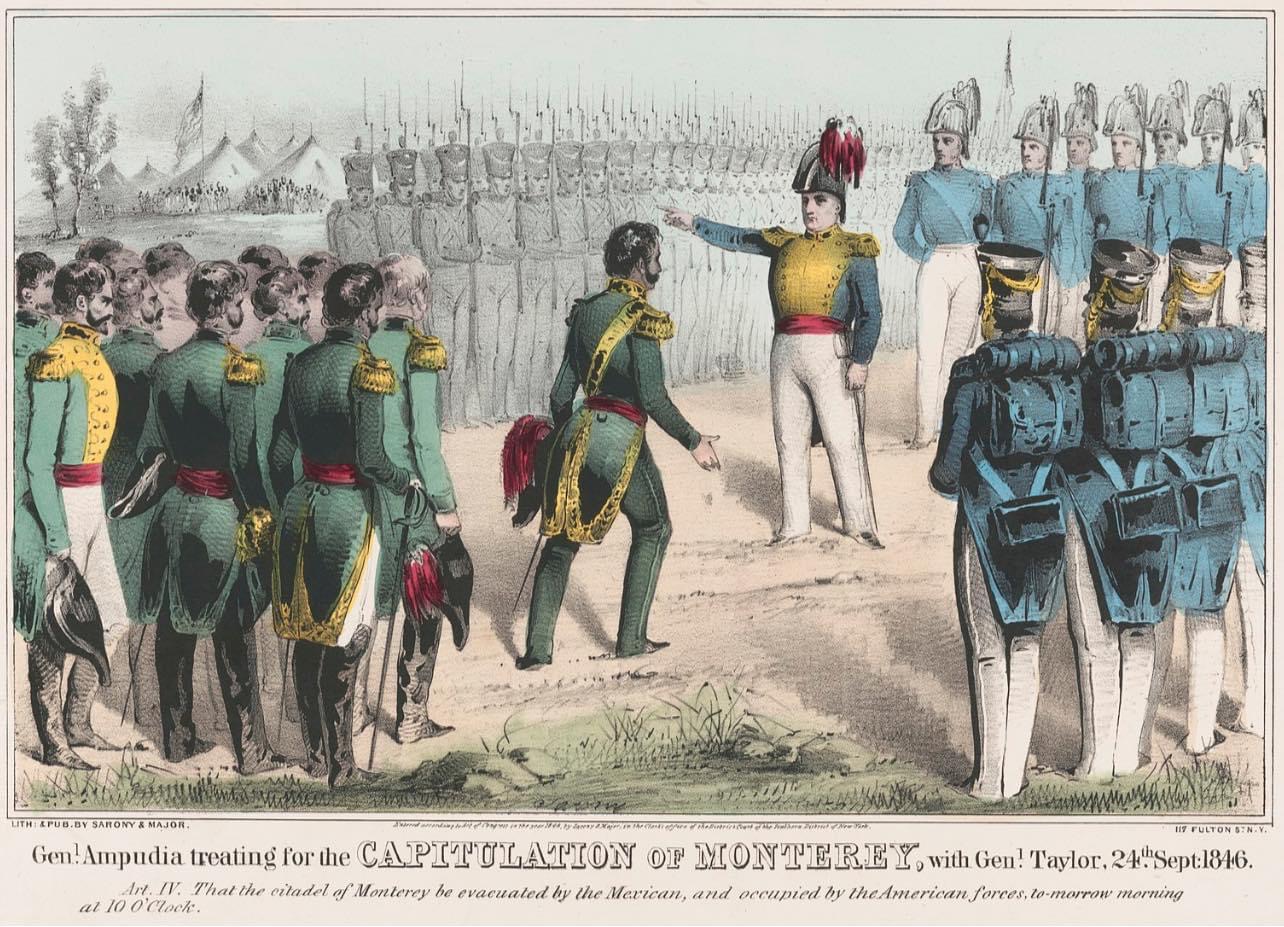
Image: “Genl. Ampudia treating for the capitulation of Monterey, with Genl. Taylor, 24th Sept. 1846,” Currier & Ives / Library of Congress, public domain.
