
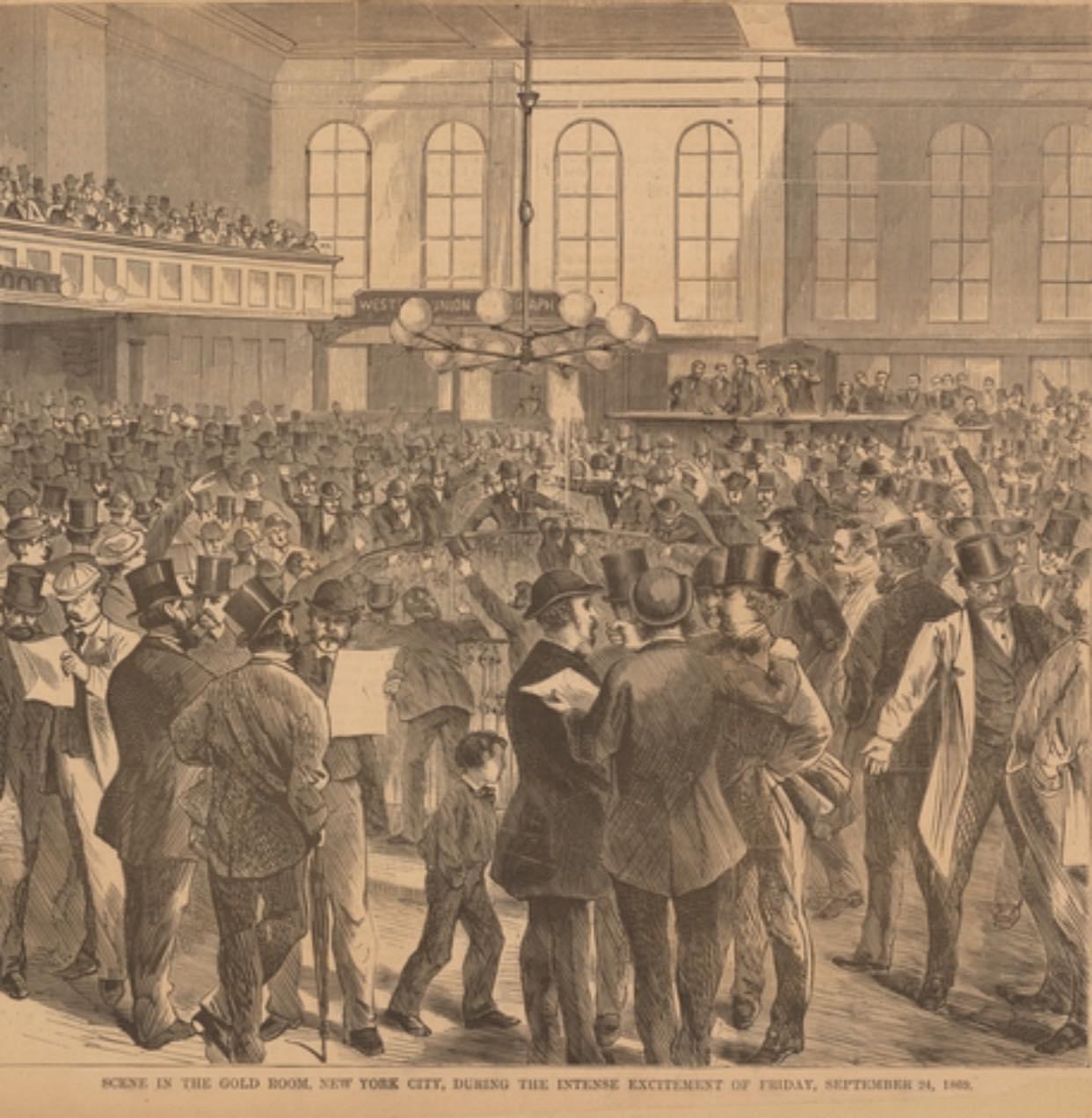
On September 24, 1869, a financial crisis remembered as Black Friday convulsed the U.S. gold market. The panic followed an attempt by Wall Street speculators Jay Gould and James Fisk to corner gold on the New York Gold Exchange—known as the Gold Room—by buying aggressively and restricting the supply available to other traders.
Their strategy depended on keeping the federal government from selling Treasury gold, which would have increased supply and restrained prices. Gould and Fisk sought influence within President Ulysses S. Grant’s circle through Abel Corbin, Grant’s brother-in-law, while also benefiting from inside information connected to Treasury official Daniel Butterfield. As gold prices surged, speculation intensified and traders who had borrowed heavily to buy gold became increasingly vulnerable.
President Grant eventually recognized that his administration’s name was being used to support a market manipulation scheme. On the evening of September 23, he authorized Treasury Secretary George S. Boutwell to sell $4 million in government gold. When the market opened the next morning, gold climbed from roughly $143 to a peak near $162 before word of the Treasury intervention spread. The price then collapsed—falling to roughly $135—as traders rushed to sell.
The consequences were severe. Several brokerage houses failed, many speculators were financially ruined, and the broader stock market declined sharply. The disruption also affected commerce, especially businesses and farmers whose transactions depended on gold prices and exchange rates. Although the panic caused months of economic strain rather than an immediate national depression, it exposed the vulnerability of financial markets to insider influence and speculative manipulation.
Gould largely avoided the worst losses after quietly reducing his exposure before the crash, while Fisk also escaped full accountability. The episode damaged public confidence in Wall Street and Grant’s administration, becoming one of the Gilded Age’s most notorious financial scandals. Black Friday remains a stark example of the destructive consequences of market cornering, political access, and weak safeguards against conflicts of interest.
Image: “Scene in the Gold Room, New York City, during the intense excitement of Friday, September 24, 1869.”
