
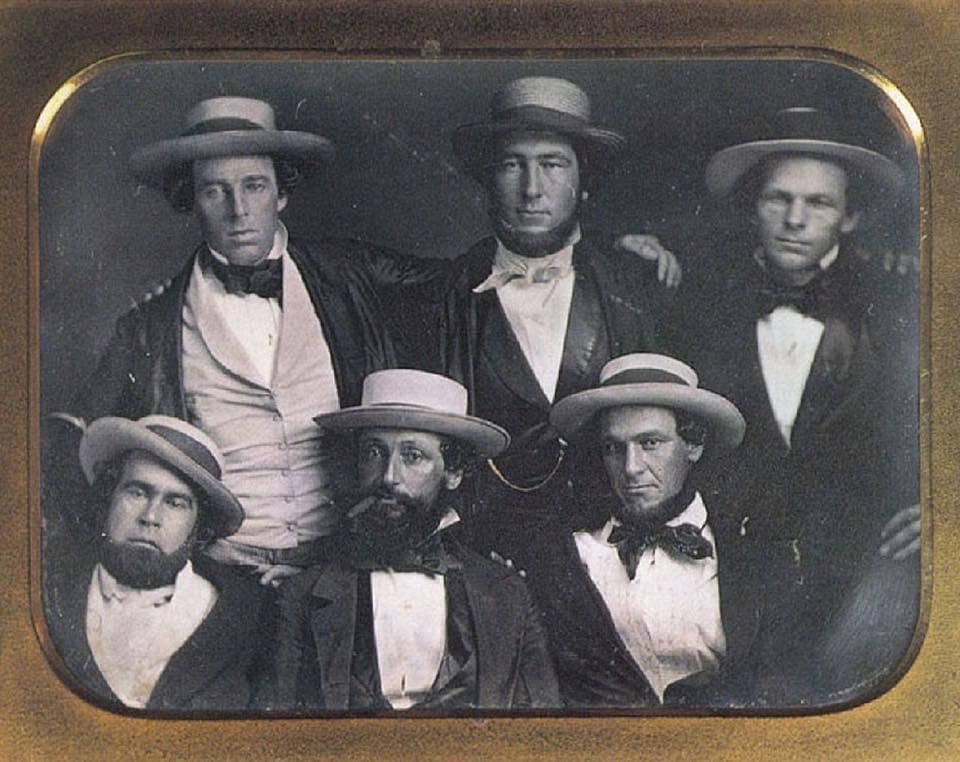
On September 23, 1845, the New York Knickerbocker Base Ball Club adopted a constitution, bylaws, and 20 written rules for its version of “base ball,” helping give the informal New York-area game a more organized club framework. The club included Alexander Cartwright and other young New York professionals, while William R. Wheaton and William H. Tucker are generally credited with formalizing the rules. The Knickerbockers played and practiced at the Elysian Fields in Hoboken, New Jersey, across the Hudson River from Manhattan.
Known as the Knickerbocker Rules, the code did not create baseball from nothing. Rather, it recorded and refined practices that had developed in earlier local ball games. The rules placed four bases at equal distances, defined a foul ball as one hit outside the range of first or third base, and required three “hands out” to retire a side. They also prohibited “soaking” or “plugging”—retiring a runner by throwing the ball at him. Instead, a runner could be put out by being touched with the ball or by reaching a base after an opponent already held the ball there.
Several provisions differed sharply from modern baseball. A game was played to 21 “aces,” or runs, provided the teams had an equal number of turns at bat. A batter could be retired on a ball caught either on the fly or after its first bounce. And after three missed swings, the batter was out only if the third strike was caught; if it was not caught, he had to run.
The Knickerbocker Rules therefore matter less as a single act of invention than as an influential early written code for the “New York game,” a form of base ball that became central to the sport’s later standardization and growth.
Image caption: Members of the New York Knickerbocker Base Ball Club, c. 1847. Wikimedia Commons, public domain.
