
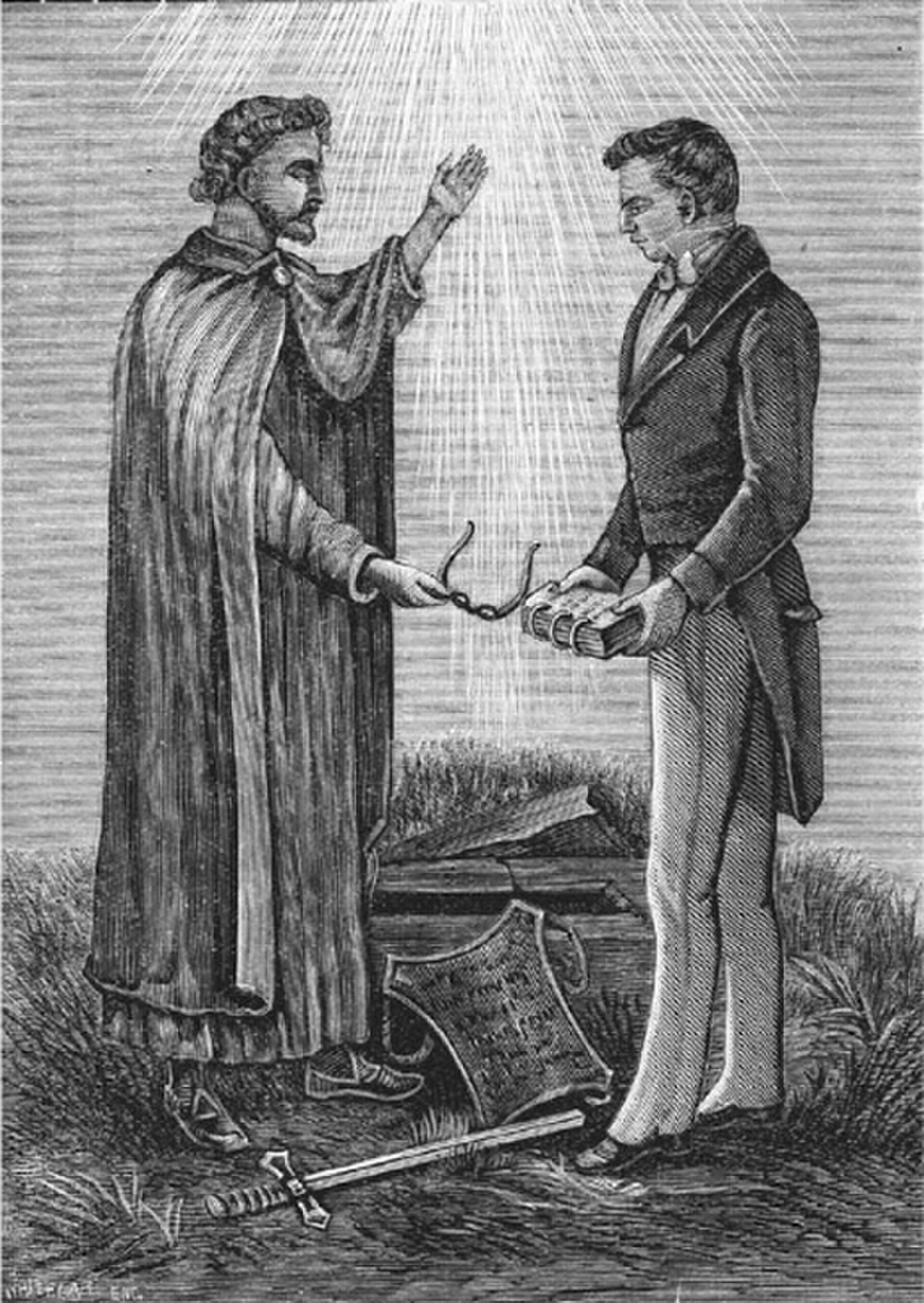
During the night of September 21–22, 1823, Joseph Smith later reported that a heavenly messenger appeared to him at his family home in Manchester Township, near Palmyra, New York. Smith, who was seventeen years old, identified the messenger in later accounts as Moroni. He said Moroni told him of an ancient record inscribed on gold plates and buried in a stone box in a nearby hill.
The next day, Smith said, he went to the hill and found the place described in the vision. According to his later account, he was not permitted to take the plates at that time. Instead, he was instructed to return annually on the same date for further instruction. Four years later, on September 22, 1827, Smith reported that he received the plates and began the work that he described as their translation.
Smith’s reported experience emerged amid the intense revivalism and religious experimentation of early nineteenth-century western New York, an area later known as the “Burned-over District.” The account became central to the emerging Latter Day Saint movement: the Book of Mormon was published in 1830, and the Church of Christ—later known as The Church of Jesus Christ of Latter-day Saints—was organized that same year.
Whether understood as a sacred visitation by believers or as a pivotal claim in American religious history, the 1823 episode marked the beginning of a movement that would grow into a worldwide religious tradition. Its later westward migrations and settlements profoundly influenced the history, culture, and demographic development of the American West.
Image: A 1893 engraving by Edward Stevenson of the Angel Moroni delivering the Golden Plates to Joseph Smith in 1827 via Wikipedia Commons
