
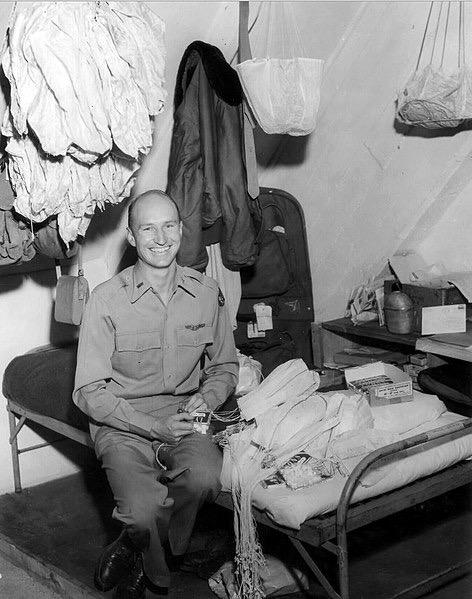
On September 22, 1948, the humanitarian effort known as Operation Little Vittles officially became an organized component of the Berlin Airlift. It had begun informally that July, when U.S. Air Force Lieutenant Gail Halvorsen started dropping small bundles of chocolate and chewing gum to children near Tempelhof Airfield, each suspended beneath a tiny parachute made from a handkerchief.
Halvorsen’s individual gesture quickly grew into a wider campaign. As news reached the United States, schoolchildren, community groups, and candy manufacturers donated sweets, handkerchiefs, and labor to support the effort. What began as a spontaneous act of kindness was formalized under the name Operation Little Vittles, a play on “Operation Vittles,” the U.S. codename for the Berlin Airlift.
The program provided more than treats. During the Soviet blockade of West Berlin, it offered children a visible sign of goodwill from the Allied air crews supplying the city. By the end of the airlift, 25 crews had dropped about 23 tons of chocolate, chewing gum, and other candy over Berlin, using hundreds of thousands of small parachutes. The initiative became one of the most enduring symbols of the airlift and helped shape West Berliners’ view of the postwar American presence.
Image via Wikimedia Commons, public domain.
