
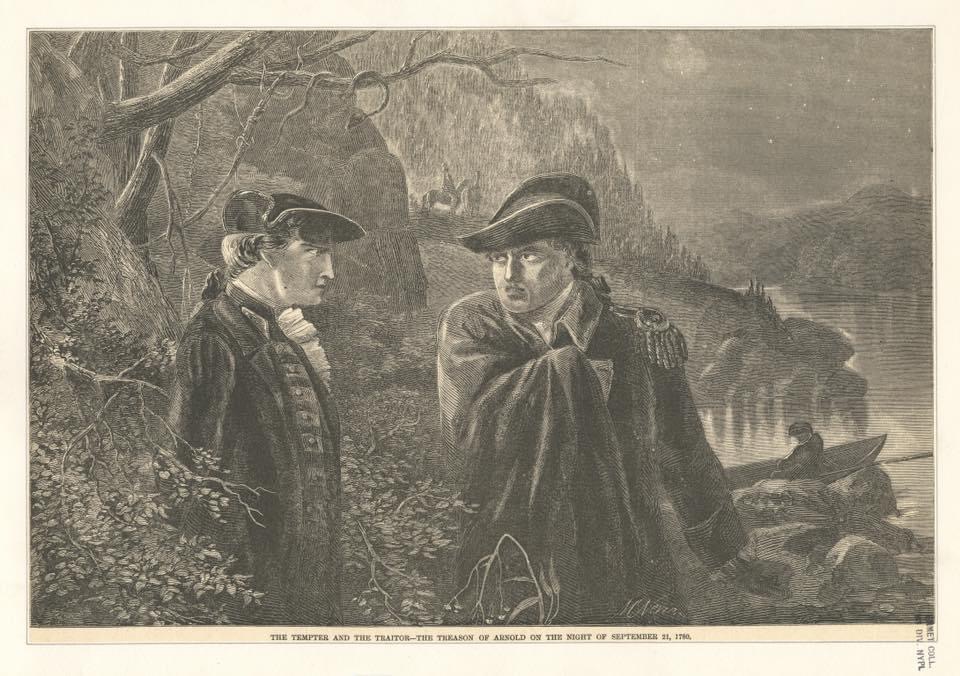
Late on September 21 and into the early hours of September 22, 1780, one of the most notorious conspiracies in American history moved toward its climax. Continental Major General Benedict Arnold secretly met British Major John André near Haverstraw, New York, at the foot of Long Clove Mountain. Arnold had been negotiating for months to turn over the strategically vital American post at West Point in exchange for money and a commission in the British Army.
André, adjutant general of the British forces in North North America, had traveled up the Hudson River aboard the British sloop-of-war Vulture to arrange the details. Under cover of darkness, he was brought ashore by boat to meet Arnold. The two men discussed the proposed transfer of West Point and the information André would need to carry back to British commander Sir Henry Clinton.
Their meeting lasted too long. By dawn, André could not safely return to the Vulture, and circumstances soon forced him to travel by land through territory controlled by the Americans. Arnold directed him toward the home of Joshua Hett Smith, where André would wait before attempting to make his way back to British lines.
That decision proved disastrous. Traveling in civilian clothing and using the name “John Anderson,” André carried papers supplied by Arnold that described West Point’s defenses and military situation. On September 23, he was captured near Tarrytown by three American militiamen. The documents found in his possession exposed Arnold’s plot. Arnold escaped to British lines, but André was tried as a spy and hanged on October 2, 1780. The failed conspiracy secured Arnold’s place in American memory as a symbol of treason.
“The boat, thus freighted with secrets on which depended the life of a nation, glided silently over the water towards the western shore… Thus these plotters against Liberty stood concealed in that lonely place, at the hour of midnight…”
—George Canning Hill, Benedict Arnold: A Biography
Image: “The Tempter and the Traitor—The Treason of Arnold on the Night of September 21, 1780,” New York Public Library; no known restrictions.
