
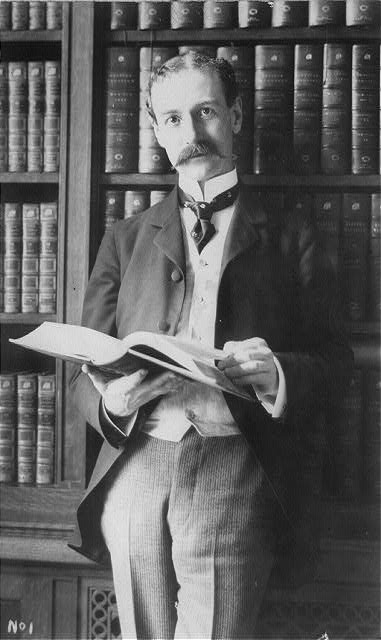
On September 20, 1861, Herbert Putnam—one of the most consequential figures in American librarianship—was born in New York City.
Putnam received a B.A. from Harvard University in 1883, then studied law at Columbia University and was admitted to the bar in 1886. But libraries became his lasting vocation. Before coming to Washington, he led the Minneapolis Athenaeum, the Minneapolis Public Library, and the Boston Public Library, building a reputation as an accomplished administrator and a leader in the growing American library movement.
In 1899, Putnam became the eighth Librarian of Congress, a post he held for forty years, until 1939. He was the first experienced librarian appointed to the role, and he helped transform the Library of Congress from a resource centered chiefly on Congress into a national institution with services reaching libraries and researchers across the country.
During his tenure, the Library expanded the distribution of printed catalog cards, launched interlibrary-loan services, advanced a national union catalog, and developed the Library of Congress Classification system for organizing its rapidly growing collections. These initiatives helped establish patterns of national library service that remain influential today.
Putnam’s legacy lies not only in the Library’s vast growth, but in his conviction that knowledge should be organized, preserved, and shared. His work helped make the Library of Congress one of the world’s leading research libraries—and strengthened the infrastructure through which Americans could discover and use the nation’s cultural record.
Image via Wikimedia Commons, public domain.
