
On September 18, 1914, the steam schooner Francis H. Leggett sank in a violent gale off the Oregon coast, in what remains the deadliest maritime disaster in the state’s recorded history. Bound south from Grays Harbor, Washington, toward San Francisco, the vessel carried a large deck cargo of railroad ties, 37 passengers, and 25 crew members.
As the ship encountered severe seas near Tillamook Rock, its cargo of railroad ties shifted, worsening its list. Waves tore away or exposed hatch coverings, allowing water to rush into the vessel. The Leggett became increasingly unstable and ultimately foundered in the storm.
Of the 62 people believed to have been aboard, 60 died. The ship’s lifeboats were overwhelmed almost immediately after they were lowered into the heavy seas. Only two passengers—James Alexander Farrell and George Poelman—survived, enduring hours in the cold water while clinging to floating railroad ties and wreckage until rescuers found them.
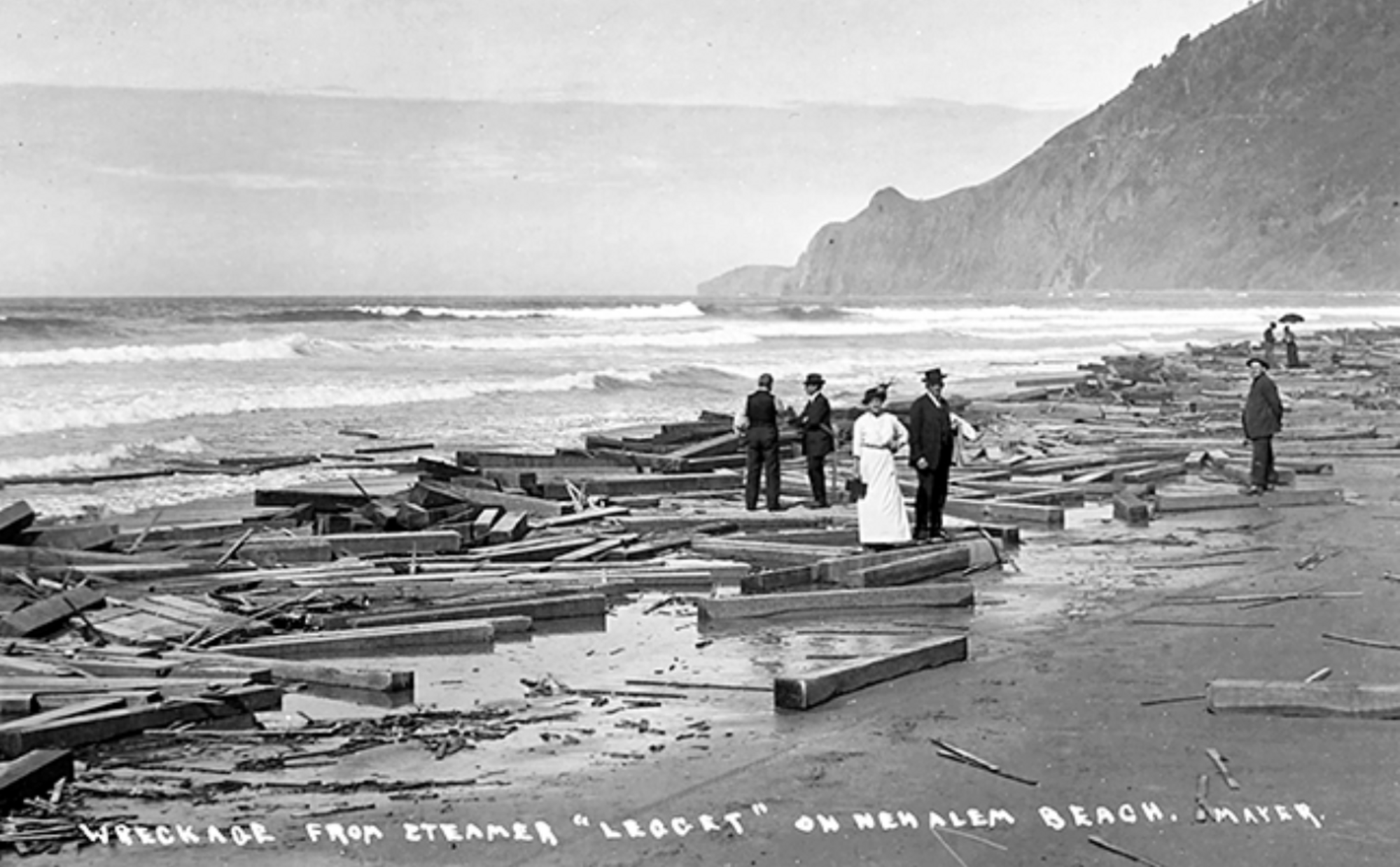
In the days afterward, railroad ties and other debris from the wreck washed ashore near Nehalem and Manzanita. The material remains of the disaster became a stark reminder of the risks faced by crews and passengers traveling the Pacific Northwest coast during the early twentieth century. The loss of the Francis H. Leggett endures as one of the region’s most haunting shipwreck stories.
Image of railroad ties from the wreck of the Francis H. Leggett that were washed ashore on Nehalem Beach via Wikimedia Commons, public domain
