
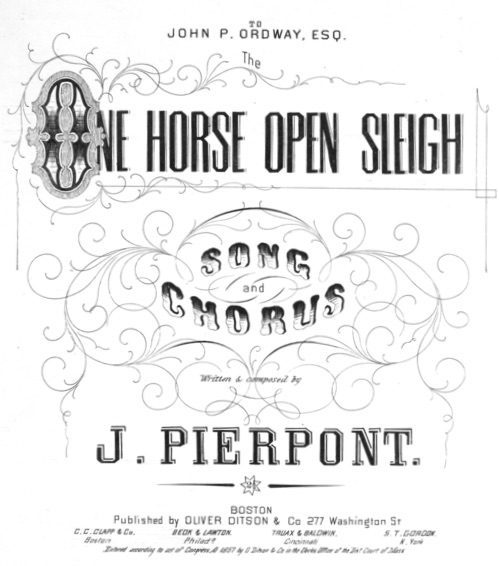
On September 16, 1857, American composer James Lord Pierpont copyrighted the sheet music for his lively winter song, “The One Horse Open Sleigh.” The song had received its first documented performance the previous day at Ordway Hall in Boston, where it was sung by minstrel performer Johnny Pell. Two years later, the piece was republished as “Jingle Bells; or, The One Horse Open Sleigh,” beginning its transformation into one of the world’s best-known seasonal songs.
Although “Jingle Bells” is now closely associated with Christmas, Pierpont’s original lyrics contain no reference to Christmas, Santa Claus, or gift-giving. Instead, they celebrate the exhilaration of sleigh rides—the snow, speed, ringing harness bells, laughter, flirtation, and occasional mishap. The song belongs to the nineteenth-century popular tradition of “sleighing songs,” which turned winter travel and recreation into lively musical entertainment.
A long-standing Medford, Massachusetts tradition holds that Pierpont drew inspiration from local sleigh races, but historians have not established with certainty where or when he composed the song. What is clear is that its vivid winter imagery and instantly memorable refrain allowed it to travel far beyond its original setting.
Over time, “Jingle Bells” moved from nineteenth-century popular performance into sheet-music culture, recordings, radio, school programs, and holiday celebrations around the world. Its durability lies in its simple, energetic picture of shared winter fun—a song rooted in a particular American moment that became a global seasonal standard.
Image via Wikimedia Commons, public domain.
