
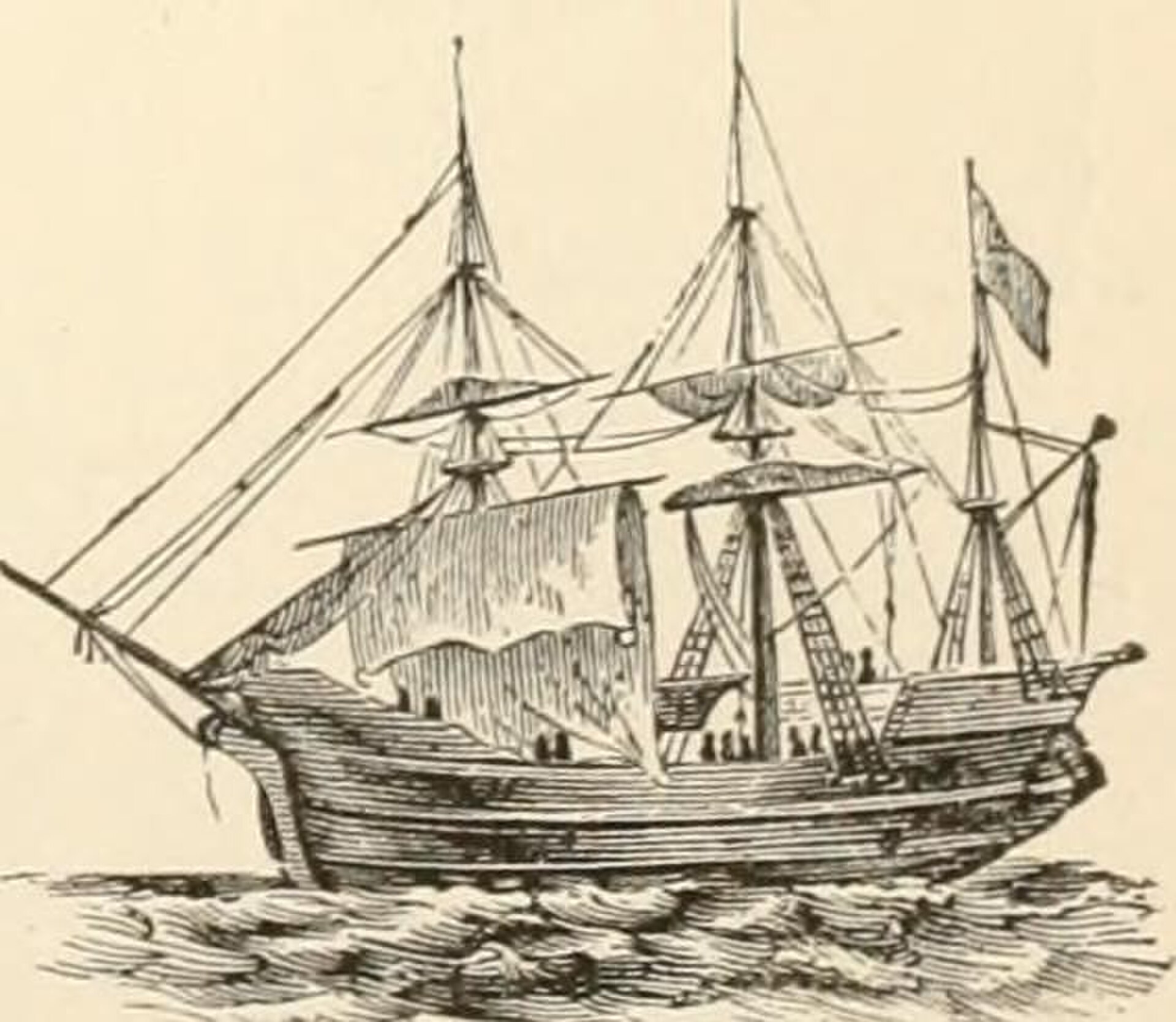
On September 16, 1620, the Mayflower departed Plymouth, England, beginning its voyage across the Atlantic toward North America. The merchant vessel carried 102 passengers, including English religious Separatists—later associated with the Pilgrims—as well as families, laborers, artisans, and other settlers connected to a commercial colonial venture. They traveled in crowded and difficult conditions alongside a crew generally estimated at about 25 to 30 men.
The crossing lasted roughly 66 days and was marked by rough autumn weather, sickness, and uncertainty. At one point, severe seas damaged a major structural beam, though the ship was repaired well enough to continue. The passengers had left behind familiar communities and entered an undertaking whose outcome was far from assured: an Atlantic passage followed by the prospect of establishing a settlement as winter approached.
The Mayflower reached Cape Cod in November 1620, outside the area where its backers had intended the colonists to settle. Before going ashore, 41 adult male passengers signed the Mayflower Compact, an agreement to form a civil body politic and make rules for the colony’s order and survival. Although limited in who could participate, the Compact later became an important symbol in American political memory of consent-based local government.
The voyage and the settlement at Plymouth became central to the later national story of the United States. At the same time, the colonists entered lands already inhabited and governed by Indigenous peoples, including the Wampanoag. The Mayflower’s arrival therefore marks not only a difficult episode of migration and settlement, but also the beginning of lasting colonial change in the region.
Image: A conceptual depiction of the Mayflower at sea, via Wikimedia Commons, public domain.
