
In the early morning hours of September 14, 1901, President William McKinley died at the Milburn House in Buffalo, New York, eight days after being shot by anarchist Leon Czolgosz at the Pan-American Exposition. The fatal wound had passed through McKinley’s stomach, and gangrene developed along the bullet’s path; his death marked only the third assassination of a U.S. president.
Vice President Theodore Roosevelt had been in the Adirondacks after reports suggested that McKinley was recovering. When word arrived that the president’s condition had taken a grave turn, Roosevelt rushed back to Buffalo. That afternoon, he went to the home of Ansley Wilcox, where the nation’s constitutional succession would be completed.
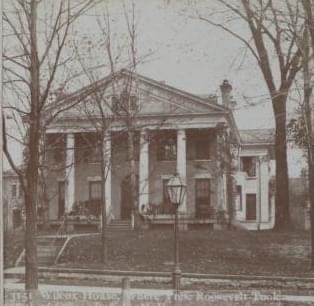
At about 3:30 p.m., in the Wilcox House library, Roosevelt stood before U.S. District Judge John R. Hazel and took the presidential oath of office. At age 42, he became the 26th president of the United States and the youngest person ever to assume the office.
McKinley’s death was a national tragedy, but Roosevelt’s prompt inauguration demonstrated the durability of the constitutional system: even after political violence claimed a president’s life, executive authority passed peacefully and without interruption. Roosevelt’s sudden elevation also helped usher in a more energetic, nationally prominent model of presidential leadership—one that would become closely associated with the Progressive Era.
Image: The Wilcox House in Buffalo, New York, where Theodore Roosevelt took the oath of office. New York Public Library Digital Collections; public domain.
Image via Wikimedia Commons, public domain
