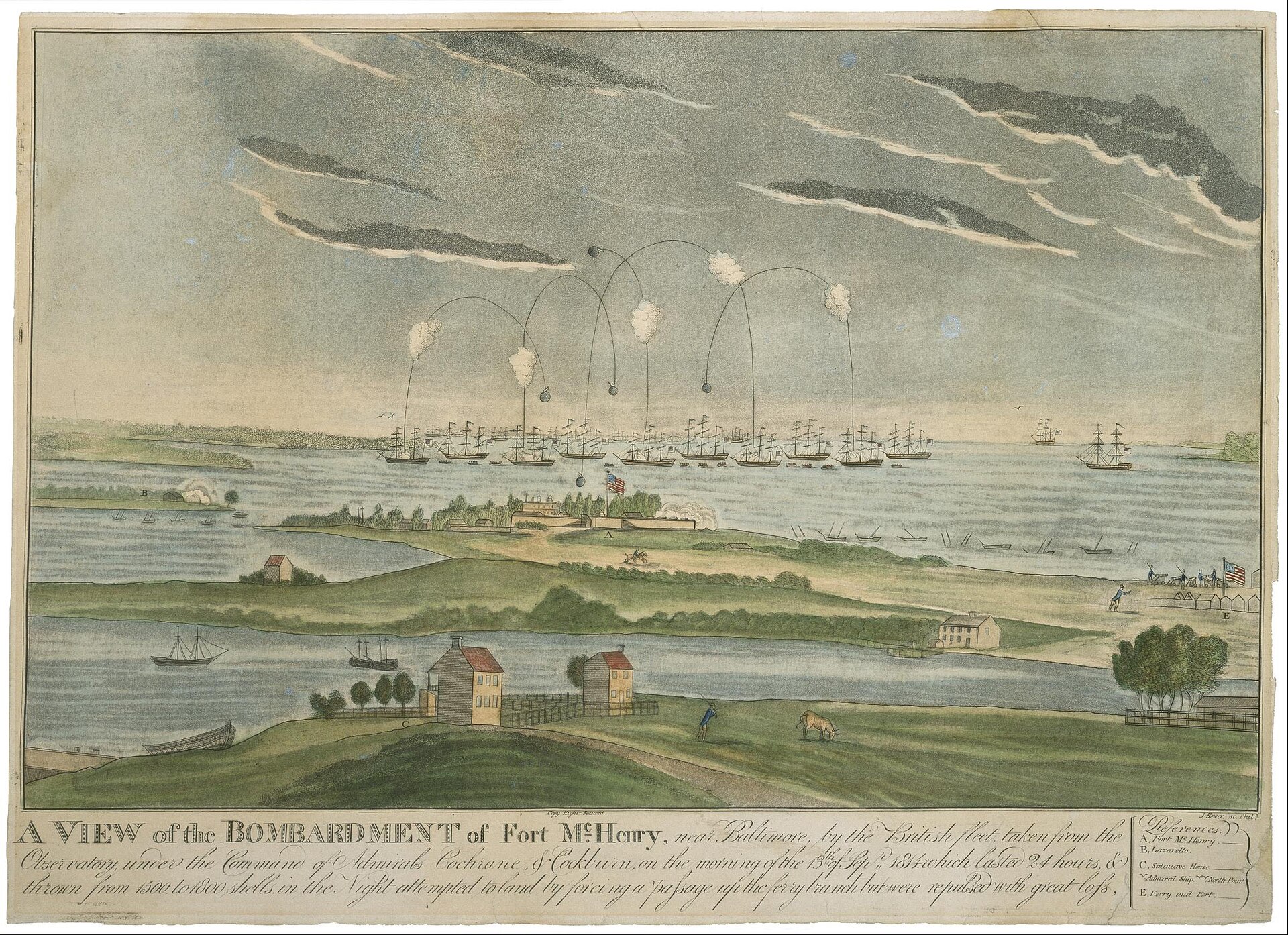
On the morning of September 13, 1814, during the War of 1812, the British Royal Navy began a roughly twenty-five-hour bombardment of Fort McHenry, Baltimore’s principal harbor defense. Fresh from the burning of public buildings in Washington, D.C., the British sought to force their way into Baltimore Harbor in support of their campaign against the important commercial city. To do so, they first needed to silence the star-shaped brick fort guarding the approach.
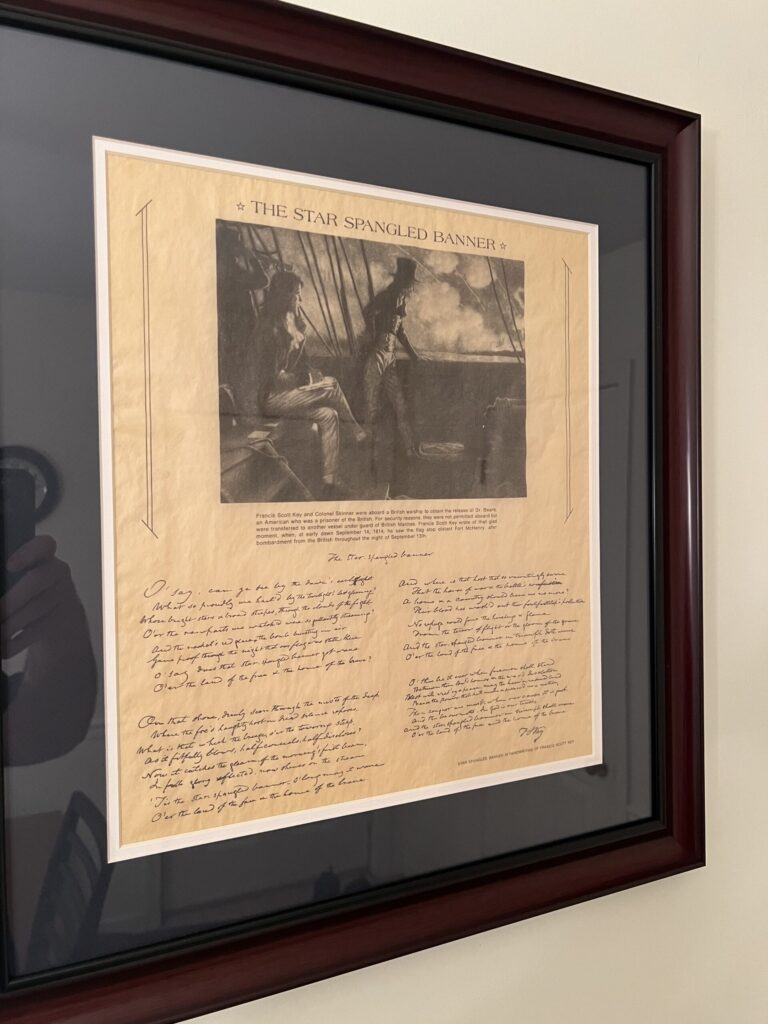
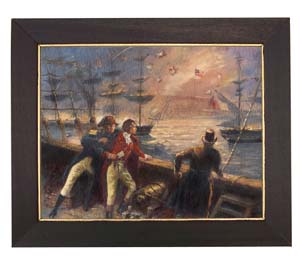
Positioned largely beyond the reach of Fort McHenry’s guns, British bomb vessels and rocket ships fired an estimated 1,500 to 1,800 explosive shells and Congreve rockets at the American defenses. The barrage continued through a dark, rainy night. Francis Scott Key—a Washington lawyer who had traveled to negotiate the release of Dr. William Beanes—was detained aboard the American truce vessel while the attack unfolded. From the harbor, he watched the flashes of shells and rockets illuminate the night sky.
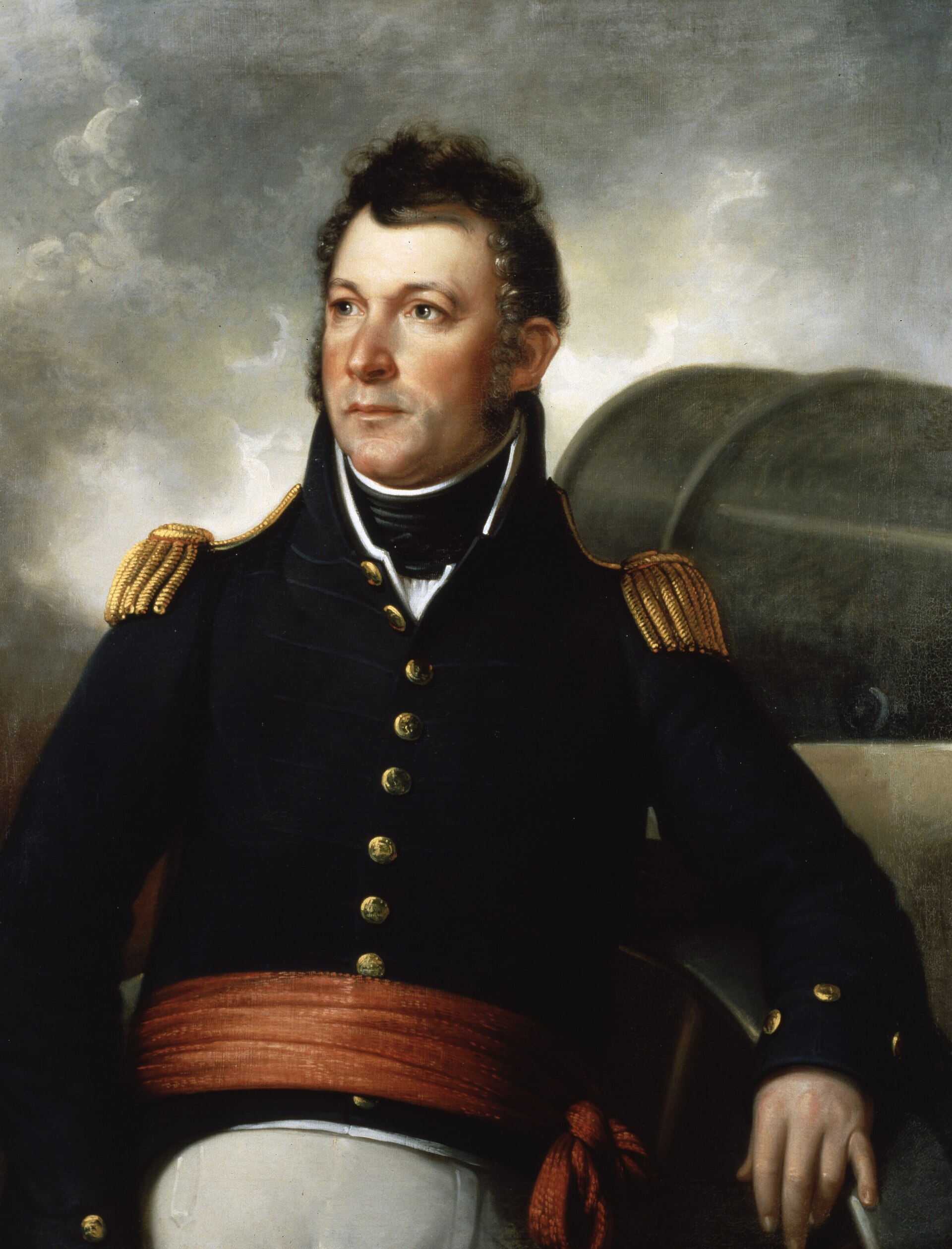
Major George Armistead (shown below) commanded Fort McHenry’s garrison. Although the bombardment damaged parts of the fort’s outer defenses and caused casualties, the defenders did not surrender. A British attempt to land troops behind the fort also failed when American defenses drove the barges back. Unable to neutralize Fort McHenry or gain access to the harbor, the British abandoned their attack on Baltimore and withdrew from the Chesapeake.
At dawn on September 14, Key saw the large American garrison flag flying above Fort McHenry’s ramparts. The sight confirmed that the fort had held. Inspired by the defense, he wrote the poem “Defence of Fort M’Henry,” whose words later became “The Star-Spangled Banner,” the United States national anthem.
Images via Wikimedia Commons, public domain